
RPE-Based Training: The Smarter Way Intermediate Lifters Should Be Programming
Fixed percentage programs work for beginners. After 12-18 months, autoregulating loads with RPE unlocks faster strength and size gains. Complete system here.

If you're still training off fixed percentages after 2 years of lifting, you're leaving gains on the table.
Not because percentage-based programs are broken. They work. They worked for you when you started, and they'll keep working for beginners who walk in tomorrow. The problem is that you're not a beginner anymore. Your neuromuscular system, your recovery capacity, and the daily variability in your actual strength have all outgrown a rigid spreadsheet that tells you to squat 72.5% on Thursday regardless of how Monday's deadlift session destroyed your posterior chain.
This article gives you a complete system — the LBE RPE Progression System — for making the switch to autoregulated training. You'll get the science, the definitions, the tables, a full 4-week sample program, and a clear action plan to start this Monday.
Key Takeaways
- RPE 7 = 3 reps in reserve; RPE 8 = 2 reps in reserve; RPE 9 = 1 rep in reserve — research shows trained athletes exhibit day-to-day strength variability of up to 18%, making fixed-percentage loads unreliable after 12-18 months of training
- The Tuchscherer 1-10 RPE scale maps directly to reps in reserve: ±1 RPE deviation corresponds to a 5-10% load variance, meaning a "missed" target RPE is a data signal, not a program failure
- Load progression is triggered by effort drop, not by the calendar: add 2.5-5% only when the same weight hits 0.5 RPE lower than the previous session — never add load if your top set exceeded your target RPE
- Auto-deload triggers require any two of: RPE drift of 1+ full point over 2 consecutive sessions, within-session RPE drift on sets 2-3, sleep-adjusted RPE 1 point above expected, or visible bar-speed decrease at familiar loads
- Hypertrophy accessory work targets RPE 8-9 (isolation) and RPE 7-8 (compound accessories); main strength lifts are capped at RPE 8-9 during accumulation and RPE 9 only in peak weeks — exceeding RPE 9.5 outside of testing weeks is a programming error
- A 2019 study found sleep-deprived subjects rated identical lifts 1-2 RPE points higher than rested counterparts — RPE calibration requires 4-8 weeks of consistent logging and is invalidated by a single night of poor sleep
The Problem With Percentage-Based Programming After Year One
When you started lifting, 65% of your 1RM probably felt like 65% of your 1RM. Training stress was novel. Neurological adaptations were fast. You could predict how your body would respond to a given load because you hadn't accumulated months of fatigue, CNS stress, and tissue adaptation.
That predictability breaks down around the 12-18 month mark.
Here's why: your true 1RM fluctuates by 5-18% on any given day depending on sleep quality, cumulative fatigue, nutrition, stress hormones, and session-to-session variation in movement efficiency. A study published in the Journal of Strength and Conditioning Research found that even well-trained athletes show day-to-day strength variability of up to 18% on primary lifts. That means 75% of Monday's 1RM is not the same load as 75% of Friday's 1RM.
Percentage programs pretend this variability doesn't exist. They say: "You squatted 315 lbs last week, so squat 320 this week." But on a bad day, 320 might be an RPE 9.5. On a good day, it might be RPE 7. The percentage stays fixed. Your readiness doesn't.
The result: intermediate lifters who follow rigid percentage blocks tend to grind themselves into overtraining plateaus, accumulate fatigue faster than they recover from it, miss rep targets that were theoretically achievable, and lose confidence in their programming.
The fix is autoregulation — and specifically, RPE-based autoregulation.
A Brief History of the RPE Scale in Strength Training
The original RPE scale was developed by Swedish psychologist Gunnar Borg in the 1960s as a 6-20 scale for cardiovascular exertion. It was never designed for lifting.
Mike Tuchscherer, an IPF champion and powerlifting coach, revamped the concept in 2005 into a 1-10 scale directly tied to reps in reserve (RIR) — a measure of how many quality reps you could still perform before technical failure. Dr. Mike Israetel and the team at Renaissance Periodization then formalized it within the context of hypertrophy training, establishing RPE and RIR as central tools for volume management, progressive overload, and deload detection.
Today, the Tuchscherer/Israetel 1-10 RPE scale is the standard across powerlifting and evidence-based hypertrophy communities. Barbell Medicine uses it across all their intermediate and advanced templates. It is the RPE system this article uses.
The RPE Reference Table
This is the operating vocabulary for everything that follows. Memorize it.
| RPE | Reps In Reserve (RIR) | Perceived Exertion | Recommended Use Case | % of 1RM Estimate | |-----|-----------------------|--------------------|----------------------|-------------------| | 10 | 0 | Absolute maximum — could not do 1 more rep | Max effort singles, competition attempts, testing day | 100% | | 9.5 | 0–1 (unclear) | Near-maximal — might have had 1 more rep | Heavy singles near peak, final week before comp | 97–99% | | 9 | 1 | Very hard — 1 more rep possible | Top sets on strength days, peak mesocycle work | 93–96% | | 8 | 2 | Hard — 2 more reps clearly possible | Primary strength work across most training weeks | 88–93% | | 7 | 3 | Moderately hard — 3 reps left | Volume work, back-off sets, early mesocycle | 83–88% | | 6 | 4 | Moderate — 4+ reps left | Warm-up sets, technique focus, early accumulation blocks | 78–83% |
Note on the % estimates: These are population averages and will vary by individual, lift, and fatigue state. Use them as a starting reference only. Your actual relationship between RPE and % will stabilize after 6-8 weeks of deliberate tracking.
%1RM Programming vs. RPE Programming: The Key Differences
| Factor | %1RM Programming | RPE Programming | |--------|-----------------|-----------------| | Load prescription | Fixed % of tested 1RM | Based on perceived effort in real-time | | Daily variability | Ignored | Accounted for automatically | | Progression mechanic | Add weight each week | Hit target RPE; increase load when effort drops | | Accuracy dependency | Accurate 1RM test required | Calibration develops over 4-8 weeks | | Best for | Beginners with predictable adaptation | Intermediate/Advanced lifters with variable readiness | | Handles fatigue accumulation | Poorly | Well — effort rises before overtraining sets in | | Handles undulating stress | Rigidly | Flexibly — adjusts to real session performance | | Deload detection | Scheduled (arbitrary) | Auto-detected via RPE drift | | Risk of overtraining | Higher in intermediate+ | Lower — built-in regulation mechanism |
The key insight: percentage programs don't fail because of the percentages — they fail because they assume your body is a machine that produces identical output on every training day. RPE programming abandons that assumption.
Why Percentage Programs Break Down at the Intermediate Level — The Contrarian Take
Let's be direct: percentage-based programs aren't wrong. They're just less efficient for intermediate lifters.
Linear progression (LP) programs like Starting Strength or StrongLifts 5x5 work brilliantly for beginners because early training is dominated by neural adaptations. The nervous system is learning movement patterns so rapidly that adding 5 lbs every session is consistently achievable. At this stage, the body's strength output is increasing so fast that day-to-day variability is a rounding error.
By month 12-18, neural adaptations slow. Structural adaptations (muscle fiber hypertrophy, tendon stiffening, increased motor unit synchronization) take longer to occur and are more sensitive to recovery quality. Your strength no longer goes up session to session — it fluctuates, trends upward over weeks, and is heavily influenced by factors percentage programs don't account for.
Here's what happens in practice: an intermediate lifter on a percentage program hits a wall. Their prescribed 3x5 @ 82.5% feels like a 9 RPE instead of the expected 7.5 RPE. They grind through it, accumulate more fatigue, and come back next week even more compromised. Within 3-4 weeks, they're either grinding ugly reps that expose injury risk or they're missing targets and labeling themselves "overtrained" when the actual issue is poor load management.
RPE programming would have caught this on day one. The moment 82.5% felt like RPE 9, the protocol says: that's your working load today, don't add weight yet, note the drift, and watch the pattern.
Beginners don't need this sophistication. They benefit from the simplicity of fixed loads. Intermediate lifters need the feedback loop.
The LBE RPE Progression System
This is a 4-step framework for implementing RPE-based training from scratch. Follow these steps in order. Don't skip Step 1.
Step 1: Calibrate Your RPE Baseline
Before you can train by RPE, you need to know what your RPE actually means in terms of load. This takes 4-8 weeks to get accurate. There is no shortcut.
How to calibrate:
For each primary lift (squat, bench, deadlift, overhead press), perform the following protocol once per week for 4 weeks:
- Warm up normally.
- Work up to a set of 5 that feels like RPE 8 (2 reps left in the tank). Log the weight.
- Do a second set of 5 at the same weight. Log how it actually felt (not how you hoped it felt).
- After each session, record: weight used, reps performed, RPE rating, sleep quality (1-5), and general stress level (1-5).
By week 4, you'll have enough data to recognize two things: (a) your typical RPE 8 load for each exercise, and (b) how your perceived effort shifts on low-sleep or high-stress days.
Common calibration errors:
- Rating the set before you finish it. Rate your RPE in the last 2 reps, not midway.
- Being generous. If you thought about stopping but didn't, that's not RPE 7. That's RPE 8-9.
- Confusing cardiorespiratory fatigue with muscular effort. RPE in lifting refers to muscular effort and proximity to technical failure, not whether you're breathing hard.
Step 2: Set RPE Targets by Goal
Different training goals require different RPE targets. Here are the standard prescriptions used by evidence-based coaches:
Maximum Strength (1RM Improvement):
- Top sets: RPE 8-9
- Back-off sets: RPE 7
- Never exceed RPE 9.5 outside of testing or competition weeks
Hypertrophy (Muscle Growth):
- Working sets: RPE 7-8 for compound movements
- Accessory/isolation: RPE 8-9 (these movements are less technically demanding, so higher effort is safer)
- Volume sets: RPE 6-7
Deload:
- All work: RPE 5-6
- Reduce volume by 30-50%
- Do not try to hit any PR or near-PR loads
General Strength Maintenance:
- Top sets: RPE 7
- Back-off: RPE 6
The principle is simple: the higher the technical complexity of the lift, the lower the ceiling on sustainable RPE across a mesocycle. Leave more in the tank on squats and deadlifts than you would on cable rows.
Step 3: Apply Weekly Progression Rules
RPE-based progression works differently from adding 5 lbs per session. The mechanism is this: you're chasing a target RPE, not a target load. Load increases when effort decreases.
The standard progression mechanic:
Week 1: 3x5 @ RPE 8. Log the weight you needed to hit RPE 8. Week 2: Use the same weight. If it feels like RPE 7.5 or lower, add 2.5-5% load. Week 3: If the new weight hits RPE 8, stay. If it hits RPE 7 or below, add again. Week 4: This is typically your heaviest week — push to RPE 8.5-9 on top sets. Week 5: Deload (RPE 5-6, -30% volume).
The rule: Never add load if your top set hit higher than your target RPE. If your 3x5 @ 225 lbs felt like RPE 9 when you wanted RPE 8, you do not add weight next week. You either repeat the same load or drop 2.5-5%.
This is what separates intermediate progression from beginner progression. Beginners add weight because they can. Intermediates add weight when their body signals readiness.
Step 4: Use RPE to Auto-Detect Deload Needs
The single most underused feature of RPE programming is deload auto-detection. Instead of scheduling arbitrary deloads every 4 weeks, you can let your RPE data tell you when you need one.
The deload signals:
- Your RPE for a given weight creeps up 1+ full point over 2 consecutive sessions (e.g., 225 lbs goes from RPE 7 to RPE 8.5 without any change in programming).
- You're consistently hitting target RPE on the first set but overshooting on sets 2 and 3 (RPE drift within a session).
- Your sleep-adjusted RPE is consistently 1 point above expected (you slept fine, ate well, and still felt like garbage under load).
- Your bar speed decreases noticeably at the same weights.
Any two of these signals in the same week = deload. No exceptions. The temptation will be to push through — this is the most common mistake intermediates make when switching to RPE. The RPE data is trying to tell you something. Listen to it.
The 4-Week LBE Upper/Lower Sample Program
This is a complete 4-week RPE-based upper/lower split. It is designed for intermediate lifters training 4 days per week with at least 12 months of consistent training history. Weights are left blank intentionally — you fill them in based on your RPE calibration.
Program Structure: Upper A / Lower A / Rest / Upper B / Lower B / Rest / Rest
WEEK 1 — Accumulation (RPE 7-8 Range)
Upper A — Horizontal Push/Pull Focus
| Exercise | Sets x Reps | Target RPE | Notes | |----------|-------------|------------|-------| | Bench Press | 4x5 | 7.5 | Top set + 3 back-off sets at same weight | | Barbell Row | 4x6 | 7 | Control the eccentric | | Incline DB Press | 3x10 | 8 | RPE-based accessory work — see note below | | Cable Row | 3x12 | 8 | | | Tricep Pushdown | 3x15 | 8 | | | Face Pull | 3x15 | 7 | |
Lower A — Squat Focus
| Exercise | Sets x Reps | Target RPE | Notes | |----------|-------------|------------|-------| | Back Squat | 4x5 | 7.5 | Same loading mechanic as Bench | | Romanian Deadlift | 3x8 | 7 | Hip hinge, not lower back | | Leg Press | 3x12 | 8 | | | Leg Curl | 3x12 | 8 | | | Standing Calf Raise | 4x15 | 8 | |
Upper B — Vertical Push/Pull Focus
| Exercise | Sets x Reps | Target RPE | Notes | |----------|-------------|------------|-------| | Overhead Press | 4x5 | 7.5 | | | Pull-Up / Lat Pulldown | 4x6 | 8 | Weighted if needed to hit RPE | | DB Shoulder Press | 3x10 | 8 | | | Seated Cable Row | 3x12 | 8 | | | Dumbbell Curl | 3x15 | 8 | | | Tricep Overhead Extension | 3x15 | 8 | |
Lower B — Deadlift Focus
| Exercise | Sets x Reps | Target RPE | Notes | |----------|-------------|------------|-------| | Conventional Deadlift | 4x4 | 8 | Heavier but fewer reps than squat day | | Front Squat | 3x5 | 7 | | | Walking Lunge | 3x12/leg | 7.5 | | | Leg Curl | 3x12 | 8 | | | Glute Bridge | 3x15 | 8 | |
WEEK 2 — Accumulation+ (Same weights; expect RPE to drop ~0.5 points)
- Repeat Week 1 structure
- If any main lift feels 0.5+ RPE lower than Week 1 at the same weight, add 2.5-5% to that lift
- Do not add weight if RPE matches or exceeds Week 1 rating
WEEK 3 — Intensification (Push RPE to 8-9 range)
Adjust all compound main movements:
- Bench, Squat, OHP: 4x4 at RPE 8.5
- Deadlift: 3x3 at RPE 8.5
- Accessories: Keep same RPE targets (8), slight load increase if Week 2 felt easy
WEEK 4 — Peak Week (RPE 8.5-9 on compounds)
Main lifts:
- Bench, Squat, OHP: Work up to 1-2 top sets at RPE 9, then 2 back-off sets at RPE 7.5
- Deadlift: 2x2 at RPE 9
- Accessories: RPE 8, reduce volume by 1 set each
End of Week 4: Assess your RPE data. If you hit RPE 9 successfully and bar speed remained good, add 2.5-5% to your base loads for the next 4-week block. If RPE 9 felt closer to 9.5 or grinders occurred, deload first.
WEEK 5 — Deload (RPE 5-6, -40% volume)
- All main lifts: 3x5 @ RPE 6 (this should feel almost laughably easy — that's correct)
- Accessories: 2 sets each, RPE 6
- No new PRs, no testing, no heroics
- Use this week to fix technique issues you noticed in Weeks 3-4
Applying RPE to Accessory and Hypertrophy Work
Main lifts (squat, bench, deadlift, OHP) are where most RPE discussions live. But RPE is arguably more valuable for accessory and hypertrophy work, where the goal is accumulating quality volume close to failure — not hitting specific loads.
For isolation movements (curls, pushdowns, leg curls, laterals), target RPE 8-9 on most sets. These movements have low technical complexity, lower injury risk, and respond well to training close to failure.
For compound accessories (Romanian deadlift, incline press, row variations), target RPE 7-8. You still want some buffer — these movements tax your CNS and primary muscle groups in ways that matter for your main lift performance.
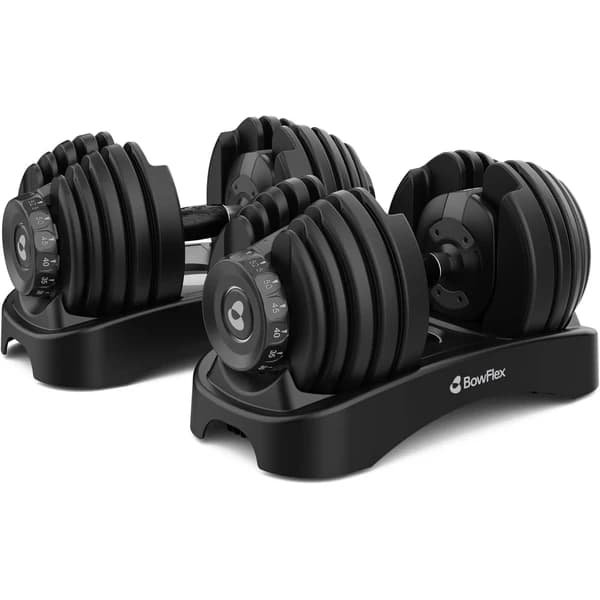
The load-fine-tuning challenge on accessories is real. If you're training dumbbell exercises and need to hit exactly RPE 8 on a set of 12, the difference between RPE 7.5 and RPE 8.5 might be 2.5 lbs. Standard fixed dumbbells in 5 lb increments make this difficult.
Amazon · Affiliate
Bowflex SelectTech 552 Adjustable Dumbbells
4.8
Replace 15 sets of weights. Dial adjusts from 5 to 52.5 lbs. Space-saving design for home gyms.
$300–$400Check Price on Amazon
RPE-based accessory work is easiest to implement when you can fine-tune load in 2.5 lb increments. Adjustable dumbbells solve this precisely — you're not forced to jump 5 lbs and overshoot your target effort, or stay at the lighter weight and undershoot it.
Common Mistakes When Switching to RPE
Mistake 1: Underestimating Early Sets
This is the most pervasive problem. Lifters rate a set of 5 at RPE 7 when it was actually RPE 8.5 because the set felt "comfortable" at the time. Then they add load, the next set hits RPE 9.5, and they wonder why the program isn't working.
The fix: rate the set based on how you felt in reps 4 and 5, not rep 1. If you thought about stopping during the set, add 0.5-1 RPE to your rating.
Mistake 2: Not Tracking RPE Drift Over a Mesocycle
A single RPE data point is nearly useless. The power of RPE comes from tracking trends. If your squat at 275 lbs was RPE 7.5 in Week 1, RPE 7.5 in Week 2, and RPE 8.5 in Week 3 — that drift is telling you something critical. Fatigue is accumulating faster than you're recovering.
Fix: keep a log. Every set, every weight, every RPE, every week. Review your log weekly for drift signals.
Mistake 3: Using RPE as an Excuse to Go Easy
"It felt like RPE 8.5, so I stopped the set" is only valid if your calibration is accurate. Many lifters unconsciously sand-bag their RPE targets to avoid discomfort. If your "RPE 8" sets look like someone else's RPE 6 on video — longer pauses, smooth bar speed, easy breathing — you're not being honest with yourself.
Record your sets occasionally and compare bar speed, form breakdown, and grinding to your RPE ratings. Objective feedback corrects subjective drift.
Mistake 4: Switching Too Fast and Comparing to Percentages
When lifters first switch from percentage-based programs to RPE, they often see the load on the bar drop in the first 2 weeks because their percentage-based loads were being pushed at unsustainably high effort. This feels like regression. It isn't.
Stick with the RPE protocol for a full 8-week block before evaluating. The first 4 weeks are calibration. The second 4 weeks are when quality volume accumulation and appropriate progressive overload start showing results.
Performance Support: What Else Moves the Needle
RPE-based training is built around accurately measuring your maximum output. That means the higher your actual output, the more effectively you can train at any given RPE.
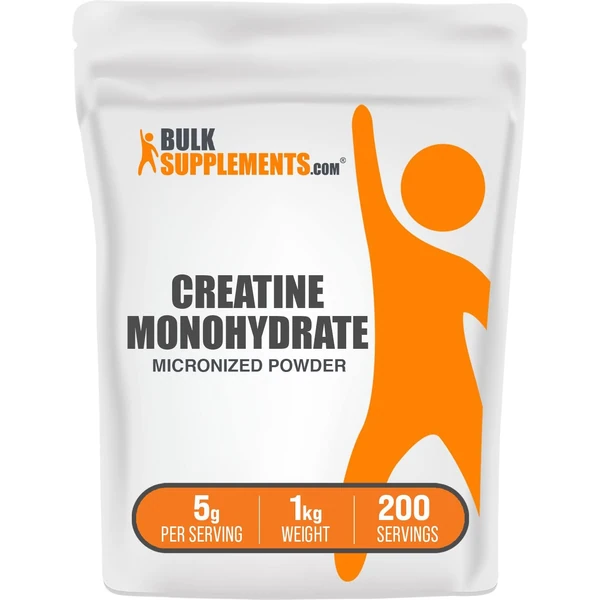
Creatine monohydrate is the single most evidence-backed supplement for increasing acute strength output. It increases phosphocreatine availability in muscle tissue, improving your capacity to produce maximal force on your heaviest sets. More than 200 peer-reviewed studies confirm its effects. When you're training at RPE 8-9 and pushing toward true capacity, creatine directly increases the ceiling you're working against.
Amazon · Affiliate
BulkSupplements Creatine Monohydrate
4.7
Pure micronized creatine monohydrate. No fillers, no additives. Lab-tested for purity.
$20–$40Check Price on Amazon
3-5g per day, every day. No loading phase required. This is the baseline supplement for any intermediate lifter focused on strength or hypertrophy.
Recovery: The Other Side of the RPE Equation
Autoregulated training done correctly means more quality volume than a typical percentage program, because you're spending more of your sessions in the effective stimulus range (RPE 7-9) instead of either grinding RPE 9.5+ sets or wasting time at RPE 5 because the program says so.
More quality volume means more cumulative mechanical stress. That stress needs to be managed.
The practical recovery protocol for RPE-based training:
-
Sleep: 7-9 hours minimum. Your RPE accuracy degrades significantly with even one night of poor sleep. A 2019 study found sleep-deprived subjects rated the same lifts 1-2 RPE points higher than their rested counterparts at identical loads.
-
Nutrition timing: Don't train fasted on compound primary lift days. Carbohydrate availability directly affects high-effort strength output. Save fasted training for low-RPE accessory days if you prefer it.
-
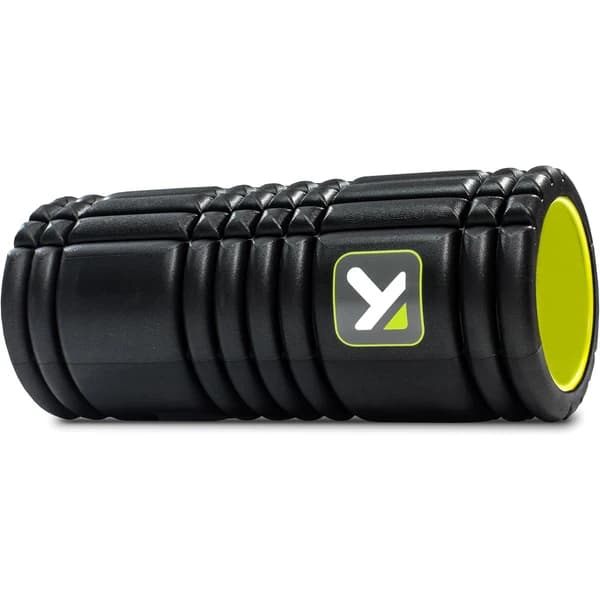
Soft tissue work: Higher volume programs generate more cumulative tension in connective tissue. Myofascial release work between sessions — particularly on high-frequency lower body days — reduces perceived tightness that can inflate RPE ratings.
Amazon · Affiliate
TriggerPoint GRID Foam Roller
4.7
Multi-density foam roller for muscle recovery and myofascial release. Used by pro athletes.
$30–$40Check Price on Amazon
10-15 minutes of targeted foam rolling before training sessions reduces perceived stiffness and can prevent artificially elevated RPE readings driven by muscular tightness rather than actual fatigue. The TriggerPoint GRID is the standard for serious lifters — multi-density surface for targeted release work.
- Deloads: Follow the deload detection protocol in Step 4. Don't skip deloads because you "feel fine." The whole point of auto-detection is catching fatigue accumulation before it becomes a problem you can feel.
Final Thoughts
Start this Monday. Here's exactly how.
Monday: Pick one primary lift — your squat, bench, or deadlift. Perform your normal warmup. Work up to a set of 5 that feels like RPE 8 — 2 clear reps left in the tank. Log the weight and log your honest RPE. Do 3 back-off sets at the same weight. Log how each one felt.
That's it. Do this for your primary lift each session this week. Rate every set honestly. Don't adjust loads yet. Just collect data.
By Week 4: You'll have enough calibration data to start using the LBE RPE Progression System properly. You'll know your RPE 7, 8, and 9 weights on each lift. You'll know how fatigue affects your ratings. You'll have a baseline to measure drift against.
RPE calibration takes 4-8 weeks to get accurate. There's no shortcut. Most lifters who "tried RPE and it didn't work" gave up in the first two weeks because their ratings were inaccurate and they didn't understand that inaccuracy is expected at the start.
The transition from percentage-based to RPE-based programming is the single most impactful programming change most intermediate lifters will ever make. Not because RPE is magic. Because it forces you to pay attention to what your body is actually doing on any given day — and to make loading decisions based on reality instead of a spreadsheet.
The gains are there. The system is in your hands. Start the calibration process this week.
Affiliate disclosure: Some links in this article are affiliate links. If you purchase through them, we may earn a small commission at no extra cost to you. We only recommend products we genuinely believe in.
About the author
Nathan reviews the research, tests the tools, and writes the guides at LeanBodyEngine — evidence-first, no sponsored content, no supplement shilling.
Related articles


Subscribe
Never miss a new article
Get an email whenever we publish a new fitness guide, supplement review, or workout plan. One short email per post — that's it.
Unsubscribe anytime. We only email when there's a new post.