
You're Probably Deloading Wrong (And It's Killing Your Gains)
The 4-6 week deload schedule is largely arbitrary. Here's the research-backed framework for knowing exactly when you need a deload — and which type to take.

Every fitness influencer tells you to deload every 4-6 weeks. Most of them are wrong about why.
The standard advice goes something like this: drop your weights to 60%, cut your sets in half, and coast through a "light week" every month or so. It's the kind of advice that sounds reasonable, gets repeated endlessly in fitness content, and is responsible for a significant amount of wasted training time.
Here's the problem: a fixed-calendar deload treats all lifters the same, treats all training blocks the same, and treats "less weight on the bar" as the primary lever — when the actual goal is clearing accumulated fatigue. Those are very different things. And the difference matters more than most people realize.
This guide is for intermediate lifters who've done deload weeks before but aren't totally sure why, when, or how. We're going to fix that.
Key Takeaways
- The 4-6 week fixed deload schedule is based on coaching convention, not your physiology.
- The goal of a deload is fatigue management, not just load reduction.
- Most recreational lifters 1-3 years in don't accumulate enough fatigue to warrant a scheduled deload — they need a reactive one.
- Volume reduction is more effective at clearing fatigue than intensity reduction for most lifters.
- A properly executed deload leads to a reliable performance bump in the following training week.
The Problem With "Every 4-6 Weeks"
The 4-6 week deload frequency has some logic behind it. It roughly maps to the length of a typical training mesocycle — a training block where volume progressively increases week over week until you hit your maximum recoverable volume (MRV) for that period. At that point, the thinking goes, you need a week to clear the accumulated fatigue before starting a new block.
That framework makes sense for high-level athletes training near their physiological ceiling — people accumulating 20+ hard sets per muscle group per week, training 5-6 days a week, potentially under a coach's supervision.
That is not most recreational intermediate lifters.
If you're training 3-4 days a week, running a sensible program, and not deliberately pushing into functional overreaching, the research suggests you may not be accumulating enough fatigue to need a deload every 4-6 weeks on the dot. A 2024 study published in BMC Sports Science, Medicine and Rehabilitation found that a 1-week training cessation at mid-program produced no hypertrophy benefit over continuous training — and actually showed lower strength gains in the deload group. The participants reported feeling lethargic, not refreshed.
The takeaway isn't "never deload." It's that deloading at the wrong time — when your body doesn't actually need it — can slow your progress, not accelerate it.
The fix: stop deloading on a calendar. Start deloading when you have objective evidence you need one.
The LBE Fatigue Monitoring Framework
Instead of guessing, track these five markers. When three or more of them flip red at the same time, your body is telling you it needs a deload. When only one or two are flagging, you can often push through with minor adjustments.
1. Performance Regression (Objective)
Threshold: 2 consecutive sessions where your working weights or reps are lower than the previous week on your primary lifts — without an obvious external cause (illness, poor sleep, travel).
This is the clearest signal. Your nervous system is the first system to show the strain of accumulated fatigue, and it shows up directly in your training outputs.
2. Resting Heart Rate Elevation (Objective)
Threshold: Morning resting HR that is consistently 5+ bpm above your personal baseline for 3+ days in a row.
Elevated resting HR is a reliable marker of physiological stress. Even without a fancy wearable, you can measure this with 60 seconds and two fingers.
3. Motivation Crater (Subjective)
Threshold: Strong, persistent reluctance to train — not the usual pre-workout inertia, but actively dreading sessions that you normally look forward to. This is a nervous system signal, not a willpower problem.
4. Joint and Soft Tissue Accumulation (Subjective)
Threshold: Nagging soreness or stiffness in 2+ joint areas (shoulders, knees, elbows, hips) that doesn't resolve with a 48-hour rest day. This indicates that tissue repair is falling behind tissue stress accumulation.
5. Sleep Quality Deterioration (Subjective)
Threshold: Difficulty falling asleep or staying asleep despite feeling physically tired, for 4+ consecutive nights. High training load dysregulates cortisol patterns, which directly impairs sleep architecture — a signal your recovery systems are overwhelmed.
The rule: 3 or more markers above threshold simultaneously → take a deload. 1-2 markers → add an extra rest day, audit your nutrition, and reassess next week.
Deload Types Comparison
Not all deloads are the same. The right type depends on what's actually driving your fatigue.
| Deload Type | Mechanism | Duration | Best Use Case | Evidence Quality | |---|---|---|---|---| | Volume Deload | Reduce weekly sets by 40-50%; maintain working weights | 5-7 days | High fatigue from excessive volume; most common scenario for recreational lifters | Strong — volume is the primary driver of fatigue accumulation in trained individuals | | Intensity Deload | Reduce load to 50-60% 1RM; maintain set/rep count | 5-7 days | Joint/tendon overuse symptoms; high-stress periods with poor sleep; returning from minor injury | Moderate — primary benefit is soft tissue recovery and reduced CNS demand | | Full Rest | No structured training | 3-5 days | Actual overtraining signs (performance decline lasting 2+ weeks, mood disorder, immune suppression); forced deload from illness or life events | Limited for performance; psychologically difficult for trained lifters; risks detraining anxiety |
The survey data backs this up: in a 2024 cross-sectional study of competitive strength and physique athletes published in PLoS ONE, 78.9% of athletes who deloaded reduced weekly sets, 84.9% reduced proximity to failure, and 70.3% kept the same exercises. Volume reduction, not load reduction, was the primary tool.
The Decision Flowchart
Work through this in order.
Step 1: Are 3+ LBE markers above threshold?
- No → Continue training. Check again in 7 days.
- Yes → Proceed to Step 2.
Step 2: Is the fatigue primarily neural/motivational (performance drop, motivation crater) with minimal joint symptoms?
- Yes → Volume deload for 5-7 days. Cut weekly sets by 40-50%. Keep weights at your normal working percentages.
Step 3: Is the fatigue primarily physical with significant joint aching and sleep disruption?
- Yes → Intensity deload for 5-7 days. Drop loads to 60%, maintain structure. Add soft tissue work.
Step 4: Have you been showing 3+ markers for more than 2 consecutive weeks despite a prior volume deload?
- Yes → Full rest for 4-5 days, followed by a volume deload week before returning to normal training.
Sample Deload Week Structures
Option A: Volume Deload Week
Use when: performance regression + motivation drop. Primary fatigue driver is excessive training volume.
| Day | Session | |---|---| | Mon | Main lifts — same exercises, same weights, 50% of your normal sets. (If you normally do 4 sets of squats, do 2.) | | Tue | Rest or easy 20-minute walk | | Wed | Accessory work only — drop sets and keep loads at ~70% 1RM | | Thu | Rest | | Fri | Full body session at 50% normal volume — 1-2 sets per movement, same intensities | | Sat/Sun | Rest |
Key principle: The weights stay close to normal. Dropping load during a volume deload defeats the purpose — you're not trying to reduce mechanical tension on the tissue; you're trying to reduce total fatigue-generating stimulus.
Option B: Intensity Deload Week
Use when: joint symptoms + sleep disruption. Primary fatigue driver is load on connective tissue.
| Day | Session | |---|---| | Mon | Full session — same exercises, same sets/reps, all loads at 50-60% 1RM | | Tue | Mobility + soft tissue work | | Wed | Full session — same structure, 50-60% 1RM | | Thu | Rest or easy walking | | Fri | Full session — same structure, 50-60% 1RM | | Sat/Sun | Rest |
Key principle: The structure stays intact. You're still going to the gym and going through the movements. The reduced load allows joint structures to recover without fully removing the training stimulus.
Option C: Full Rest Week
Use when: signs of non-functional overreaching lasting multiple weeks.
Literally do not train. Walk, stretch, sleep more. This is rare and most recreational lifters will never need it. If you think you need it more than twice a year, your programming has a volume or recovery problem that a deload won't fix permanently.
Recovery Stack: What to Do During Your Deload
A deload week is idle time the rest of the year — use it deliberately.
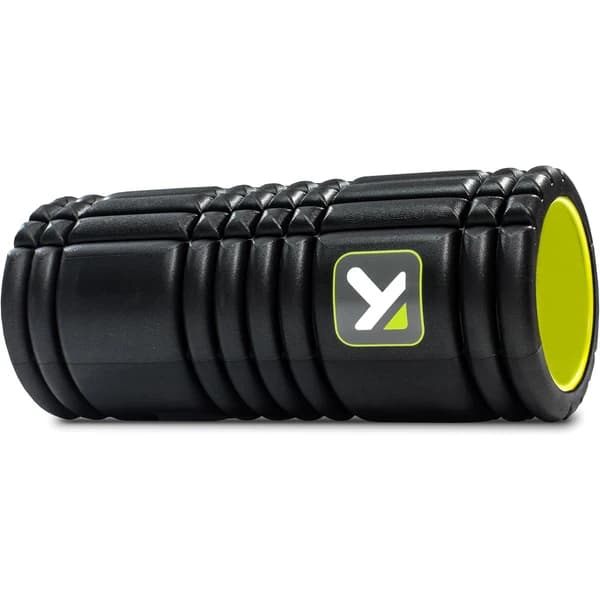
Soft tissue work: A deload week is ideal for adding the foam rolling you skip when you're focused on heavy training. Ten to fifteen minutes of targeted work on the areas that have been accumulating tightness — hip flexors, thoracic spine, hamstrings — makes a meaningful difference in how you feel heading into the next block.
Amazon · Affiliate
TriggerPoint GRID Foam Roller
4.7
Multi-density foam roller for muscle recovery and myofascial release. Used by pro athletes.
$30–$40Check Price on Amazon
Epsom salt soaks: A magnesium sulfate soak 2-3 times during your deload week supports muscular relaxation and may accelerate the fatigue clearance process. The osmotic effect reduces localized inflammation in overworked tissue, and the ritual itself signals your nervous system to downregulate.

Amazon · Affiliate
Dr Teal's Pure Epsom Salt Soak (6 lbs)
4.8
Pure magnesium sulfate soak. Relieves sore muscles, reduces inflammation, and promotes relaxation post-workout.
$8–$16Check Price on Amazon
Sleep optimization: The actual recovery during a deload week happens during sleep — the deload just creates the conditions for it. Sleep quality is where the gains are actually consolidated. Magnesium glycinate consistently improves sleep depth in active individuals by supporting GABA receptor function and reducing nighttime cortisol.

Amazon · Affiliate
Doctor's Best High Absorption Magnesium Glycinate
4.7
Highly bioavailable magnesium chelate. Supports muscle relaxation, deep sleep, stress reduction, and recovery.
$12–$22Check Price on Amazon
Myth vs. Reality
Myth #1: "You'll lose gains during a deload."
Reality: You won't. Muscle protein synthesis remains active during a deload week, and any minimal detraining effect reverses within one or two sessions of full training. The week after a proper deload, performance reliably improves — this is supercompensation in action. You're not losing gains; you're banking them.
Myth #2: "A deload means going to 60% of your max on everything."
Reality: "60% of max" is only appropriate for an intensity deload. In a volume deload — which is the more commonly needed type — your working weights should stay close to normal. If you're squatting 225 for 4x6, your volume deload has you squatting 225 for 2x6, not 135 for 4x6. Load retention is what preserves the neuromuscular pattern; volume reduction is what clears the fatigue.
Myth #3: "If you're not progressing, you need a deload."
Reality: Stalled progress has many causes — inadequate protein, poor sleep, programming errors, accumulated fatigue, or just being in a harder training phase. A deload is only the right tool if the cause is accumulated fatigue (flagged by the monitoring framework above). Taking a deload when the real problem is inadequate protein intake or bad programming just wastes a week.
What the Research Actually Says About Duration
The survey data from competitive strength athletes shows the average deload lasts 6.4 ± 1.7 days — roughly one calendar week. That range (5-8 days) appears to be the sweet spot.
- 3-4 days: Often not enough to fully clear central nervous system fatigue, particularly from high-volume training.
- 5-7 days: The most well-supported window. Enough to reduce fatigue markers without inducing meaningful detraining.
- 8-10+ days: Begins to risk actual detraining in trained individuals, particularly loss of neuromuscular efficiency. If you need more than 7-8 days to feel recovered, the fatigue accumulation was extreme — and you should look at your program's volume management, not just your deload duration.
For most intermediate recreational lifters: one week, full stop. Not 10 days, not two weeks.
Final Thoughts
Stop deloading on a calendar. Start deloading when your body actually needs it.
The research on this is pretty clear: a deload taken when you don't actually need one is a week of suboptimal training. A deload taken when the markers are telling you it's time is a week that makes the next 6-8 weeks of training substantially more productive.
Track the five markers. Use the decision flowchart. Pick the right deload type for what you're actually experiencing. Spend the week on soft tissue work, sleep quality, and recovery — not just going through lighter versions of your normal sessions.
Done right, a deload week doesn't slow your progress. It accelerates it. The week after a proper deload, most lifters hit personal bests. That's not a coincidence — it's supercompensation working exactly the way the science says it should.
Train hard. Recover harder. Know the difference.
Affiliate disclosure: Some links in this article are affiliate links. If you purchase through them, we may earn a small commission at no extra cost to you. We only recommend products we genuinely believe in.
About the author
Nathan reviews the research, tests the tools, and writes the guides at LeanBodyEngine — evidence-first, no sponsored content, no supplement shilling.
Related articles


Subscribe
Never miss a new article
Get an email whenever we publish a new fitness guide, supplement review, or workout plan. One short email per post — that's it.
Unsubscribe anytime. We only email when there's a new post.