
Best Multivitamins for Athletes (2025 Guide)
Athletes have different nutritional needs than sedentary individuals. We reviewed top multivitamins for athletes based on bioavailability and third-party testing.

Athletes deplete nutrients faster than sedentary people through sweat, increased metabolism, and cellular repair processes. A well-formulated multivitamin can fill the gaps that even a good diet misses. But most multivitamins on the market are poorly absorbed and under-dosed. Here's what to look for — and what the research actually says.
Key Takeaways
- Athletes are most commonly deficient in vitamin D, magnesium, and iron (females especially) — these three gaps cause the most measurable performance losses
- Magnesium glycinate absorbs at ~40% vs. ~4% for cheap magnesium oxide — the form on the label matters as much as the dose
- Third-party certification (NSF Certified for Sport, Informed Sport) means the product is tested for banned substances and label accuracy — essential for competitive athletes
- Vitamin D requirements for athletes can be 2–5x the general RDA; blood testing (25-OH vitamin D) is the only way to know your actual status
- B vitamins are depleted rapidly during intense training; methylcobalamin (B12) and methylfolate are the bioavailable forms to look for
- Fat-soluble vitamins (A, D, E, K) accumulate in the body — never mega-dose without blood work confirming a deficiency
Do Athletes Need Multivitamins?
The honest answer: it depends on your diet, training volume, and which specific nutrients you're actually short on. But research consistently shows that:
- Intense training increases requirements for vitamins C, D, B vitamins, zinc, and magnesium
- Athletes commonly show deficiencies in vitamin D, iron (in females), and magnesium — often without symptoms obvious enough to notice
- Even well-balanced diets frequently fall short on micronutrient diversity, especially under high training loads that increase metabolic demand
A quality multivitamin provides insurance against these gaps — not a replacement for whole-food nutrition, and not a performance drug. Think of it as covering your bases so deficiencies don't quietly limit your progress.
The LBE Athlete Micronutrient Priority Hierarchy
Not all micronutrients matter equally for athletes. Here's a ranked framework for where to direct your attention:
Tier 1 — Critical (deficiency directly impairs performance):
- Vitamin D — affects muscle contraction, testosterone production, and immune function. Deficiency is endemic among athletes who train indoors.
- Magnesium — required for ATP production, muscle relaxation, and sleep quality. Sweated out in volume during training.
- Iron (female athletes) — essential for oxygen transport. Low ferritin blunts VO2max and causes early fatigue.
Tier 2 — Important (deficiency creates measurable but less acute effects):
- Zinc — supports testosterone, immune function, and wound healing. Depleted through sweat and high-carbohydrate diets.
- B12 and folate — drive red blood cell production and DNA repair. Plant-based athletes are at particular risk.
- Vitamin C — supports collagen synthesis, immune response, and antioxidant defense under training stress.
Tier 3 — Beneficial (deficiency is less common but worth covering):
- Vitamin K2 — works with vitamin D to direct calcium to bones rather than arteries.
- Iodine — often missing from non-iodized salt users; supports thyroid function and metabolic rate.
- Selenium — antioxidant cofactor; trace amounts are sufficient, and easy to over-supplement.
This hierarchy should guide how you evaluate a multivitamin label. A product with excellent Tier 1 nutrients in bioavailable forms at meaningful doses beats one with 50 ingredients at homeopathic amounts.
What Makes a Good Athletic Multivitamin?
Bioavailable Forms Matter
Cheap multivitamins cut costs by using poorly absorbed forms:
- Magnesium oxide (absorbed at ~4%) vs. magnesium glycinate (~40%)
- Cyanocobalamin (B12) vs. methylcobalamin (active form, used directly)
- Folic acid vs. methylfolate (critical for the ~40% of people with MTHFR gene variants who can't convert folic acid efficiently)
- Vitamin D2 (ergocalciferol) vs. vitamin D3 (cholecalciferol) — D3 raises blood levels roughly twice as effectively
Form isn't marketing fluff — it's the difference between a supplement that works and one that passes through.
Third-Party Testing
For any athlete subject to drug testing, NSF Certified for Sport or Informed Sport certification is non-negotiable. These programs test every production batch for:
- Over 270 substances banned by WADA
- Heavy metals and environmental contaminants
- Label accuracy (does the product contain what it says?)
Even for recreational athletes, third-party certification is the only independent confirmation that the product isn't contaminated or mislabeled.
Athlete Nutrient Needs vs. General Population
| Nutrient | Athlete Need | General Population RDA | Consequence of Deficiency in Athletes | |---|---|---|---| | Vitamin D | 2,000–5,000 IU/day | 600–800 IU/day | Reduced muscle force, impaired immunity, low testosterone | | Magnesium | 400–600 mg/day | 310–420 mg/day | Muscle cramps, poor sleep, impaired energy metabolism | | Zinc | 15–30 mg/day | 8–11 mg/day | Suppressed testosterone, slower wound healing | | Iron (females) | 18–27 mg/day | 18 mg/day | Reduced VO2max, chronic fatigue, poor recovery | | Vitamin C | 200–1,000 mg/day | 75–90 mg/day | Impaired collagen repair, weakened immune response | | B12 | 500–1,000 mcg/day | 2.4 mcg/day | Reduced red blood cell production, fatigue, poor recovery |
Note: "athlete need" figures reflect ranges cited in sports nutrition literature for those training 5+ hours per week. Exact requirements vary by individual, training load, and diet quality.
Our Top Picks
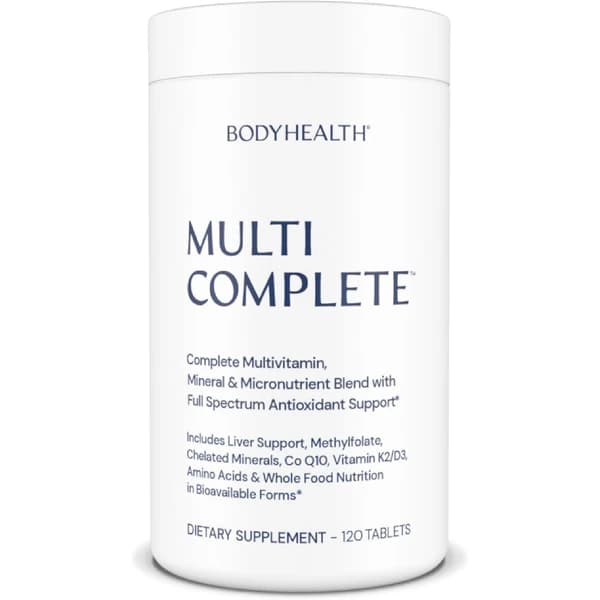
Best Overall: Thorne Basic Nutrients 2/Day
Thorne is the benchmark for bioavailability and third-party rigor. Basic Nutrients 2/Day is NSF Certified for Sport and uses highly bioavailable forms across the board: methylcobalamin (B12), methylfolate, magnesium bisglycinate, and vitamin D3. No iron (appropriate for males and most females who don't need supplemental iron), no unnecessary fillers.
Two capsules per day is all it takes — no bloated 6-pill protocol. For athletes who want a clean, clinically sound foundation, this is the easiest recommendation.
Amazon · Affiliate
Thorne Basic Nutrients 2/Day
4.8
NSF Certified multivitamin for athletes. Highly bioavailable forms of key vitamins and minerals.
$35–$45Check Price on Amazon
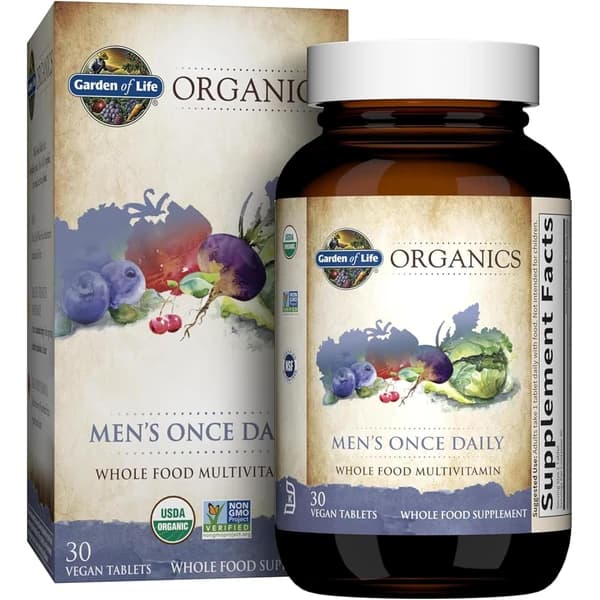
Best Whole-Food Option: Garden of Life Sport Multivitamin
Made from certified organic whole foods. Includes live probiotics, an antioxidant fruit blend, and all nutrients sourced from real food matrices — which may improve cofactor absorption for certain vitamins. NSF Certified for Sport.
The trade-off: doses of some individual nutrients are lower than Thorne's formulation, because whole-food concentrates have natural limits. For athletes who also want gut support and prefer food-based sourcing, Garden of Life is the best choice.
Amazon · Affiliate
Garden of Life Sport Multivitamin
4.6
Certified organic whole food multivitamin for athletes. Includes probiotics and antioxidants.
$30–$40Check Price on Amazon
The Case for Targeted Supplementation Over a Multivitamin
Here's the contrarian take: most athletes don't need a multivitamin — they need to fix three specific deficiencies.
Blood work consistently shows that the most impactful gaps in athlete populations are:
1. Vitamin D — Estimated 40–70% of athletes are deficient, particularly those training indoors. The RDA of 600–800 IU is insufficient to raise blood levels in deficient individuals. Most athletes need 2,000–5,000 IU daily to reach optimal 25-OH vitamin D levels (40–60 ng/mL). No multivitamin provides this dose.
2. Magnesium — Sweat losses during intense training can exceed 36mg per hour. Athletes in caloric restriction, high-carb diets, or heavy training are almost certainly depleted. Magnesium glycinate at 300–400mg before bed improves sleep quality and reduces muscle cramping within days.
3. Omega-3s — Not technically a multivitamin ingredient, but the most consistently evidence-backed supplement for athletic recovery. EPA+DHA at 2–3g daily reduces exercise-induced inflammation, supports muscle protein synthesis, and improves cardiovascular efficiency.
If you address these three deficiencies directly — through targeted supplements rather than a multi — you may capture most of the benefit at lower cost and with better dosing precision.
That said, a high-quality multivitamin from Thorne or Garden of Life simultaneously covers these gaps while providing a safety net for everything else. The question is whether you want to manage 3–4 individual products or simplify with one comprehensive formula.
Vitamin D3 — If You're Adding It Separately
Amazon · Affiliate
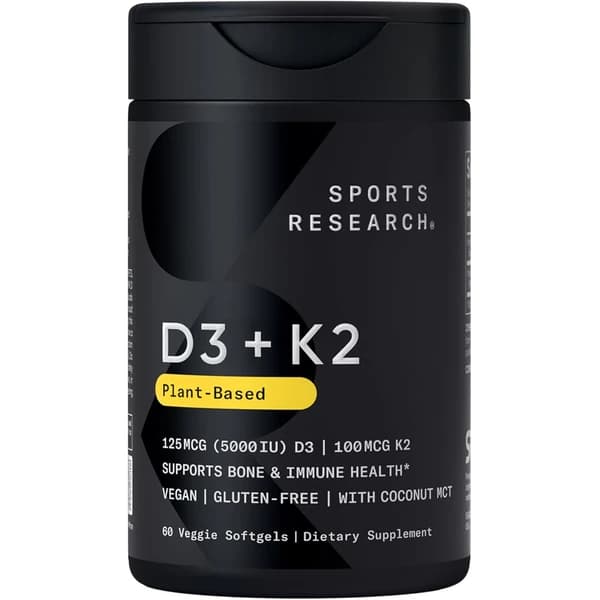
Sports Research Vitamin D3 + K2 (5000 IU)
4.7
Bioavailable D3 paired with K2 for calcium regulation. Supports bone density, immunity, and testosterone levels.
$15–$22Check Price on Amazon
Magnesium Glycinate — If You're Adding It Separately
Amazon · Affiliate
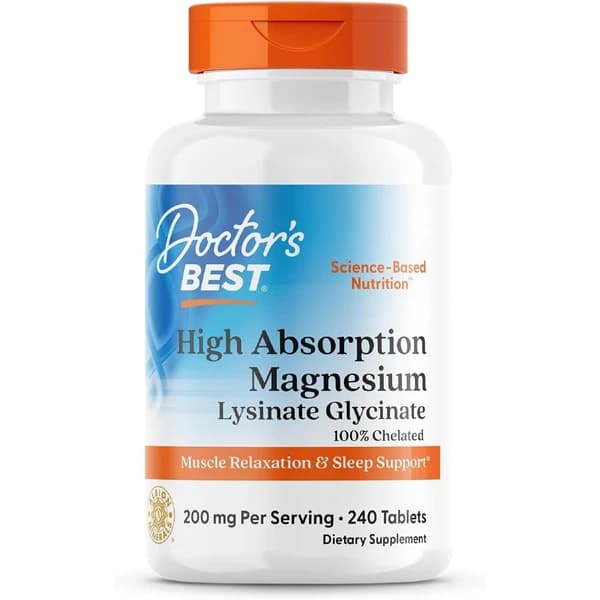
Doctor's Best High Absorption Magnesium Glycinate
4.7
Highly bioavailable magnesium chelate. Supports muscle relaxation, deep sleep, stress reduction, and recovery.
$12–$22Check Price on Amazon
Multivitamin Comparison: Top Products for Athletes
| Product | Form | 3rd-Party Certified | Key Standout Nutrients | Approx. Price | |---|---|---|---|---| | Thorne Basic Nutrients 2/Day | Capsule (2/day) | NSF Certified for Sport | Methylfolate, methylcobalamin, D3, magnesium bisglycinate | $40–$50/month | | Garden of Life Sport Multi | Capsule (4/day) | NSF Certified for Sport | Whole-food C, probiotics, organic fruit blend | $35–$45/month | | Sports Research Vitamin D3 | Softgel (1/day) | Third-party tested | D3 5,000 IU in coconut MCT oil for absorption | $15–$20/month | | Magnesium Glycinate (standalone) | Capsule (2/day) | Varies by brand | Chelated form, >35% absorption rate | $15–$25/month |
When to Take Your Multivitamin
- With food — fat-soluble vitamins (A, D, E, K) require dietary fat for absorption; taking with a meal containing fat meaningfully increases uptake
- In the morning — B vitamins are involved in energy metabolism; some athletes report difficulty sleeping if taken late
- Consistently — daily use matters far more than precise timing; a consistent habit beats perfect timing you skip
Nutrients to Be Careful With
- Iron — only supplement if blood tests confirm deficiency; excess iron generates free radicals, impairs zinc absorption, and accumulates in organs
- Fat-soluble vitamins (A, D, E, K) — unlike water-soluble vitamins, these accumulate to toxic levels with chronic over-supplementation; vitamin A toxicity is a real clinical concern
- Calcium — large standalone doses (500mg+) may interfere with magnesium and zinc absorption and have been associated with increased cardiovascular risk in some studies; dietary calcium from food is preferable
What Multivitamins Can't Do
A multivitamin won't compensate for a poor diet. Whole foods provide fiber, phytonutrients, polyphenols, and thousands of bioactive compounds that no supplement can replicate. The research on isolated micronutrients rarely matches the outcomes seen with whole-food sources.
Think of it as gap insurance — not a foundation. The foundation is food quality, sleep, and training consistency. The multivitamin makes sure micronutrient shortfalls aren't quietly limiting the results of everything else you're doing right.
Final Thoughts
For athletes who want one product that covers the bases without requiring them to track individual deficiencies, Thorne Basic Nutrients 2/Day is the gold standard. It's NSF certified, uses bioavailable forms across the board, and doesn't cut corners on formulation.
If whole-food sourcing matters to you and you want probiotic support alongside your micronutrients, Garden of Life Sport is the best alternative.
For anyone willing to go the targeted route: get blood work done, identify your actual gaps, and address vitamin D, magnesium, and omega-3s directly. This approach costs less per month and gives you more control over dosing.
Whatever you choose, the most important thing is consistent daily use combined with a diet that the multivitamin supplements — not replaces. Micronutrient sufficiency is invisible when you have it and quietly destructive when you don't.
Affiliate disclosure: Some links in this article are affiliate links. If you purchase through them, we may earn a small commission at no extra cost to you. We only recommend products we genuinely believe in.
About the author
Nathan reviews the research, tests the tools, and writes the guides at LeanBodyEngine — evidence-first, no sponsored content, no supplement shilling.
Related articles

Subscribe
Never miss a new article
Get an email whenever we publish a new fitness guide, supplement review, or workout plan. One short email per post — that's it.
Unsubscribe anytime. We only email when there's a new post.