
Best Creatine Supplements for Muscle Growth (2025)
Creatine is the most well-researched supplement in sports nutrition. Here's which form works best, how to take it, and our top product picks.
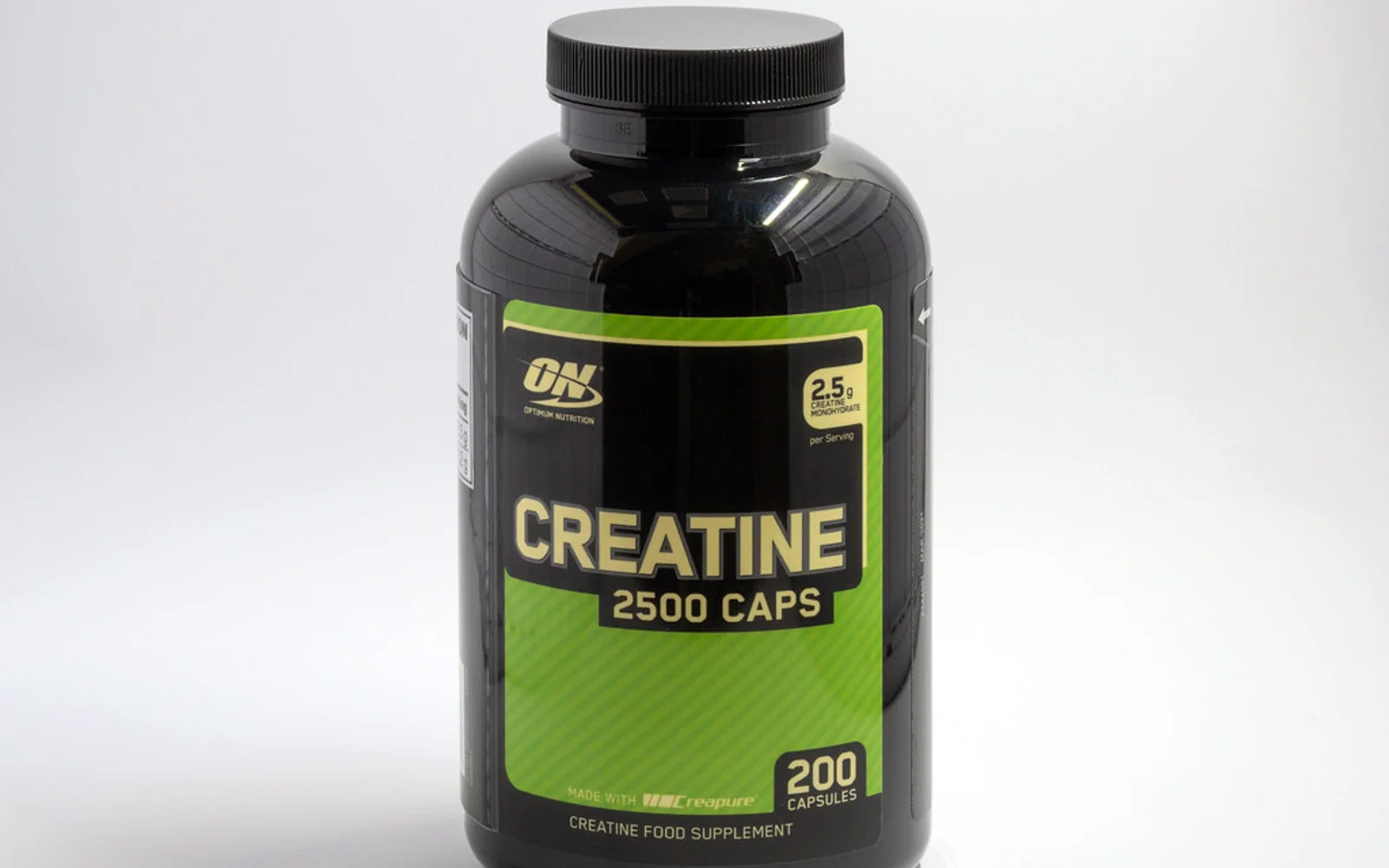
Creatine is the most studied supplement in sports nutrition history. Over 500 peer-reviewed studies confirm its safety and efficacy for improving strength, power output, and lean muscle mass. If you're not taking it, you're leaving performance on the table.
Key Takeaways
- Creatine monohydrate is the gold standard — no other form outperforms it in head-to-head trials
- Meta-analyses show a ~15% increase in training volume and 5–10% improvement in 1RM strength
- The standard maintenance dose is 3–5 g per day — a loading phase is optional, not required
- Full muscle saturation takes ~3–4 weeks at 5 g/day, or ~1 week with a 20 g/day loading protocol
- Vegetarians and vegans respond most dramatically due to lower baseline muscle creatine stores
- Long-term use (up to 5 years studied) shows no adverse effects on kidney or liver function in healthy individuals
What Is Creatine?
Creatine is a naturally occurring compound found in muscle cells. It helps produce ATP (adenosine triphosphate) — the primary energy currency for high-intensity exercise. Supplementing creatine increases your muscle phosphocreatine stores, allowing you to train harder before fatiguing.
The Proven Benefits
- Increased strength — meta-analyses show 5–10% improvement in 1RM strength
- More reps — enables 1–2 additional reps at submaximal loads
- Greater muscle mass — through improved training volume and cell volumization
- Faster recovery — reduces muscle cell damage and inflammation
- Cognitive benefits — emerging evidence for brain health and memory
Which Form of Creatine Is Best?
Creatine Forms Comparison
Not all creatine is created equal — or at least that's what supplement companies want you to believe. Here's how the major forms actually stack up:
| Form | Evidence Grade | Cost per Dose | Dose | Best For | Skip If | |---|---|---|---|---|---| | Monohydrate | A (500+ studies) | ~$0.05 | 3–5 g | Everyone | No reason to skip | | Micronized Monohydrate | A (same data) | ~$0.08 | 3–5 g | Those with GI sensitivity | Budget is tight | | HCl (Hydrochloride) | C (limited trials) | ~$0.40 | 1–2 g | Marketing claims | You want value | | Buffered (Kre-Alkalyn) | C (no advantage shown) | ~$0.50 | 1.5–3 g | Nothing specifically | Almost always | | Ethyl Ester | D (inferior absorption) | ~$0.35 | 3–5 g | Nothing | Always — avoid |
Verdict: Creatine monohydrate wins on every dimension that matters — evidence, cost, and efficacy. Don't let marketing fool you.
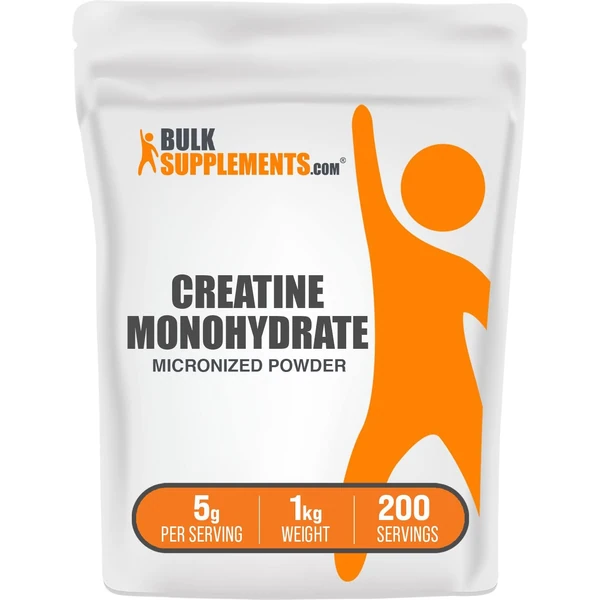
Our Top Pick: BulkSupplements Creatine Monohydrate
Pure, micronized creatine monohydrate with no fillers. Third-party lab tested. At this price per gram, it's hard to beat.
Amazon · Affiliate
BulkSupplements Creatine Monohydrate
4.7
Pure micronized creatine monohydrate. No fillers, no additives. Lab-tested for purity.
$20–$40Check Price on Amazon
The LBE Creatine Selection System
Choosing a creatine form doesn't need to be complicated. Use this three-question framework:
L — Lab Evidence Does this form have large, replicated, peer-reviewed trials behind it? Monohydrate: yes. Everything else: no.
B — Budget Reality Is there a meaningful cost premium? HCl, buffered, and ethyl ester variants cost 5–10x more per dose. That money is better spent on food.
E — Experience Sensitivity Do you have GI discomfort with regular monohydrate? If yes, step up to micronized monohydrate (finer particle size, same molecule). That's the only legitimate reason to pay slightly more.
Decision tree:
- Start with standard creatine monohydrate.
- If GI issues arise → switch to micronized monohydrate.
- If someone pitches you anything else → ask to see the head-to-head trial. There isn't one.
How to Take Creatine
Quick-Reference Dosing Cheat Sheet
| Protocol | Daily Dose | Duration to Saturation | Notes | |---|---|---|---| | Maintenance only | 3–5 g | ~3–4 weeks | Easiest; recommended for most | | Loading phase | 20 g (4 × 5 g) | ~5–7 days | Faster saturation, no long-term advantage | | Post-loading maintenance | 3–5 g | Already saturated | Continue indefinitely | | Higher body weight (>100 kg) | 5 g | ~4 weeks | Upper end of standard range | | Vegetarian/vegan | 5 g | May need less time | Lower baseline = faster apparent response |
Loading Phase (Optional)
Take 20 g per day (divided into 4 doses of 5 g) for 5–7 days. This saturates muscle stores faster.
Maintenance Phase
Take 3–5 g per day. This is all you need to maintain elevated creatine levels once saturated.
When to Take It
Timing doesn't matter much. Take it whenever it's convenient — with a meal is fine. Consistency is what matters.
Contrarian Take: The Loading Phase Is Oversold
The fitness industry treats the loading phase as gospel. Load for a week, they say — otherwise you're leaving gains on the table. The research tells a different story.
A 2003 study in the Journal of Strength and Conditioning Research (Hultman et al.) found that while loading reaches muscle saturation faster, total muscle creatine levels at 28 days are identical whether you loaded or went straight to 3–5 g/day. You reach the same endpoint — loading just gets you there in 1 week instead of 4.
For the vast majority of lifters, that three-week difference is irrelevant. You're not competing in 10 days. You're building a training habit over months. Starting with 5 g/day and skipping the bloating, GI discomfort, and expense of 20 g/day loading is the smarter default for most people.
Who should actually load: Competitive athletes with a specific event in 2–3 weeks who want maximum saturation quickly. Everyone else — skip it, stay consistent, get the same result.
Common Creatine Questions
Does it cause water retention? Creatine draws water into muscle cells (intracellular), which increases muscle fullness and size. This is a good thing. It does not cause bloating or subcutaneous water retention.
Is it safe long-term? Yes. Studies spanning up to 5 years show no negative effects on kidney or liver function in healthy individuals.
Do I need to cycle off it? No. Cycling creatine is not supported by research. You can take it continuously.
Will it work if I'm a vegetarian? Potentially more so. Vegetarians have lower baseline muscle creatine levels and tend to respond more dramatically to supplementation.
Who Shouldn't Take Creatine?
People with pre-existing kidney disease should consult a physician before supplementing. Everyone else — it's one of the safest supplements available.
Final Thoughts
Creatine monohydrate is the single most cost-effective supplement for athletic performance. It works, it's safe, it's cheap, and it's been proven in hundreds of studies. The data is unambiguous, the cost is negligible, and the only mistake you can make is overcomplicating it.
Take 5 g every day. Use monohydrate. Don't cycle it, don't load unless you have a reason to, and don't pay a premium for a form with no additional evidence behind it. That's the entire playbook.
Affiliate disclosure: Some links in this article are affiliate links. If you purchase through them, we may earn a small commission at no extra cost to you. We only recommend products we genuinely believe in.
Frequently asked
Questions people ask about this
Does creatine cause water retention?
Creatine draws water into muscle cells (intracellular), which increases muscle fullness and size. This is beneficial — it does not cause bloating or subcutaneous water retention that affects how you look.
Is creatine safe to take long-term?
Yes. Studies spanning up to 5 years show no adverse effects on kidney or liver function in healthy individuals. People with pre-existing kidney disease should consult a physician before supplementing.
Do I need to cycle off creatine?
No. Cycling creatine is not supported by research — you can take 3–5 g per day continuously without your body downregulating its own creatine production in any meaningful way.
Does creatine work for vegetarians?
Vegetarians often respond more dramatically to creatine supplementation because they have lower baseline muscle creatine stores. Dietary creatine comes primarily from red meat and fish, so plant-based eaters have more room to saturate.
When should I take creatine for best results?
Timing doesn't meaningfully matter — morning, pre-workout, post-workout, with food, or without. Consistency is what drives results. Take it at whatever time you'll reliably remember every day.
Which form of creatine is best?
Creatine monohydrate. Every other form (HCl, buffered, ethyl ester, kre-alkalyn) costs significantly more and shows no meaningful performance advantage over monohydrate in head-to-head research. Micronized monohydrate is the gold standard.
About the author
Nathan reviews the research, tests the tools, and writes the guides at LeanBodyEngine — evidence-first, no sponsored content, no supplement shilling.
Related articles

Subscribe
Never miss a new article
Get an email whenever we publish a new fitness guide, supplement review, or workout plan. One short email per post — that's it.
Unsubscribe anytime. We only email when there's a new post.