
Vitamin D and Athletic Performance: Why 80% of Gym-Goers Are Deficient
Most gym-goers are unknowingly vitamin D deficient. Learn how it impacts testosterone, muscle, and immunity — and how to fix it fast.
You could be training five days a week, hitting your protein targets, and getting eight hours of sleep — and still leaving serious gains on the table. One overlooked micronutrient quietly governs your testosterone production, muscle fiber function, immune resilience, and even your ability to recover between sessions.
That nutrient is vitamin D, and research suggests that roughly 80% of regular gym-goers are deficient in it.
Not slightly low. Clinically deficient — operating at levels that measurably impair the physiological processes that determine how much muscle you build, how fast you recover, and how often you get sick mid-training block.
This guide covers everything you need to know: the science behind vitamin D and athletic performance, why gym culture creates a perfect storm for deficiency, how to test and interpret your own blood levels, and exactly how to fix it with the right supplement stack.
Key Takeaways
- Vitamin D functions as a steroid hormone, not just a vitamin — it directly regulates hundreds of genes including those governing muscle protein synthesis and testosterone production
- Optimal blood levels for athletes are 40–60 ng/mL — significantly higher than the RDA-based "sufficient" threshold of 20 ng/mL
- Indoor training, sunscreen use, and northern latitude living create a triple threat that makes gym-goers among the most at-risk groups for deficiency
- Vitamin D3 is significantly more effective than D2 at raising and maintaining blood levels
- You must pair D3 with K2 to direct calcium into bones (not arteries), and with magnesium because your body literally cannot convert D3 without it
- A standard maintenance dose for athletes is 2,000–5,000 IU of D3 daily with food, though many benefit from higher therapeutic doses under medical guidance
What Vitamin D Actually Does (Beyond Bones)
Most people think of vitamin D as "the bone vitamin." That mental model is about 30 years out of date.
Vitamin D is a fat-soluble secosteroid — a hormone precursor that, once activated in the kidneys, functions almost identically to a steroid hormone. The activated form (1,25-dihydroxyvitamin D, or calcitriol) binds to vitamin D receptors (VDRs) found in virtually every tissue in the human body, including:
- Skeletal muscle fibers
- The testes (Leydig cells that produce testosterone)
- The brain and pituitary gland
- Immune cells (T-cells, B-cells, macrophages)
- The heart and vascular tissue
- Fat cells and the pancreas
When calcitriol docks at these receptors, it acts as a master regulator — switching genes on and off that govern everything from protein synthesis to inflammatory response to insulin sensitivity.
Muscle Function
Vitamin D receptors are expressed throughout skeletal muscle. Adequate vitamin D levels support:
- Fast-twitch (Type II) muscle fiber development — the fibers responsible for explosive power, sprinting, and heavy lifting
- Mitochondrial function within muscle cells, affecting endurance capacity and fatigue resistance
- Muscle protein synthesis rates, with some studies showing a 30–40% decline in muscle protein turnover when vitamin D is deficient
- Phosphocreatine resynthesis between sets, which directly affects how much work you can do in strength training sessions
A 2009 meta-analysis published in Medicine & Science in Sports & Exercise found that athletes supplementing with vitamin D showed statistically significant improvements in vertical jump height, sprint times, and strength output compared to placebo.
Testosterone Production
The link between vitamin D and testosterone is well-documented and mechanistically clear. Leydig cells in the testes express VDRs, and calcitriol directly stimulates the enzymatic pathways that convert cholesterol into testosterone.
A landmark randomized controlled trial published in Hormone and Metabolic Research (Pilz et al., 2011) supplemented 165 men with 3,332 IU of vitamin D3 daily for 12 months. The result: a 25.2% increase in total testosterone in the supplementation group versus no significant change in controls.
Men with sufficient vitamin D levels consistently show higher free and total testosterone concentrations across population-level studies. The relationship appears dose-dependent up to serum levels of around 50 ng/mL.
Immune Regulation
Vitamin D is arguably the most important micronutrient for immune system regulation. It:
- Stimulates the production of cathelicidin and defensins — antimicrobial peptides that represent your first line of defense against bacterial and viral infections
- Modulates the inflammatory response, reducing the risk of excessive inflammation that impairs recovery
- Enhances the function of natural killer (NK) cells, which identify and destroy virally infected cells
- Regulates T-regulatory cells, helping prevent the immune overreactions associated with autoimmune conditions
Athletes who train hard are in a state of transient immunosuppression after intense sessions — a window where upper respiratory infections are more likely. Low vitamin D dramatically widens that window.
Bone Density and Injury Prevention
The classic bone-health role remains important for athletes. Vitamin D facilitates calcium absorption in the intestines and regulates bone remodeling. Deficient athletes show higher rates of stress fractures, particularly in sports involving repetitive impact loading.
But the bone-density story is more nuanced than "calcium + D = strong bones." Without adequate K2 (discussed below), supplemental calcium directed by vitamin D can deposit in soft tissue and arteries rather than bone matrix — a risk that makes K2 pairing non-negotiable.
Why Athletes Are Especially at Risk
Vitamin D deficiency is widespread in the general population — estimates range from 40% to 80% depending on the cohort and the cutoff used. Among gym-goers specifically, several factors compound the risk.
The Indoor Training Paradox
The primary source of vitamin D isn't food — it's ultraviolet B (UVB) radiation from sunlight striking cholesterol in the skin and triggering its conversion to vitamin D3.
People who train consistently tend to spend enormous time indoors — at gyms, offices, and home. The person dedicated enough to train four days a week in a gym is also likely spending 8+ hours indoors at work. This behavioral pattern dramatically reduces sun exposure compared to an equivalent-activity outdoor lifestyle.
Sunscreen, Glass, and Latitude
Even outdoor sun exposure is less effective than most people assume:
- Sunscreen with SPF 30 blocks approximately 95–97% of UVB radiation, essentially eliminating vitamin D synthesis even during direct sun exposure
- Glass windows block 100% of UVB — sitting by a sunny window provides no vitamin D synthesis
- Latitude matters enormously: above roughly 35°N latitude (which includes most of the United States, all of Canada, and all of northern Europe), UVB radiation from October through March is insufficient for vitamin D synthesis regardless of sun exposure
If you live north of Charlotte, North Carolina, from November to March your skin synthesizes essentially no vitamin D from sunlight — period.
Training-Induced Vitamin D Demand
Heavy exercise increases the body's demand for vitamin D as it's consumed in enzymatic processes involved in muscle repair, immune modulation, and mitochondrial function. Elite athletes and heavy trainers effectively have a higher "baseline requirement" than sedentary individuals.
Research in military populations — a group with rigorous outdoor exposure — still finds high rates of deficiency, suggesting that training volume itself elevates requirements beyond what sun exposure can reliably meet.
Body Composition and Absorption
Vitamin D is fat-soluble, which means it's stored in adipose tissue. Counterintuitively, this creates a sequestration problem in individuals with higher body fat percentages — the vitamin D gets trapped in fat stores and isn't circulating in the bloodstream where it's needed. Leaner athletes generally maintain higher serum vitamin D levels per unit of sun exposure or supplemental intake.
The Science on D3 and Performance
Let's go deeper on the performance-specific research, because this is where the story becomes most compelling for athletes.
Strength and Power Output
A 2013 study published in the Journal of the International Society of Sports Nutrition examined D3 supplementation in college-aged men over eight weeks. The supplementation group (4,000 IU/day) showed significantly greater improvements in upper body strength, lower body power, and lean mass compared to placebo.
A systematic review in Nutrients (2017) examining 13 randomized controlled trials found that vitamin D supplementation improved muscular strength in subjects who were deficient at baseline, with the largest effects seen in subjects with the most severe deficiency.
Endurance and VO2max
Vitamin D influences mitochondrial density and oxygen-carrying capacity. Studies in cyclists and runners show positive correlations between serum vitamin D and VO2max — the gold-standard measure of aerobic capacity. One study in elite swimmers found that subjects in the highest vitamin D quartile had VO2max values averaging 12% higher than those in the lowest quartile.
Injury Prevention and Recovery
A 2016 study of NFL players found that those with serum vitamin D below 20 ng/mL had significantly higher rates of muscle injuries during the season — and those injuries took longer to heal. A separate analysis of NBA players found similar patterns, with deficient players missing more games due to soft tissue injuries.
The mechanism involves vitamin D's role in satellite cell activation — the precursor cells that repair muscle damage after training. Deficiency slows satellite cell response, extending the time between a training stimulus and full tissue repair.
Sleep Quality
There's emerging evidence that vitamin D influences sleep architecture — specifically the ratio of slow-wave sleep (the phase most critical for growth hormone release and tissue repair) to total sleep time. Athletes with corrected vitamin D status report improvements in sleep depth and next-day recovery quality.
How to Know If You're Deficient
Vitamin D Deficiency Self-Assessment Checklist
Before getting a blood test, run through this checklist. These are the most common signs of suboptimal vitamin D status. Check every item that applies:
Physical Signs
- [ ] Persistent muscle weakness or unusual fatigue during training that doesn't resolve with rest
- [ ] Bone or joint pain, especially in the back, hips, or legs
- [ ] Frequent muscle cramps, especially at night
- [ ] Slower than expected recovery between workouts
- [ ] Hair loss or thinning (not related to genetics)
Immune and Inflammatory
- [ ] Getting 3 or more colds or respiratory infections per year
- [ ] Slow wound healing
- [ ] Feeling run-down for extended periods after intense training blocks
Hormonal and Neurological
- [ ] Low energy or persistent fatigue not explained by sleep
- [ ] Mood changes, low motivation, or subclinical depression during low-sun months
- [ ] Reduced libido or low-normal testosterone range on blood work
Lifestyle Risk Factors
- [ ] You train primarily indoors at a gym
- [ ] You consistently wear sunscreen when outdoors
- [ ] You live above 35°N latitude (roughly north of Los Angeles or Atlanta)
- [ ] You work indoors during peak sunlight hours (10 AM – 2 PM)
- [ ] You have darker skin tone (higher melanin requires more UVB to synthesize equivalent D3)
- [ ] You follow a strict vegan diet (animal products are the primary dietary sources)
Scoring: If you checked 3 or more items, vitamin D deficiency is a plausible contributing factor to your performance and health. If you checked 5 or more, consider testing your blood levels a high priority.
The Definitive Test: 25(OH)D Blood Test
The only way to know your actual status is a blood test measuring serum 25-hydroxyvitamin D [also written as 25(OH)D]. This is a standard lab test available at any clinic or through mail-in services like Everlywell or LabCorp.
How to order it:
- Ask your primary care physician to add a "25-hydroxyvitamin D" or "vitamin D, 25-OH" panel to your next blood draw
- Order a home test kit through Everlywell (25(OH)D test, ~$49–69)
- Order directly through LabCorp or Quest Diagnostics without a physician referral (~$30–50 in most states)
Test in the late fall or early winter to capture your "worst-case" annual baseline, or any time symptoms suggest deficiency.
Optimal Blood Levels for Athletes
The vitamin D reference ranges printed on most lab reports are based on population averages and the minimum level to prevent rickets — not the optimal range for an athlete trying to maximize performance and body composition.
Vitamin D Blood Level Reference Table
| Classification | 25(OH)D Level | What It Means for Athletes | |---|---|---| | Severely Deficient | < 10 ng/mL | Significant impairment of muscle function, immunity, and bone metabolism. Immediate supplementation required. | | Deficient | 10–19 ng/mL | Measurably reduced performance, elevated injury risk, compromised immune function. The range where most "average" people fall. | | Insufficient | 20–29 ng/mL | The standard "normal" cutoff — insufficient for athletes. Suboptimal testosterone, muscle fiber recruitment, and recovery rates. | | Low-Normal | 30–39 ng/mL | Acceptable but not optimal for performance. Some studies show benefits from raising levels higher. | | Optimal for Athletes | 40–60 ng/mL | Peak range for performance, body composition, immune function, and hormonal output. Target for all serious athletes. | | High-Normal | 60–80 ng/mL | Generally safe; some practitioners target this range for high-demand athletes or those with inflammatory conditions. | | Potentially Toxic | > 100 ng/mL | Risk of hypercalcemia. This level is extremely difficult to reach through supplementation alone at reasonable doses; almost always requires mega-dosing (>10,000 IU/day for extended periods without monitoring). |
Key insight: The mainstream "sufficient" threshold of 20 ng/mL is roughly half the level most sports medicine physicians and performance-focused endocrinologists target for athletes. Being told your levels are "normal" at 22 ng/mL means you're operating at about 40% of your athletic potential for this micronutrient.
D3 vs. D2: Which Form Actually Works
There are two supplemental forms of vitamin D: ergocalciferol (D2), derived from irradiated plant matter and fungi, and cholecalciferol (D3), derived from animal sources (typically lanolin from sheep's wool) or lichen (for vegan formulations).
The research is not ambiguous here: D3 is substantially more effective at raising and maintaining serum 25(OH)D levels.
A 2012 meta-analysis published in the American Journal of Clinical Nutrition examined 10 randomized controlled trials directly comparing D2 and D3 supplementation. D3 was found to be approximately 87% more potent at raising serum vitamin D levels and produced levels that were 2–3 times higher over an extended supplementation period.
Why the difference? D3 has a longer half-life in circulation and binds more effectively to the carrier protein (vitamin D-binding protein) that transports it to target tissues. D2 is also more rapidly catabolized and excreted.
The only exception is strict vegans who cannot use the lanolin-derived D3 standard. In this case, lichen-derived D3 (available in specific vegan supplements) maintains equivalent potency to the standard D3 and is dramatically superior to D2. When reading vegan supplement labels, look for "cholecalciferol from lichen" — not "ergocalciferol."
Bottom line: Always choose D3. Never supplement with D2 unless specifically directed by a physician for a clinical reason.
Why You Must Pair D3 with K2 and Magnesium
The K2 Connection: Directing Calcium Where It Belongs
Here's the problem that most people don't know about: when vitamin D3 increases intestinal calcium absorption, that calcium needs to be directed into bone matrix. Without adequate vitamin K2, it doesn't go there — it circulates in the bloodstream and can deposit in soft tissues and arterial walls.
This is not a theoretical risk. Studies show that populations with high vitamin D intake but low vitamin K2 intake have higher rates of arterial calcification than populations with balanced intake. Vitamin K2 activates two critical proteins:
- Osteocalcin — the protein that binds calcium into bone matrix
- Matrix Gla Protein (MGP) — the most potent known inhibitor of vascular calcification
The active form you want is MK-7 (menaquinone-7), not MK-4. MK-7 has a dramatically longer half-life in the body (72+ hours vs. 1–2 hours for MK-4), meaning a single daily dose maintains consistent activation.
Standard dosing recommendation: 90–200 mcg of vitamin K2 (MK-7) for every 2,000–5,000 IU of vitamin D3.
The Magnesium Factor: Without It, D3 Doesn't Work
This is the most overlooked element of vitamin D supplementation, and it's critical.
Magnesium is a required cofactor for every enzymatic step that converts vitamin D3 into its active form. The conversion pathway looks like this:
Dietary/supplemental D3 → 25(OH)D (liver) → 1,25(OH)₂D / calcitriol (kidneys)
Both conversion steps require magnesium-dependent enzymes. If you're magnesium deficient — and approximately 50–60% of Americans are — supplementing with vitamin D3 without correcting magnesium deficiency is like pouring fuel into a car with a broken fuel pump.
Worse, high-dose vitamin D supplementation without adequate magnesium can actually deplete magnesium stores further, as the activation process consumes it.
Magnesium also directly supports athletic performance through completely independent pathways:
- Muscle relaxation and prevention of cramps
- Deep sleep and growth hormone release
- ATP production (every ATP molecule is bound to magnesium)
- Insulin sensitivity and glucose metabolism
The most bioavailable form for supplementation is magnesium glycinate — absorbed at roughly 40% compared to 4% for the cheaper magnesium oxide found in most drugstore products. Standard dosing: 200–400 mg elemental magnesium as glycinate, taken at night.

Amazon · Affiliate
Doctor's Best High Absorption Magnesium Glycinate
4.7
Highly bioavailable magnesium chelate. Supports muscle relaxation, deep sleep, stress reduction, and recovery.
$12–$22Check Price on Amazon
Dosage Guidelines
Vitamin D dosage is more nuanced than most supplement recommendations because it's genuinely dependent on your starting blood level, body weight, and individual absorption efficiency.
General Supplementation Guidelines
Maintenance (for those in the 30–50 ng/mL range):
- 1,000–2,000 IU D3 daily
Standard athlete protocol (targeting 40–60 ng/mL):
- 2,000–5,000 IU D3 daily
- This is the dose range most appropriate for the average gym-goer
Correction protocol (for those below 20 ng/mL):
- 5,000–10,000 IU D3 daily for 8–12 weeks, then retest and drop to maintenance
- Some physicians prescribe 50,000 IU once weekly for 8 weeks for severe deficiency
Important: If supplementing above 5,000 IU daily for extended periods, retest serum levels every 3–6 months. Toxicity from supplementation is rare but possible at sustained mega-doses.
Timing and Absorption
- Take D3 with your largest meal of the day — the fat content significantly increases absorption (vitamin D is fat-soluble)
- Alternatively, take with a specific source of healthy fat (fish oil, avocado, olive oil)
- Morning or midday dosing is preferred; some people report sleep disruption when taking D3 at night (though this is individual)
Pairing Summary
| Supplement | Dose | Form | Timing | |---|---|---|---| | Vitamin D3 | 2,000–5,000 IU | Cholecalciferol | With largest meal | | Vitamin K2 | 100–200 mcg | MK-7 | With D3 (same meal) | | Magnesium | 200–400 mg | Glycinate | Evening / before bed |
Our Supplement Recommendations
Our Recommendation: Sports Research Vitamin D3 + K2
For most people, a dedicated D3+K2 product is the most efficient way to cover the two most critical co-dependent nutrients in one daily capsule. Sports Research has become the gold standard in this category for good reason.
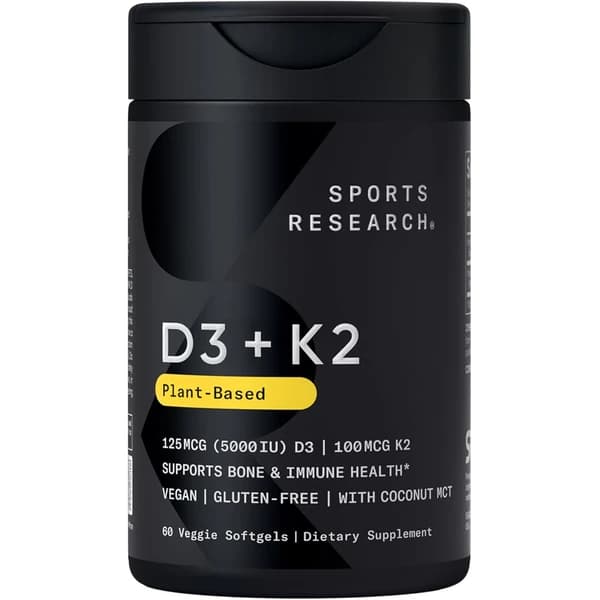
Sports Research Vitamin D3+K2 delivers 5,000 IU of cholecalciferol (D3) paired with 100 mcg of MK-7 vitamin K2 in a single softgel. The D3 is suspended in cold-pressed organic coconut oil, which significantly enhances absorption compared to dry powder capsules. The K2 form is MK-7 sourced from fermented chickpeas, with the longer half-life needed for consistent activation.
This product has accumulated over 60,000 reviews on Amazon with a 4.7-star rating — exceptional for a supplement. The combination format is considerably more cost-effective than buying D3 and K2 separately.
At $15–22 for a 360-day supply (at the 5,000 IU dose level), this is one of the highest-value supplements you can buy.
Amazon · Affiliate
Sports Research Vitamin D3 + K2 (5000 IU)
4.7
Bioavailable D3 paired with K2 for calcium regulation. Supports bone density, immunity, and testosterone levels.
$15–$22Check Price on Amazon
Best All-in-One Alternative: Thorne Basic Nutrients 2/Day
If you want to consolidate your entire micronutrient foundation into a single product — rather than building individual supplement stacks — Thorne's Basic Nutrients 2/Day is the best multivitamin available for athletes.
What it covers that's directly relevant to this article:
- Vitamin D3 (1,000 IU — you may still want to add standalone D3 to reach the 2,000–5,000 IU athlete target)
- Vitamin K2 (MK-4 form, 200 mcg)
- Magnesium (50 mg as bisglycinate — likely still supplement separately for full dose)
- Zinc (15 mg as zinc bisglycinate — the form required for testosterone synthesis)
- B vitamins in methylated forms (methylfolate and methylcobalamin)
- Vitamin C and full antioxidant coverage
Why Thorne is the premium pick: It's NSF Certified for Sport — independently tested and verified to be free from banned substances, heavy metals, and label inaccuracies. For competitive athletes, this certification matters. For everyone else, it's simply proof of quality assurance that most supplement brands don't bother with.
At $35–45 per month, Thorne costs more than Sports Research D3 alone, but covers the entire athlete micronutrient landscape in two capsules per day.
Budget vs. Premium Decision:
- Budget pick: Sports Research D3+K2 ($15–22) + Doctor's Best Magnesium Glycinate ($12–22) = full D3 stack for ~$27–44/month
- Premium pick: Thorne Basic Nutrients 2/Day ($35–45/month) consolidates nearly everything, with possible D3 top-up
Amazon · Affiliate
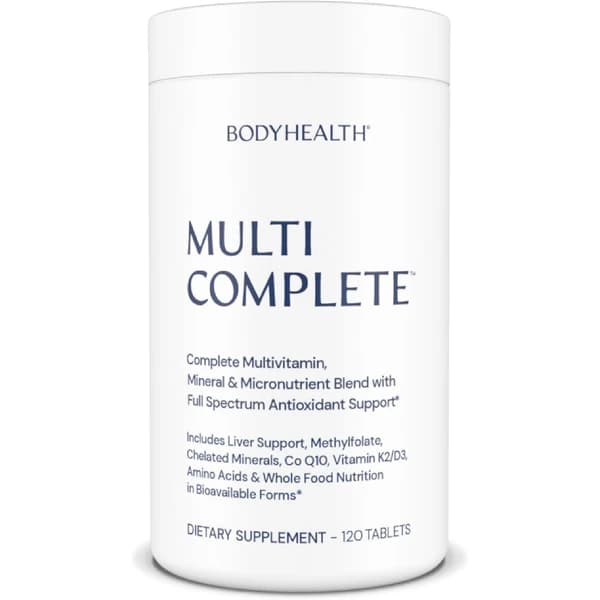
Thorne Basic Nutrients 2/Day
4.8
NSF Certified multivitamin for athletes. Highly bioavailable forms of key vitamins and minerals.
$35–$45Check Price on Amazon
The Anti-Inflammation Stack: Why Fish Oil Pairs with Vitamin D
Vitamin D and omega-3 fatty acids work synergistically through overlapping but complementary anti-inflammatory mechanisms.
Vitamin D modulates the immune system at the cellular signaling level, regulating which inflammatory genes are expressed. Omega-3 fatty acids (EPA and DHA) work at the lipid mediator level — literally forming the building blocks of anti-inflammatory compounds called resolvins and protectins that turn off acute inflammation after training.
Together, they address inflammation from two different angles:
- D3 → regulates which inflammatory pathways turn on
- Omega-3s → produce the molecules that turn those pathways off
Research from Harvard's VITAL study — the largest D3/omega-3 supplementation trial ever conducted — found that combining both supplements produced synergistic reductions in inflammatory markers beyond what either achieved alone.
For athletes, the practical implication is faster recovery between sessions, less baseline inflammation, and potentially a wider training adaptation window.
Nordic Naturals Ultimate Omega provides 1,280 mg of EPA+DHA per serving in the triglyceride form (the most bioavailable molecular form, versus ethyl ester form used in many cheaper brands). Third-party tested for oxidation, purity, and potency. At 4.7 stars with extensive independent verification, this is the go-to recommendation in the fish oil category.

Amazon · Affiliate
Nordic Naturals Ultimate Omega
4.7
1,280mg of EPA+DHA per serving. Third-party tested for purity and freshness. Reduces inflammation and supports heart health.
$30–$55Check Price on Amazon
The Complete Athlete Stack
Here's how all four recommended supplements fit together as a comprehensive micronutrient foundation for performance athletes.
Complete Athlete Micronutrient Stack Comparison
| Supplement | Primary Role | Secondary Benefits | Best For | Monthly Cost | |---|---|---|---|---| | Sports Research D3+K2 | Testosterone, muscle function, immunity | Bone density, mood, sleep | Budget-focused athletes who want targeted D3 | $1–2/mo | | Doctor's Best Magnesium Glycinate | D3 conversion cofactor | Sleep quality, muscle relaxation, stress | Anyone supplementing D3; athletes with poor sleep or cramps | $1–2/mo | | Nordic Naturals Ultimate Omega | Anti-inflammatory recovery | Heart health, brain function, mood | Athletes training 4+ days/week; anyone with joint soreness | $1.50–2.50/day | | Thorne Basic Nutrients 2/Day | Complete micronutrient coverage | Bioavailable forms of all key vitamins | Athletes wanting single-product simplicity with NSF certification | $1.20–1.50/day |
How to Layer the Stack
Minimum Effective Stack (Budget):
- Sports Research D3+K2 — daily with largest meal
- Doctor's Best Magnesium Glycinate — nightly before bed
Total: ~$25–45/month. Addresses the most common deficiencies directly tied to athletic performance.
Complete Performance Stack:
- Sports Research D3+K2 or Thorne multi (choose one as your D3 base)
- Doctor's Best Magnesium Glycinate (nightly)
- Nordic Naturals Ultimate Omega (with meals, alongside D3)
Total: ~$45–75/month. Covers vitamin D optimization, magnesium repletion, K2 co-factor, and the synergistic omega-3 anti-inflammatory layer.
Elite Stack (if budget allows):
- Thorne Basic Nutrients 2/Day (morning) — full multi coverage
- Sports Research D3+K2 (additional D3 top-up if needed based on blood test)
- Nordic Naturals Ultimate Omega (with meals)
- Doctor's Best Magnesium Glycinate (evening)
This combination gives you NSF-certified multi coverage, optimized D3 dosing, K2 in two forms, full magnesium repletion, and EPA+DHA synergy.
What This Stack Doesn't Replace
No supplement stack replaces:
- Adequate sunlight exposure when possible (aim for 10–20 minutes of midday sun on arms/legs, without sunscreen, 3–4x weekly during summer months)
- A whole-foods diet rich in wild-caught fatty fish, eggs, and organ meats (the few meaningful dietary sources of vitamin D and omega-3s)
- Regular blood work to confirm your levels are actually moving toward the 40–60 ng/mL target
Common Questions
Can I get enough vitamin D from food alone?
No. The dietary sources are limited: wild-caught salmon (~600–1,000 IU per 3.5 oz), canned tuna (~150 IU), egg yolks (~40 IU each), fortified dairy (~100 IU per cup). To reach 5,000 IU from food alone, you'd need to eat roughly 5 servings of wild salmon daily. Food contributes marginally; sun and supplementation carry the load.
What time of day should I take vitamin D3?
With your largest meal — typically lunch or dinner. The fat content in the meal enhances absorption by approximately 50% compared to fasting intake. Some people report improved sleep by avoiding D3 in the evening, though this is individual. Consistency of timing matters more than exact timing.
How long before I see results?
Blood levels respond within 4–6 weeks of consistent supplementation. Performance effects — if deficiency was significant — may be noticeable within 6–12 weeks. Testosterone and hormonal markers typically show meaningful changes at the 3-month mark. Retest at 3 months to confirm you've reached the target range.
Is vitamin D toxicity a real concern?
At doses under 10,000 IU/day, toxicity is extremely rare in adults without underlying conditions. Toxicity (hypercalcemia) requires sustained high-dose supplementation over months without monitoring. The risk-benefit ratio at 2,000–5,000 IU/day is overwhelmingly favorable given the prevalence of deficiency and the cost of underperformance.
Does body weight affect how much I need?
Yes. Vitamin D distributes into adipose tissue, and larger individuals generally require higher doses to achieve equivalent serum levels. As a rough guideline: add approximately 1,000 IU for every 50 lbs above 150 lbs body weight when estimating baseline needs. Retest to confirm.
Final Thoughts
Vitamin D deficiency is the most impactful, most correctable, and most ignored performance variable in gym culture. The irony is painful: the more dedicated you are to training — the more time you spend in the gym, the more you cover up for outdoor training, the more you optimize your diet without thinking about micronutrients — the more likely you are to be deficient.
The fix is straightforward and inexpensive. A bottle of Sports Research D3+K2 and Doctor's Best Magnesium Glycinate costs less per month than a single post-workout meal. Add Nordic Naturals omega-3 for the anti-inflammatory synergy, and you have the foundation of a supplement stack that actually addresses a real, measurable gap in most athletes' physiology.
Get your blood tested. Target 40–60 ng/mL. Take D3 with K2 and magnesium. Retest in three months.
If your gains have stalled, your recovery feels sluggish, or you keep getting sick mid-training block — there's a strong chance you've been overlooking the one hormone-vitamin that sits at the intersection of all three.
Affiliate disclosure: Some links in this article are affiliate links. If you purchase through them, we may earn a small commission at no extra cost to you. We only recommend products we genuinely believe in.
About the author
Nathan reviews the research, tests the tools, and writes the guides at LeanBodyEngine — evidence-first, no sponsored content, no supplement shilling.
Related articles


Subscribe
Never miss a new article
Get an email whenever we publish a new fitness guide, supplement review, or workout plan. One short email per post — that's it.
Unsubscribe anytime. We only email when there's a new post.