
Creatine Monohydrate Review: Why It's Still the #1 Strength Supplement in 2026
An honest creatine monohydrate review — dosage, timing, who benefits, side effects, and why newer forms like HCl haven't beaten monohydrate.
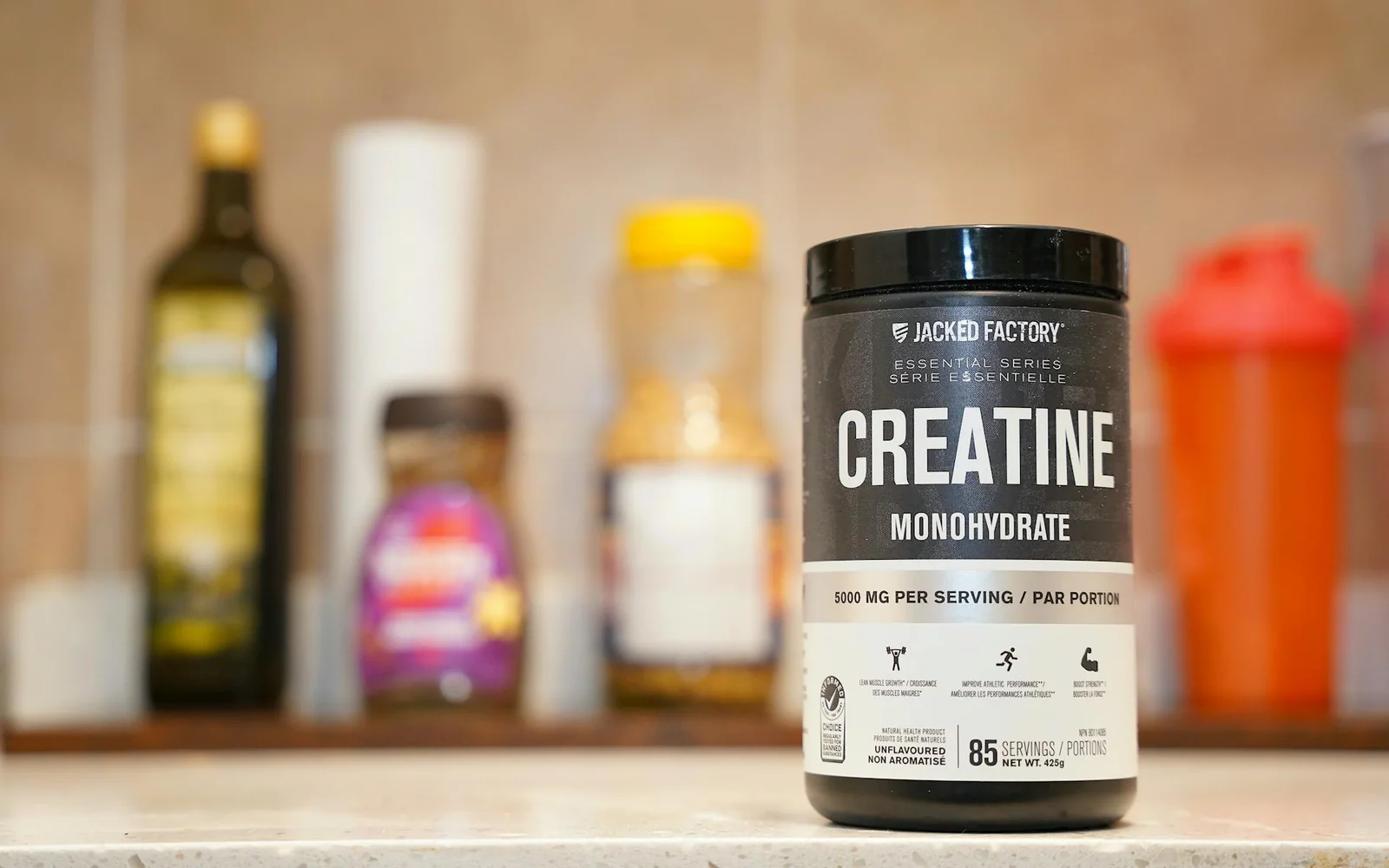
Creatine Monohydrate Review: Why It's Still the #1 Strength Supplement in 2026
Walk into any supplement shop in 2026 and you'll see shelves crowded with creatine HCl, kre-alkalyn, buffered creatine, liquid creatine, and whatever proprietary blend the latest influencer is pushing. This creatine monohydrate review exists because, despite all the marketing noise, the cheapest, oldest, and most researched form of creatine is still winning on every metric that actually matters. If you're new to lifting and trying to figure out which supplement deserves a spot in your routine, the answer hasn't really changed in 30 years — it just keeps getting cheaper.
The goal here is to give you an honest, beginner-friendly breakdown without the fitness-bro hype or the "pharmaceutical grade" snake oil. We'll cover what creatine actually does, how to dose it, why the expensive alternatives underperform in head-to-head trials, what side effects to realistically expect, and who should skip it entirely.
Key Takeaways
- Creatine monohydrate is backed by 200+ controlled trials — more than any other performance supplement
- Meta-analysis data shows an average ~15% increase in training volume when combined with resistance training
- A standard 3–5 g daily dose fully saturates muscle stores in 3–4 weeks without a loading phase
- Loading (20 g/day for 5–7 days) only speeds saturation by about 2 weeks — the end result is identical
- Newer forms like HCl and kre-alkalyn cost 3–5x more per serving while matching, not beating, monohydrate in head-to-head trials
- Expect 2–4 lb of intramuscular water weight in the first few weeks — this is normal and not subcutaneous bloat
Quick Verdict
Rating: 4.8 / 5
Creatine monohydrate is the single most evidence-backed performance supplement on the market. It's safe, affordable (often under $0.15 per serving), tasteless when micronized, and delivers measurable strength and muscle gains within 4–8 weeks of consistent use. The only reasons we don't give it a flat 5/5 are the short-term water retention that throws off some beginners, and mild GI discomfort that affects a small percentage of users at higher doses. Other than that, this is the rare supplement where the science, the price, and the real-world results all point in the same direction.
- Best for: Strength training, power sports, anyone trying to build muscle on a budget
- Skip if: You have existing kidney disease or you expect it to work without consistent training
- Cost-to-benefit: Elite. Nothing else in the supplement aisle comes close.
How Creatine Actually Works
Your muscles use a molecule called ATP (adenosine triphosphate) as their primary fuel for short, explosive efforts — think the first 10 seconds of a heavy set or sprint. When ATP is burned, it becomes ADP, and your body has to regenerate it to keep going. Creatine's job, stored as phosphocreatine in muscle tissue, is to donate a phosphate group and speed that regeneration.
More phosphocreatine in the tank means more reps before failure, more power per rep, and faster recovery between sets. The catch: most people only hit roughly 60–80% of their natural phosphocreatine storage capacity from diet alone (primarily red meat and fish). Supplementing with creatine monohydrate saturates those stores to 100%, which is where the performance gains come from.
A 2021 meta-analysis in the Journal of the International Society of Sports Nutrition pooled data from over 200 controlled trials and found that creatine supplementation combined with resistance training produced, on average, a ~15% increase in training volume (total weight moved across a session) compared with placebo. That's not a marketing number — that's decades of independent research converging on the same finding.
Dosing: How Much and When
This is where most beginners overcomplicate things. The evidence-based protocol is genuinely boring:
- Daily dose: 3–5 grams per day, every day, forever (or for as long as you're training).
- Loading phase: Unnecessary. The old "20g per day for 5–7 days" loading protocol saturates your muscles about 2 weeks faster, but a standard 3–5g daily dose gets you to the same place by week 3–4 without the GI distress.
- Timing: Doesn't meaningfully matter. Morning, pre-workout, post-workout, with food, without food — pick whatever you'll actually remember. Consistency beats timing.
- Cycling: Not needed. Your body doesn't downregulate creatine production in any clinically meaningful way from chronic supplementation.
A small nuance: taking creatine with carbs or a protein-containing meal can slightly improve uptake via insulin response, but the effect is marginal. If you eat in the next couple of hours, you've covered it.
Monohydrate vs HCl, Kre-Alkalyn, HMB, and the Rest
Here's where we debunk the shelf full of expensive alternatives marketed as "next generation" creatine.
Creatine HCl is creatine bonded with hydrochloric acid. The pitch is "better solubility, smaller dose, no bloating." The reality: when researchers compare equivalent doses of HCl and monohydrate head-to-head for strength and lean mass outcomes, they consistently find no meaningful difference. You're paying 3–5x more per serving for marketing copy.
Kre-Alkalyn (buffered creatine) claims its higher pH prevents breakdown into creatinine in the stomach. A 2012 randomized trial published in the Journal of the International Society of Sports Nutrition directly compared kre-alkalyn to monohydrate over 28 days. Result: monohydrate produced equal or greater gains in strength, lean mass, and muscle creatine content — at a fraction of the cost.
HMB (beta-hydroxy beta-methylbutyrate) is sometimes marketed alongside creatine, but it's a different compound entirely. The evidence for HMB in trained lifters is mixed at best and its effect size is far smaller than creatine's.
Liquid creatine and creatine ethyl ester are actively worse — both degrade into creatinine (a useless byproduct) more quickly than monohydrate.
The bottom line: every "upgraded" form of creatine is trying to solve problems that monohydrate doesn't really have. Micronized monohydrate mixes cleanly in water, absorbs almost completely, and has three decades of safety data behind it. Buy the plain white powder.
Creatine Form Comparison: Which to Choose
| Creatine Form | Evidence Quality | Cost vs. Monohydrate | Best Use Case | Verdict | |---|---|---|---|---| | Monohydrate | Highest (200+ trials) | Baseline (<$0.15/serving) | All goals — strength, power, muscle | Best overall | | Micronized Monohydrate | Highest (same molecule) | Slightly higher | Anyone who dislikes mixing | Best for mixability | | Creatine HCl | Moderate | 3–5x more | Sensitive stomachs (marginal benefit) | Overpriced | | Kre-Alkalyn | Moderate | 3–5x more | None vs. monohydrate | Overpriced | | Creatine Ethyl Ester | Low | 2–4x more | None — degrades to creatinine | Avoid | | Liquid Creatine | Low | 2–4x more | None — pre-degraded in solution | Avoid | | HMB | Low (in trained athletes) | 4–6x more | Untrained beginners only | Skip |
Side Effects: What's Real, What's Myth
Let's be honest about trade-offs, because a fair creatine monohydrate review shouldn't pretend there are none.
Water weight (real, temporary, misunderstood): Creatine pulls water into your muscle cells, not under your skin. Expect 2–4 pounds of scale weight in the first few weeks. This is intramuscular hydration, not bloat — your muscles will actually look slightly fuller. If you're weight-class-sensitive (wrestling, MMA), factor it in. Otherwise, ignore the scale for a month.
GI discomfort (real, dose-dependent): Roughly 5–10% of users report mild stomach upset, especially when loading or taking more than 5g at once. Fix: split into two 2–3g doses or take it with food.
Kidney damage (myth, with one exception): Decades of research on healthy adults — including long-term studies up to 5 years — have found no adverse effects on kidney function. The one exception: if you have pre-existing kidney disease, talk to a doctor before supplementing anything.
Hair loss (extremely weak evidence): One 2009 rugby study showed an increase in DHT, a hormone associated with male-pattern baldness. No follow-up study has replicated the finding, and no study has directly shown hair loss from creatine. If you're already genetically predisposed and paranoid, it's a fair thing to monitor, but the panic is overblown.
Who It's For (and Who Should Skip)
Strong match:
- Beginners lifting 2+ times per week who want to accelerate their first 6 months of gains
- Intermediate and advanced lifters looking for an extra 5–15% on their work sets
- Vegetarians and vegans (who have lower baseline muscle creatine stores)
- Anyone in power sports, sprinting, or combat sports
Probably skip:
- Endurance-only athletes (marathon runners, cyclists) — the performance benefit is minimal for long-duration, low-power efforts, and you probably don't want the extra water weight
- Anyone with diagnosed kidney disease
- People who aren't actually training consistently — creatine amplifies the results of hard work; it doesn't replace it
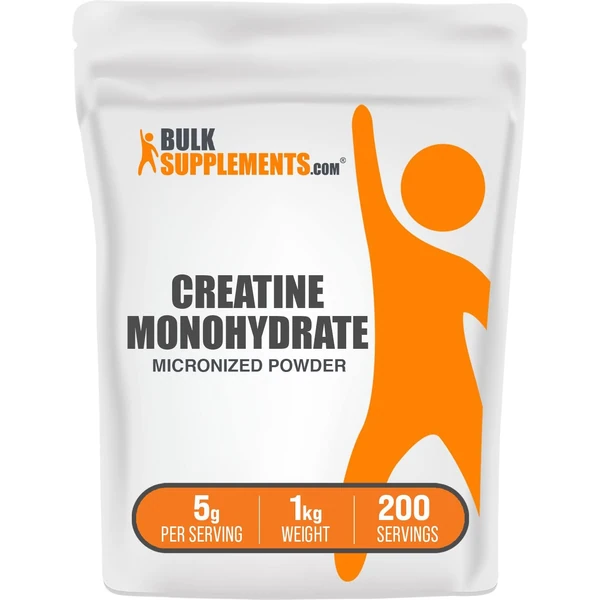
Amazon · Affiliate
BulkSupplements Creatine Monohydrate
4.7
Pure micronized creatine monohydrate. No fillers, no additives. Lab-tested for purity.
$20–$40Check Price on Amazon
Pairing Creatine with Protein
Creatine gives your muscles more short-term fuel. Protein gives them the raw material to repair and grow after you've used that fuel. These two work on entirely different mechanisms, which is exactly why stacking them is so effective — and why this is where most beginner supplement routines should start and stop.
A reasonable beginner protocol: 3–5g of creatine monohydrate daily, plus 0.7–1.0 grams of protein per pound of bodyweight spread across 3–4 meals. If your whole-food protein intake is falling short (and for most beginners, it is), a quality whey protein fills the gap without overhauling your diet. Whey is particularly useful post-workout because of its fast absorption and high leucine content, which is the amino acid most directly responsible for triggering muscle protein synthesis.
You don't need to take creatine and whey together, but mixing them in the same post-workout shake is convenient and there's no downside to doing so. Both dissolve well in water or milk, and the combo covers the two most important supplement bases a beginner will ever need.
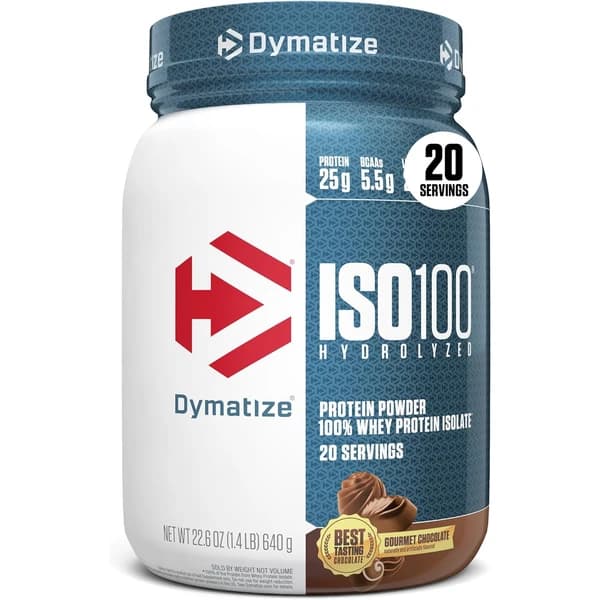
Amazon · Affiliate
Dymatize ISO100 Whey Protein Isolate
4.7
Fast-absorbing whey isolate with 25g protein and under 1g of fat and sugar per serving. Great for post-workout.
$35–$60Check Price on Amazon
Final Thoughts
If you're going to buy one supplement to support your training in 2026, creatine monohydrate is still the obvious pick — not because it's trendy, but because the evidence has stayed boringly consistent for 30 years while every competing product has come and gone. It's cheap, safe, deeply researched, and genuinely effective when paired with consistent resistance training.
Skip the fancy forms. Skip the loading phase if you're not in a rush. Skip cycling. Just take 3–5g a day, train hard, eat enough protein, and give it 6–8 weeks before you judge the results.
Start with a tub of plain micronized monohydrate and a solid whey protein, and you've already built a supplement stack that outperforms 95% of what's on the shelf — at a fraction of the price. That's the whole game.
Affiliate disclosure: Some links in this article are affiliate links. If you purchase through them, we may earn a small commission at no extra cost to you. We only recommend products we genuinely believe in.
Frequently asked
Questions people ask about this
Do I need to do a loading phase with creatine?
No. A standard 3–5 g daily dose reaches full muscle saturation in 3–4 weeks, versus about 1 week with a 20 g/day loading phase — the end result is identical. Skipping the load also avoids the mild GI discomfort some users experience at higher doses.
Does creatine cause kidney damage?
Not in healthy adults. Long-term studies up to 5 years have found no adverse effects on kidney function in individuals without pre-existing kidney disease. If you have diagnosed kidney issues, talk to a physician before supplementing anything.
Is creatine monohydrate better than creatine HCl or kre-alkalyn?
Yes, based on the research. When newer forms are tested head-to-head against monohydrate at equivalent doses, they match — but never beat — monohydrate on strength, lean mass, and muscle creatine content. Given monohydrate costs 3–5x less, it's the clear value pick.
Why do I gain 2–4 pounds when I start creatine?
Creatine pulls water into your muscle cells, which shows up on the scale as a short-term 2–4 lb gain. This is intramuscular hydration, not subcutaneous bloat — your muscles will look slightly fuller, not softer. The effect plateaus within the first few weeks.
Does creatine cause hair loss?
The evidence is very weak. One 2009 rugby study noted an increase in DHT (a hormone associated with male-pattern baldness), but no follow-up study has replicated that finding and no study has directly shown creatine causing hair loss. If you're genetically predisposed and concerned, it's reasonable to monitor — but the panic is not supported by the research.
Can I skip creatine on rest days?
No. Creatine works by saturating muscle stores over time, not by providing a pre-workout boost. Take 3–5 g every day, including rest days, to keep stores topped off. Timing relative to your workout doesn't meaningfully change outcomes.
About the author
Nathan reviews the research, tests the tools, and writes the guides at LeanBodyEngine — evidence-first, no sponsored content, no supplement shilling.
Related articles


Subscribe
Never miss a new article
Get an email whenever we publish a new fitness guide, supplement review, or workout plan. One short email per post — that's it.
Unsubscribe anytime. We only email when there's a new post.