
NMN vs NR: What the NAD+ Longevity Research Actually Shows
NMN and NR have generated billions in sales on Sinclair research. Here is what the actual human clinical trials show and where the evidence runs out.
Here is the fact that the NMN industry does not want to lead with: NAD+ levels in your blood do increase meaningfully when you take NMN or NR. That part is well established across multiple randomized, controlled human trials. A 60-day trial out of China showed blood NAD+ rising significantly in all treated groups at doses of 300 mg, 600 mg, and 900 mg daily. An early NIH-sponsored NR trial demonstrated roughly a doubling of whole-blood NAD+ after two weeks of supplementation.
So the molecule works — biochemically, at least.
What is emphatically not established is whether that increase in circulating NAD+ translates into the anti-aging, performance-boosting, lifespan-extending effects you are probably imagining when you hand over $60 to $120 for a monthly supply. That is a different question entirely, and the honest answer — after reviewing every significant human trial published between 2020 and 2025 — is that we simply do not have the long-term human data to confirm it.
This is the gap the supplement industry is quietly exploiting. And it is worth understanding exactly where the science ends and the salesmanship begins.
Key Takeaways
- Human trials confirm oral NMN doses of 300–900 mg/day reliably raise blood NAD+ levels; an early NIH-sponsored NR trial showed roughly a doubling of whole-blood NAD+ after just two weeks.
- Blood NAD+ rising does not equal tissue NAD+ rising — the landmark Yoshino 2021 Science paper improved muscle insulin sensitivity without detecting any increase in muscle NAD+, meaning the mechanism is more complex than the marketing suggests.
- A 2024 meta-analysis of 10 NMN RCTs (n = 437) found non-significant improvements in physical performance overall, and concluded that "an exaggeration of the benefits of NMN supplementation may exist in the field."
- NR and NMN produce equivalent evidence quality for healthy adults; NR costs ~$40–80/month versus ~$60–120/month for NMN, and NR carries clearer FDA regulatory standing (GRAS status via TruNiagen).
- The strongest human signals exist for specific populations: the NICE trial showed meaningful walking distance improvement in peripheral artery disease patients on NR, and Yoshino 2021 showed insulin sensitivity gains in middle-aged adults with overweight.
- No human trial has run long enough to measure hard longevity endpoints (cardiovascular events, cognitive decline, all-cause mortality) — every positive result to date is a surrogate biomarker or short-duration functional outcome.
Why NAD+ Matters: The Biology Without the Hype
To evaluate the claims around NMN and NR intelligently, you need to understand what NAD+ actually does and why its decline with age is a legitimate scientific concern — not just a marketing hook.
NAD+ (nicotinamide adenine dinucleotide) is a coenzyme found in every living cell. It functions as an electron carrier in energy metabolism, shuttling electrons through the mitochondrial electron transport chain to produce ATP. But its role extends well beyond energy production. NAD+ is required by:
- Sirtuins (SIRT1–SIRT7): Protein deacetylases involved in gene expression, DNA repair, inflammation regulation, and mitochondrial biogenesis. Sirtuins are essentially NAD+-dependent and cannot function properly without adequate NAD+ supply.
- PARPs (Poly ADP-ribose polymerases): Enzymes central to DNA damage repair. PARP1 alone can consume enormous quantities of NAD+ when DNA damage is extensive.
- CD38: A membrane-bound NADase involved in immune function and calcium signaling.
The reason NAD+ declines with age is multifactorial and creates a vicious cycle. The primary mechanism is the age-related reduction in NAMPT (nicotinamide phosphoribosyltransferase), the rate-limiting enzyme in the NAD+ salvage pathway — the most important route by which cells recycle nicotinamide back into NAD+. Studies in human skeletal muscle confirm NAMPT expression drops with age.
At the same time, demand for NAD+ rises. Chronic inflammation — a hallmark of aging — activates CD38, which degrades NAD+ aggressively. Accumulating DNA damage over decades activates PARP enzymes, further depleting the pool. The net result: NAD+ levels in human skeletal muscle can decline by 15–65% between young adulthood and old age, depending on tissue type and individual factors.
The theoretical case for supplementation is therefore coherent. If NAD+ is a substrate for DNA repair, mitochondrial health, and cellular energy metabolism, and if its levels fall substantially with age, then restoring those levels might plausibly slow some aspects of biological aging. That argument holds together. The problem is that "plausibly might" is carrying a lot of weight when you're being asked to spend $80 per month.
The Mouse Studies Are Spectacular. The Human Data Is Fine.
This is the critical distinction that gets lost in virtually every podcast appearance and supplement advertisement.
In rodent models, NAD+ precursor supplementation has produced genuinely striking results. Older mice given NMN showed improvements in muscle endurance, energy metabolism, insulin sensitivity, and in some studies, extended median lifespan. Sinclair's lab at Harvard published foundational work showing that raising NAD+ levels could reverse vascular aging in old mice and improve muscle function. These were real findings in peer-reviewed journals.
But here is what David Sinclair's podcasts and book Lifespan sometimes elide: mice are not humans, and lifespan studies in rodents have an extraordinarily poor track record of translating to human clinical outcomes. The pharmaceutical industry has spent billions on molecules that extended rodent life and then failed completely in human trials. The biology is not equivalent.
Charles Brenner, PhD — the biochemist at City of Hope who pioneered NR research and ran the first human NR trial — has been pointed about this. Brenner, who has his own financial interest in NR through his advisory role at ChromaDex (maker of TruNiagen), has nonetheless publicly criticized Sinclair for making "innumerable non-evidence-based statements" and for retelling "fictitious stories about aging" to a general public that trusts a Harvard scientist's authority. His published letter critiquing Sinclair's book Lifespan described it as representing a researcher "central to the failure of the largest longevity medicine program in pharmaceutical history" pivoting to the general public.
The specific program Brenner references is resveratrol, Sinclair's earlier longevity compound. By 2005, it was clear that resveratrol was not a sirtuin activator in the way Sinclair had claimed. GlaxoSmithKline acquired Sirtris Pharmaceuticals — the company co-founded by Sinclair to commercialize resveratrol-inspired drugs — for $720 million in 2008, then shut it down after failed trials in 2013. Sinclair continued publicly advocating for resveratrol long after the pharmaceutical failure.
Dr. Brad Stanfield, a New Zealand physician who has systematically reviewed every published NMN human trial, offers the clearest lay summary: "We just don't have good evidence that NAD precursors help combat aging or age-related diseases in humans. There's interesting mice and single-cell studies, but the human data demonstrating a benefit is lacking."
Stanfield's own supplement protocol: 50 mg niacin, regular exercise, quality sleep. He thinks the entire supplement category is probably a "1% gain" at best.
Evidence Quality Table: Human Trials on NMN and NR
The following table covers the most significant published human randomized controlled trials as of 2025. Note the short durations, modest sample sizes, and the gap between "NAD+ goes up" and "meaningful clinical outcomes."
| Compound | Study | Year | Duration | n | Primary Outcome | Result | Grade | |---|---|---|---|---|---|---|---| | NMN | Yoshino et al. (Science) | 2021 | 10 weeks | 25 | Muscle insulin sensitivity | Improved; muscle NAD+ did NOT increase | B | | NMN | Huang et al. (multicenter RCT) | 2022 | 60 days | 80 | Blood NAD+, physical performance | NAD+ elevated; 6-min walk improved; biological age stable | B | | NMN | Liao et al. (systematic review + meta) | 2024 | 4–12 wks | 437 (10 RCTs) | Physical performance | Non-significant improvement overall; modest aerobic gains at 600–900 mg | C | | NMN | Mills et al. (Wash. U.) | 2023 | 12 weeks | 30 | Aerobic capacity, gait speed, grip | Gait speed improved; aerobic capacity improved; grip unchanged | B | | NR | Dollerup et al. (Aarhus Univ.) | 2020 | 12 weeks | 40 | Insulin sensitivity, skeletal muscle NAD+ | NAD+ elevated in blood; NO change in muscle NAD+; no metabolic improvement | C | | NR | Martens et al. (Wash. U.) | 2020 | 6 weeks | 30 | Cardiovascular, blood pressure | Blood NAD+ increased 2x; systolic BP reduced in older adults | B | | NR | Pereira et al. (RCT, MCI patients) | 2024 | 12 weeks | 38 | Cognition in mild cognitive impairment | NAD+ elevated; no significant cognitive improvement | C | | NR | NICE trial (PAD) | 2024 | 6 months | 90+ | Walking distance in peripheral artery disease | Meaningful improvement in 6-min walk vs placebo | B | | NR | NR-SAFE (Parkinson's) | 2023 | 4 weeks | 20 | Safety at high dose (3000 mg/day) | Safe; NAD metabolome increased; no clinical outcomes measured | C |
Grading rubric: A = strong RCT evidence with hard clinical endpoints replicated across studies; B = positive RCT with relevant but surrogate/limited outcomes; C = positive biomarker change (NAD+ elevation) with absent or unclear clinical benefit; D = failed trial or safety concern.
Key observation: The single best result in this table for NMN — the Yoshino 2021 Science paper — improved insulin sensitivity while failing to detect any increase in muscle NAD+. If NAD+ did not rise in the tissue that improved, the mechanism driving the benefit is unclear. This is not a failure to disqualify the supplement; it is a signal that the biology is more complex than "raise NAD+ → get healthier."
NMN vs. NR: Head-to-Head Comparison
Both are NAD+ precursors. Both raise blood NAD+. The debate between them is partly scientific, partly a proxy war between competing commercial interests.
| Factor | NMN | NR | |---|---|---| | Molecular size | Larger; was believed to require conversion to NR before entering cells | Smaller; enters cells via NRK1/NRK2 kinase pathway | | Absorption | A 2022 study showed oral NMN is absorbed and raises blood NAD+ within 30 min; bioavailability appears good | Well-established oral bioavailability since Bogan & Brenner 2008; first human trial by Brenner 2016 | | Tissue NAD+ elevation | Blood NAD+ well established; muscle NAD+ NOT consistently elevated (Yoshino 2021, Dollerup 2020) | Same limitation — blood NAD+ rises reliably; tissue-level changes inconsistent | | Human trial volume | ~18 completed RCTs as of 2025; more recent data | ~10–12 completed RCTs; more established history | | Cost | ~$60–$120/month for quality brands (250–500 mg/day) | ~$40–$80/month for quality brands (250–500 mg/day) | | Typical dose in trials | 250–900 mg/day | 250–2000 mg/day | | FDA regulatory status | Under scrutiny as potential drug ingredient; NDI status contested | Recognized as dietary supplement; TruNiagen has GRAS status | | Practical recommendation | Reasonable choice if cost is not a barrier; slightly more trial data recently | Slightly lower cost; longer track record as supplement; equivalent evidence quality |
Bottom line on NMN vs. NR: The evidence does not strongly favor one over the other for healthy adults. NR has a longer history as a supplement with clearer regulatory standing; NMN has accumulated more trial data in recent years and is marginally better studied in metabolic outcomes. Neither has demonstrated a clear advantage in human longevity outcomes.
The Contrarian Take: What the Mouse-to-Human Gap Really Means
The mouse studies are spectacular. Sinclair's 2013 Cell paper showing NMN reversed vascular aging in old mice, or the landmark Mills 2016 Cell Metabolism paper demonstrating NMN administration preserved muscle function and energy metabolism in aged mice — these are genuinely exciting findings from a biology standpoint.
But consider the arithmetic of translation. A two-year lifespan study in mice takes 24 months. A comparable aging study in humans would take decades. Most current human NMN/NR trials run 4–12 weeks, with the rare outlier at 6 months. We are measuring surrogate biomarkers — blood NAD+, insulin sensitivity, 6-minute walk distance — in studies that are orders of magnitude shorter than any meaningful human aging endpoint.
There is a meaningful gap between "NMN extends lifespan in mice by 15%" and "NMN is worth $80/month for a healthy 35-year-old." That gap includes:
- The mouse-to-human translation failure rate across most longevity interventions
- The fact that most trials showing clinical benefit enroll middle-aged to older adults with metabolic impairment — not healthy younger adults
- The absence of any hard clinical endpoint data in humans (all-cause mortality, cardiovascular events, cognitive decline) — because no human trial has run long enough to capture them
- The significant metabolic variability between individuals in baseline NAD+ levels and response to supplementation
The Liao 2024 meta-analysis — covering 10 NMN RCTs — concluded bluntly that "an exaggeration of the benefits of NMN supplementation may exist in the field." Not a dismissal of the molecule, but a sober assessment of where the evidence actually lands.
One honest counterpoint: if you are over 50, have metabolic dysfunction, or are specifically interested in the insulin sensitivity or walking performance data that does exist, there is a modest positive signal in the human literature worth considering. The evidence is better for those populations than for healthy younger adults.
The LBE Longevity Supplement Priority Stack
If your goal is genuinely to invest in long-term health, here is a tiered framework based on the current weight of human evidence. The tiers matter because you have limited dollars and attention, and opportunity cost is real.
Tier 1: Strong Human Evidence — Start Here
These compounds have decades of human data, clearly identified mechanisms, and well-replicated clinical outcomes across large populations.
Omega-3 Fatty Acids (EPA + DHA)
The evidence base for omega-3s dwarfs anything in the NAD+ precursor literature. Meta-analyses covering hundreds of trials and tens of thousands of participants demonstrate reductions in cardiovascular events, triglycerides, inflammatory markers (CRP, IL-6), and all-cause mortality in at-risk populations. For active adults, omega-3s reduce exercise-induced muscle soreness and have demonstrated effects on joint health. The mechanism — modulation of eicosanoid pathways and membrane fluidity — is thoroughly characterized. This is not hype; it is foundational nutritional science with the trial volume to back it up.
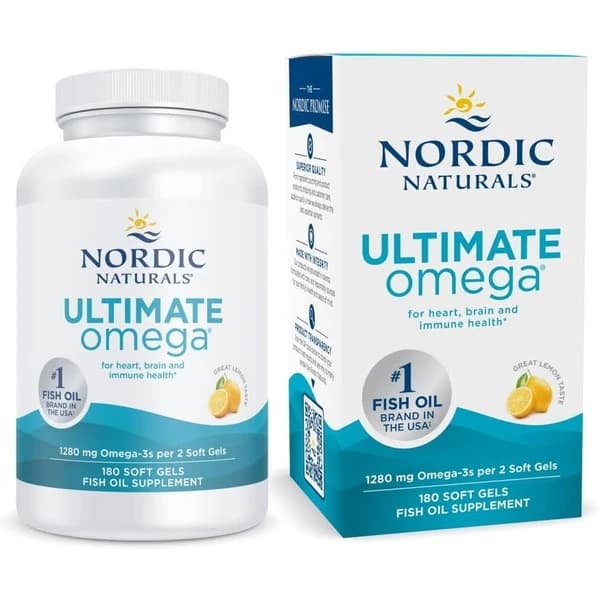
Amazon · Affiliate
Nordic Naturals Ultimate Omega
4.7
1,280mg of EPA+DHA per serving. Third-party tested for purity and freshness. Reduces inflammation and supports heart health.
$30–$55Check Price on Amazon
Vitamin D3
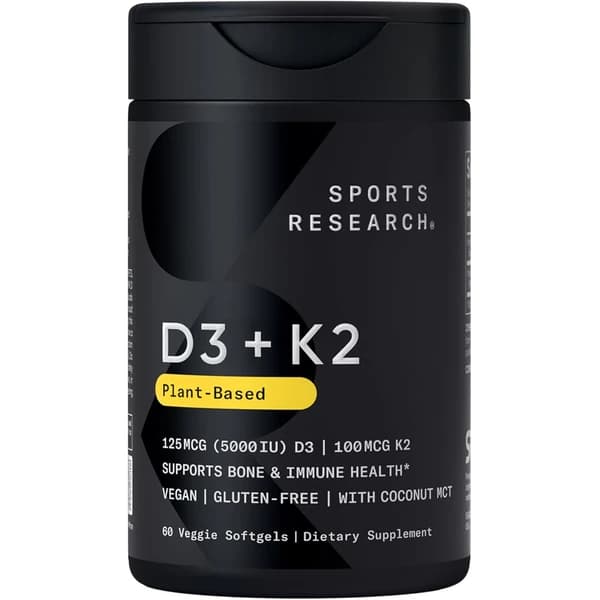
Vitamin D deficiency affects an estimated 40–80% of American adults, depending on the population and cutoff used. Unlike NMN, fixing a documented vitamin D deficiency has established, clinically meaningful effects: improved bone mineral density, reduced fracture risk, immune function support, and associations with lower all-cause mortality in deficient populations. The Sports Research D3+K2 formulation pairs cholecalciferol with menaquinone-7 to support proper calcium metabolism — relevant for athletes and anyone concerned about long-term bone health.
The cost-benefit here is essentially uncontested: a month's supply runs $15–22, deficiency is common, and the evidence for correction is robust. This is among the highest-return investments in any longevity stack.
Amazon · Affiliate
Sports Research Vitamin D3 + K2 (5000 IU)
4.7
Bioavailable D3 paired with K2 for calcium regulation. Supports bone density, immunity, and testosterone levels.
$15–$22Check Price on Amazon
Tier 2: Targeted Evidence — Context Dependent
Collagen Peptides (Joint and Connective Tissue Health)
Collagen is worth discussing here because it illustrates how a supplement with legitimate, modest evidence gets overshadowed by sexier molecules. The human trial literature on collagen peptides for joint health is actually more directly applicable to most fitness-conscious adults than the NMN literature: multiple RCTs in athletes and older adults show reduced joint pain scores, improved cartilage markers, and faster recovery from activity. The mechanism is relatively clear — hydrolyzed collagen provides glycine and proline substrates for collagen synthesis in cartilage, tendons, and ligaments.
This is not a longevity molecule in the Sinclair sense. But if you train regularly and care about joint health over a 20-year horizon, the evidence base here is more actionable than NMN's.

Amazon · Affiliate
Vital Proteins Collagen Peptides
4.7
20g collagen per serving. Supports joint health, skin elasticity, and connective tissue repair. Unflavored, mixes into any beverage.
$25–$45Check Price on Amazon
Tier 3: Speculative — Proceed With Eyes Open
NMN and NR (NAD+ Precursors)
This is where NMN and NR honestly belong at this point in the research timeline. The biochemistry is compelling. The mouse data is exciting. The human biomarker data shows the target is being hit — blood NAD+ reliably increases. But the clinical outcomes in healthy adults are modest, inconsistent, and derived from short trials.
Reasonable considerations for this tier:
- Who it makes most sense for: Adults over 45–50 with metabolic concerns, lower baseline activity levels, or family history of age-related metabolic disease. The insulin sensitivity data (Yoshino 2021) and the cardiovascular walking data (NICE trial for PAD) suggest benefits in impaired populations.
- Dosage with the most trial support: 600 mg NMN daily (Huang 2022) or 500–1000 mg NR daily
- What to watch for: Future trials with 6–12 month durations, hard clinical endpoints, and mechanistic data on tissue-level NAD+ changes
Not Currently Stacked (And Why)
Resveratrol: Sinclair still takes it. The scientific community has largely moved on. The sirtuin-activation mechanism was debunked. No convincing human trial evidence exists.
NAD+ IV infusions: Popular at longevity clinics. A 2024 preprint comparing NR+ IV to placebo showed no advantage for the IV route over oral. Very expensive, plausible mechanism not supported by comparative outcome data.
What Does Quality NMN Actually Cost?
The NMN market was valued at approximately $210–410 million in 2024 and is projected to approach $1 billion by the early 2030s. The price range for reputable NMN products:
- Budget end: $30–40/month for 250 mg/day from China-manufactured brands (variable quality control)
- Mid-range: $50–80/month for 500 mg/day from brands with third-party testing
- Premium: $80–120/month for 600–900 mg/day from well-known brands (Tru Niagen for NR; ProHealth, Renue By Science for NMN)
For context: the Huang 2022 trial that showed the most positive outcomes used 600 mg/day NMN — the middle of the therapeutic range. Running that protocol for a year costs $600–1,440 depending on the brand.
The cost-benefit math changes depending on who you are. For a 55-year-old with metabolic risk factors investing in their healthspan, the modest positive signals in the human literature may justify the cost. For a healthy 30-year-old spending $80/month on NMN instead of a gym membership or better food quality, the tradeoff is almost certainly unfavorable by any reasonable evidence standard.
Final Thoughts
Here is the honest verdict:
NMN and NR are not fraudulent supplements. They do what they claim to do at the mechanistic level: oral supplementation reliably raises blood NAD+, and that effect is dose-dependent and well-replicated. The biology underpinning their theoretical benefits is legitimate science. Some human trials show real, if modest, improvements in insulin sensitivity, aerobic capacity, and gait speed — particularly in older and metabolically compromised adults.
But the gap between "raises blood NAD+" and "reverses aging" is enormous, and it is a gap currently being papered over by podcast appearances, David Sinclair's personal supplement disclosures, and a supplement market that has grown to hundreds of millions of dollars on the back of mouse studies and surrogate biomarkers.
The human trials we have are mostly 4–12 weeks long. They mostly measure blood NAD+, not tissue NAD+ in the organs that matter. They mostly enroll middle-aged or older adults, not the 35-year-old who just heard about NMN on a podcast. No human trial has run long enough to measure what anyone actually wants to know: does this reduce cardiovascular disease incidence? Does it slow cognitive decline? Does it extend healthy years of life?
If you are building a longevity supplement stack with a real budget, the priority order should be:
- Fix documented deficiencies first — Vitamin D is the most common and most consequential. It is also cheap.
- Establish a meaningful omega-3 intake — the evidence runway here is decades long and the mechanistic case for cardiovascular and inflammatory health is ironclad.
- If you train seriously, consider collagen peptides for connective tissue — more directly relevant to most athletes than NAD+ precursors.
- If you are over 45, have metabolic risk factors, and have addressed the above — then NMN or NR at 500–600 mg/day is a reasonable addition, with appropriately calibrated expectations.
What you should not do is spend $80/month on NMN instead of spending $80/month on food quality, sleep optimization, or a strength training program. The effect size of lifestyle factors on longevity outcomes in humans is orders of magnitude larger than the effect size of any supplement currently on the market — including NMN.
The supplement companies know this. They count on you not doing the comparison.
All supplement recommendations are based on published research. Individual responses vary. Consult a healthcare provider before starting any new supplement protocol.
Affiliate disclosure: Some links in this article are affiliate links. If you purchase through them, we may earn a small commission at no extra cost to you. We only recommend products we genuinely believe in.
About the author
Nathan reviews the research, tests the tools, and writes the guides at LeanBodyEngine — evidence-first, no sponsored content, no supplement shilling.
Related articles

Subscribe
Never miss a new article
Get an email whenever we publish a new fitness guide, supplement review, or workout plan. One short email per post — that's it.
Unsubscribe anytime. We only email when there's a new post.