
Blood Flow Restriction Training: The Science Behind Low-Load Muscle Building
BFR training builds muscle with weights as light as 20% of your max and the evidence is stronger than you think. Science, protocols, and who benefits most.

Say you've just tweaked your shoulder doing overhead press. Nothing catastrophic — the orthopedist says it's a minor impingement, hands you a sheet of band exercises, and tells you to avoid loading it heavy for six to eight weeks. You nod, you go home, and then reality sets in: six to eight weeks. That's two months of watching your arm size and shoulder strength slowly evaporate while you do color-coded physical therapy bands with the tension of a stretched ponytail.
This is the exact scenario that blood flow restriction training was originally designed to solve. And it turns out that what started in physical therapy clinics 30 years ago has become one of the most research-validated muscle-building tools available to healthy athletes — not just injured people waiting out a diagnosis.
If you've heard the term "BFR training" thrown around the gym floor and assumed it was either a fringe rehab gimmick or something reserved for elderly patients, this guide is for you.
Key Takeaways
- BFR with 20–30% 1RM produces muscle hypertrophy comparable to traditional 70–80% 1RM training, according to a 2024 meta-analysis in PLOS ONE examining healthy young adults.
- The minimum effective dose for measurable hypertrophy is approximately 12 sessions — roughly 3–4 weeks of consistent training.
- A 2024 Scientific Reports meta-analysis of athletes found BFR produced strength effect sizes of 0.74–1.03 and body composition effect sizes of 0.28–1.23, meaningful gains in already-trained individuals.
- The standard researched protocol is 30-15-15-15 reps (75 total) at 20–30% 1RM with 30–45 seconds rest between sets and cuff pressure set to 50–80% of arterial occlusion pressure.
- BFR restricts venous return (blood out) while preserving arterial inflow — target tightness is a 7/10 subjective rating, never full occlusion; deflate the cuff 3–5 minutes between exercises.
- Absolute contraindications include DVT history, active cardiovascular disease, peripheral vascular disease, sickle cell anemia, and pregnancy — three rhabdomyolysis cases have been reported in those with compromised renal function.
What Is BFR Training, Actually?
Blood flow restriction training involves wrapping a cuff, band, or strap around the proximal portion of a limb (the upper arm or upper thigh) and then performing resistance exercises at loads that would normally be too light to stimulate meaningful muscle growth — typically 20–40% of your one-rep max.
The cuff partially restricts blood flow. Specifically, it reduces venous return — the blood flowing out of the muscle — while preserving most of the arterial inflow into it. The muscle fills up with blood, metabolic byproducts accumulate, and the training stimulus becomes far greater than the external load would suggest.
The result: significant hypertrophy and strength adaptation at loads that your grandma could lift. The research backs this up in a way that should genuinely surprise you.
The Mechanism: Why Tiny Weights Produce Big Results
This is the part most people skip, but it's actually what makes BFR training interesting rather than just trendy. There are three main drivers working simultaneously:
1. Metabolic Stress and Lactate Accumulation
When venous return is restricted, your muscle can't clear metabolic waste products — lactate, hydrogen ions, and inorganic phosphate — at its normal rate. These byproducts accumulate rapidly, creating a chemically stressful environment inside the muscle. That chemical stress is itself a powerful anabolic signal.
The low-pH environment created by lactate and hydrogen ion buildup stimulates a significant spike in growth hormone secretion. We're talking a hormonal response comparable to what you see after a heavy compound lift at 80–85% 1RM — except you're curling a 15-pound dumbbell.
2. Forced Fast-Twitch Fiber Recruitment
Normally, your nervous system recruits motor units in order of size: slow-twitch fibers first, fast-twitch fibers only when the load demands it. At 20–30% 1RM, under normal conditions, you'd barely touch your fast-twitch fibers — the heavy hitters responsible for the most growth.
BFR short-circuits this. As slow-twitch fibers fatigue rapidly in the hypoxic, metabolite-rich environment, your nervous system is forced to recruit fast-twitch motor units to compensate. You get high-threshold fiber activation at a fraction of the load that would typically be required. That's a significant part of why BFR punches well above its load weight.
3. mTOR Activation and Cell Swelling
The hypoxic conditions inside a BFR-restricted muscle significantly upregulate the mTOR signaling cascade — the primary molecular pathway that triggers muscle protein synthesis. Separately, the blood pooling in the muscle causes cellular swelling (sometimes called the "pump"), which signals to muscle cells that they're under stress and need to adapt.
These three mechanisms — hormonal response, forced fiber recruitment, and mTOR activation — don't happen in isolation. They compound each other, which is why a 2024 meta-analysis in PLOS ONE found that low-load BFR training produces muscle hypertrophy comparable to traditional high-load resistance training in healthy young adults.
The Research Case: BFR Works for Healthy Athletes, Not Just Injured Ones
This is the angle that got buried for a long time. Early BFR research focused on elderly patients and post-surgical rehab because those populations obviously can't train heavy. The implication — unintentional but pervasive — was that BFR was a consolation prize for people who couldn't do real training.
The more recent literature tells a different story.
A 2024 systematic review and meta-analysis in Frontiers in Physiology examining upper extremity BFR studies found no statistically significant difference in muscle hypertrophy between low-load BFR and high-load resistance training in healthy subjects. Strength gains were modestly inferior in BFR groups, but for hypertrophy specifically, the effect sizes were comparable.
A 2024 Scientific Reports meta-analysis examining BFR's effects on athletes (not rehab patients) found small-to-large improvements in strength (effect size 0.74–1.03) and body composition (ES 0.28–1.23) — results that are meaningful even in already-trained individuals.
The minimum effective dose for measurable hypertrophy appears to be around 12 sessions — roughly three to four weeks of consistent training. That's fast.
The takeaway isn't that BFR is better than heavy training for building mass. It's that BFR can produce hypertrophic results that are roughly equivalent to heavy training, at loads that are dramatically safer for joints, tendons, and connective tissue — which matters whether you're injured or just smart about longevity.
The Standard BFR Protocol
The most researched protocol in the literature is the 30-15-15-15 rep scheme, totaling 75 reps across four sets with the cuff maintained throughout.
Here's what that looks like across different exercises:
| Exercise Type | % 1RM | Rep Scheme | Sets | Rest Between Sets | Cuff Pressure (% AOP) | |---|---|---|---|---|---| | Bicep curl / tricep pushdown | 20–30% | 30-15-15-15 | 4 | 30–45 sec | 50–70% | | Leg extension / leg curl | 20–30% | 30-15-15-15 | 4 | 30–45 sec | 50–80% | | Dumbbell press / lateral raise | 20–30% | 30-15-15-15 | 4 | 30–45 sec | 40–60% | | Walking / treadmill walk | N/A | 5 min continuous | 2–3 | 1–2 min (deflate) | 50–80% | | Bodyweight squat | Bodyweight | 30-15-15-15 | 4 | 30–45 sec | 60–80% |
Notes on cuff pressure: AOP stands for Arterial Occlusion Pressure — the pressure required to fully stop arterial flow. You want to work at a percentage of that, never full occlusion. Most practical BFR setups use a subjective tightness rating: around a 7 out of 10 (noticeable compression, but you can still feel your pulse).
Notes on the 30-rep first set: That opener should feel moderately hard by rep 20 and genuinely challenging by rep 28-30. If you're breezing through it, add a bit of load or pressure. The subsequent 15-rep sets will feel much harder — the cumulative metabolic stress builds quickly with only 30-45 seconds of rest.
Rest the cuff between exercises: If you're doing multiple BFR exercises in a session, deflate the cuff and rest 3–5 minutes between exercises to allow reperfusion (blood return). Keeping the cuff inflated between exercises isn't necessary and adds unnecessary stress.
A Practical Way to Get Started
You don't need a clinical pressure cuff to start experimenting with BFR. Practical options for home or gym use include dedicated BFR cuffs (usually $30–80), wraps with a consistent tightness gauge, and resistance bands at the right tension.
Amazon · Affiliate
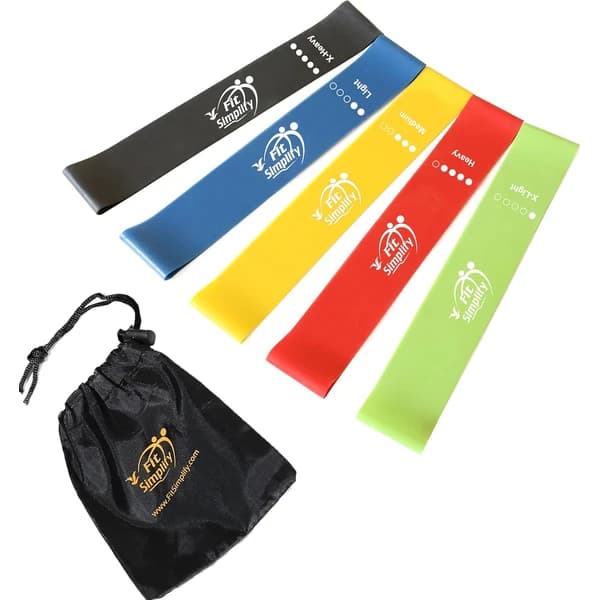
Fit Simplify Resistance Loop Bands (5-Pack)
4.7
Premium latex resistance bands for all fitness levels. Perfect for home workouts, stretching, and rehab.
$10–$15Check Price on Amazon
A quality resistance band set gives you a cost-free starting point for BFR. Wrap a thicker band around your upper arm or thigh firmly — aim for that 7/10 tightness — and you have a workable BFR setup. It's not as precisely calibrated as a dedicated cuff, but for healthy athletes experimenting with the technique, it's a legitimate way to learn the protocol before investing in specialized equipment.
Myth vs. Reality: Clearing Up the Common Misconceptions
BFR training has accumulated some persistent myths. Here are the main ones, corrected:
Myth: BFR cuts off all blood flow to the muscle. Reality: BFR restricts venous return — blood flowing out of the muscle — while maintaining most of the arterial inflow. The goal is partial restriction, not tourniquet-level occlusion. Full arterial restriction would be dangerous and counterproductive. Think of it less like a tourniquet and more like squeezing a garden hose while the tap keeps running.
Myth: BFR is only useful for injured or elderly populations. Reality: The most recent meta-analyses show comparable hypertrophy outcomes in healthy young adults and trained athletes. BFR is an acute tool for anyone who wants to add training volume with lower joint stress — injured or not.
Myth: You need medical equipment or professional supervision to do BFR safely. Reality: For healthy adults without cardiovascular conditions, BFR with properly applied elastic wraps or commercially available cuffs has a strong safety record. The incidence of serious adverse events in research populations is very low. Common side effects are temporary tingling and DOMS. That said, supervision matters if you're using clinical-grade equipment or have any health conditions.
BFR vs. Standard Volume Training: When to Use Each
BFR and conventional high-load resistance training serve different purposes. The smarter approach is to use them strategically rather than treating them as competitors.
| Scenario | BFR | Standard High-Load Training | |---|---|---| | Joint injury / post-surgical rehab | Excellent — maintains muscle with minimal load | Often not possible during recovery | | Building muscle while deloading joints | Excellent | Not compatible by definition | | Maximizing strength gains (1RM) | Moderate — hypertrophy yes, strength modest | Superior | | Training while traveling (no heavy equipment) | Very effective with bands | Limited by equipment | | Adding volume without CNS fatigue | Ideal — lower neural demand | Increases CNS load significantly | | Primary hypertrophy in healthy lifter | Comparable to HLT in most studies | Comparable, with more strength carryover | | Powerlifting / sport-specific strength | Secondary supplement | Primary tool |
The cleanest use case for healthy intermediate lifters: use BFR for isolation work (curls, pushdowns, leg extensions) as a way to add meaningful hypertrophic volume without piling more load on joints and tendons that already take a beating from your heavy compounds.
Intra-Workout Support: Why Nutrition Timing Matters More With BFR
BFR creates an unusually high degree of metabolic stress relative to the load lifted. Your muscles are going through significant glycolytic activity and protein turnover in a short period. That makes the window around BFR training particularly sensitive to nutritional support.
Amazon · Affiliate
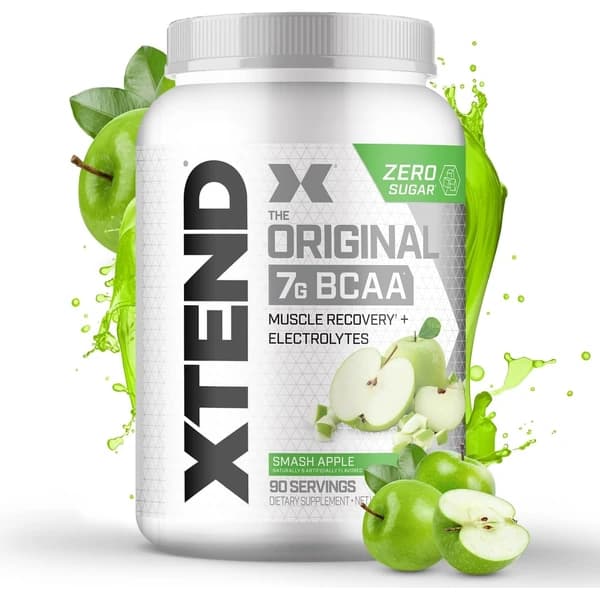
Xtend Original BCAA Powder
4.6
7g BCAAs per serving in the proven 2:1:1 ratio. Zero sugar, hydration minerals, and 14 flavors. Supports muscle recovery and endurance.
$25–$40Check Price on Amazon
Sipping BCAAs during or immediately after BFR sessions gives your muscle protein synthesis machinery the amino acid availability it needs at exactly the moment mTOR signaling is elevated. The 7g BCAA dose in Xtend — in the researched 2:1:1 leucine-to-valine-to-isoleucine ratio — pairs well with the hormonal environment BFR creates. It's not a magic bullet, but the timing logic is sound.
Post-BFR Recovery: The Localized Fatigue Problem
One thing that surprises new BFR users is how local the fatigue feels. After a set of BFR curls, your biceps feel cooked in a way that's disproportionate to the weight used. The metabolic byproduct accumulation and temporary tissue hypoxia leave the muscle feeling fatigued and sometimes tight well after the session.
Amazon · Affiliate
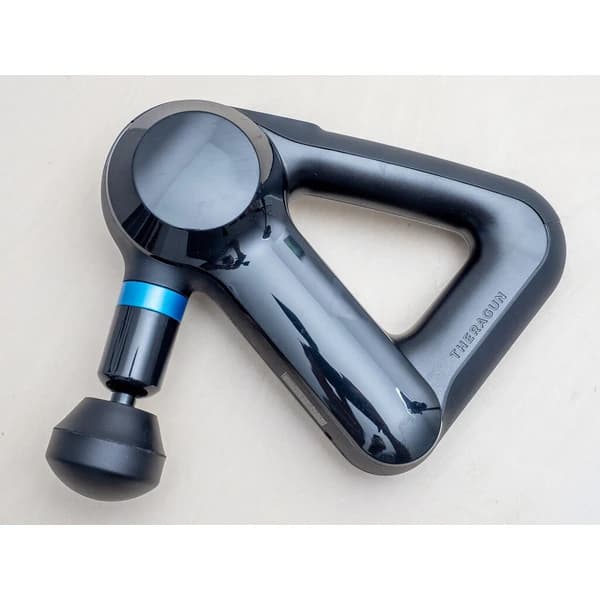
RENPHO R3 Mini Massage Gun
4.5
5 speeds, 6 interchangeable heads, 50 lbs of percussion force. Ultra-quiet motor. Reaches deep tissue in 15 minutes.
$40–$65Check Price on Amazon
Percussion massage targets exactly this kind of localized metabolic fatigue. The RENPHO R3's variable speed and compact head design make it practical for reaching the upper arm, quads, and hamstrings — the typical BFR target sites. Running it over the treated muscle for 10–15 minutes post-session helps accelerate tissue reperfusion and reduce the residual tightness that BFR tends to leave behind.
Safety: Who Should and Shouldn't Use BFR
BFR has an excellent safety record in healthy populations. Common side effects — temporary numbness or tingling, delayed-onset muscle soreness, skin bruising from over-tight cuffs — are minor and avoidable with proper technique.
Absolute contraindications (do not use BFR if you have):
- History of deep vein thrombosis (DVT) or clotting disorders
- Active cardiovascular disease or uncontrolled hypertension
- Peripheral vascular disease or compromised circulation in the limb
- Sickle cell anemia
- Known risk of embolism
- Active infection or open wound in the restricted area
- Pregnancy
Relative cautions:
- Recently diagnosed cardiovascular conditions — get medical clearance
- Compromised renal function — three cases of rhabdomyolysis have been reported in the literature
- First-time BFR users with any cardiovascular history — consult a physician first
For healthy adults with no cardiovascular concerns, the risk profile is low. Start with lighter pressures, shorter sessions, and single exercises before building up. If you feel unusual pain (beyond typical exercise burn), numbness that doesn't resolve quickly, or dizziness, release the cuff immediately.
BFR is not appropriate for everyone. If you're unsure whether you have any of the above conditions, see your doctor before starting. That caveat is real — not just legal boilerplate.
Final Thoughts
Blood flow restriction training arrived on gym floors with a rehabilitation pedigree that made it easy to dismiss as "old-person training." The research that's accumulated since 2018 has made that dismissal hard to defend.
For intermediate lifters specifically, BFR fills a gap that nothing else quite covers: meaningful hypertrophy stimulus at loads that are genuinely friendly to joints and connective tissue. Whether you're nursing an overuse injury, adding isolation volume without taxing your nervous system, or just looking for a technique with real novelty and legitimacy, BFR delivers.
Here's how to start this week without overthinking it:
- Pick one isolation exercise — bicep curls or leg extensions work well for beginners
- Grab a resistance band or BFR cuff; apply at a 7/10 tightness at the top of the limb
- Use a weight you'd normally consider a warmup — about 25–30% of what you'd use in a normal working set
- Run the 30-15-15-15 protocol with 30-second rest between sets, cuff on throughout
- Feel the burn, wonder why it's working, and come back in 48 hours to do it again
Do that 12 times over the next three to four weeks and see what happens. The research says you'll be surprised. The mechanism says you should believe it.
This is one of those rare techniques where the barrier to entry is genuinely low — light weights, a band, and the willingness to feel a deep burn — and the payoff is legit.
Affiliate disclosure: Some links in this article are affiliate links. If you purchase through them, we may earn a small commission at no extra cost to you. We only recommend products we genuinely believe in.
About the author
Nathan reviews the research, tests the tools, and writes the guides at LeanBodyEngine — evidence-first, no sponsored content, no supplement shilling.
Related articles

Subscribe
Never miss a new article
Get an email whenever we publish a new fitness guide, supplement review, or workout plan. One short email per post — that's it.
Unsubscribe anytime. We only email when there's a new post.