
How to Build Stronger Legs: A Beginner's Complete Guide
Learn how to build stronger legs with the 5 best exercises, weekly volume targets, progressive overload rules, and a realistic 12-week beginner plan.
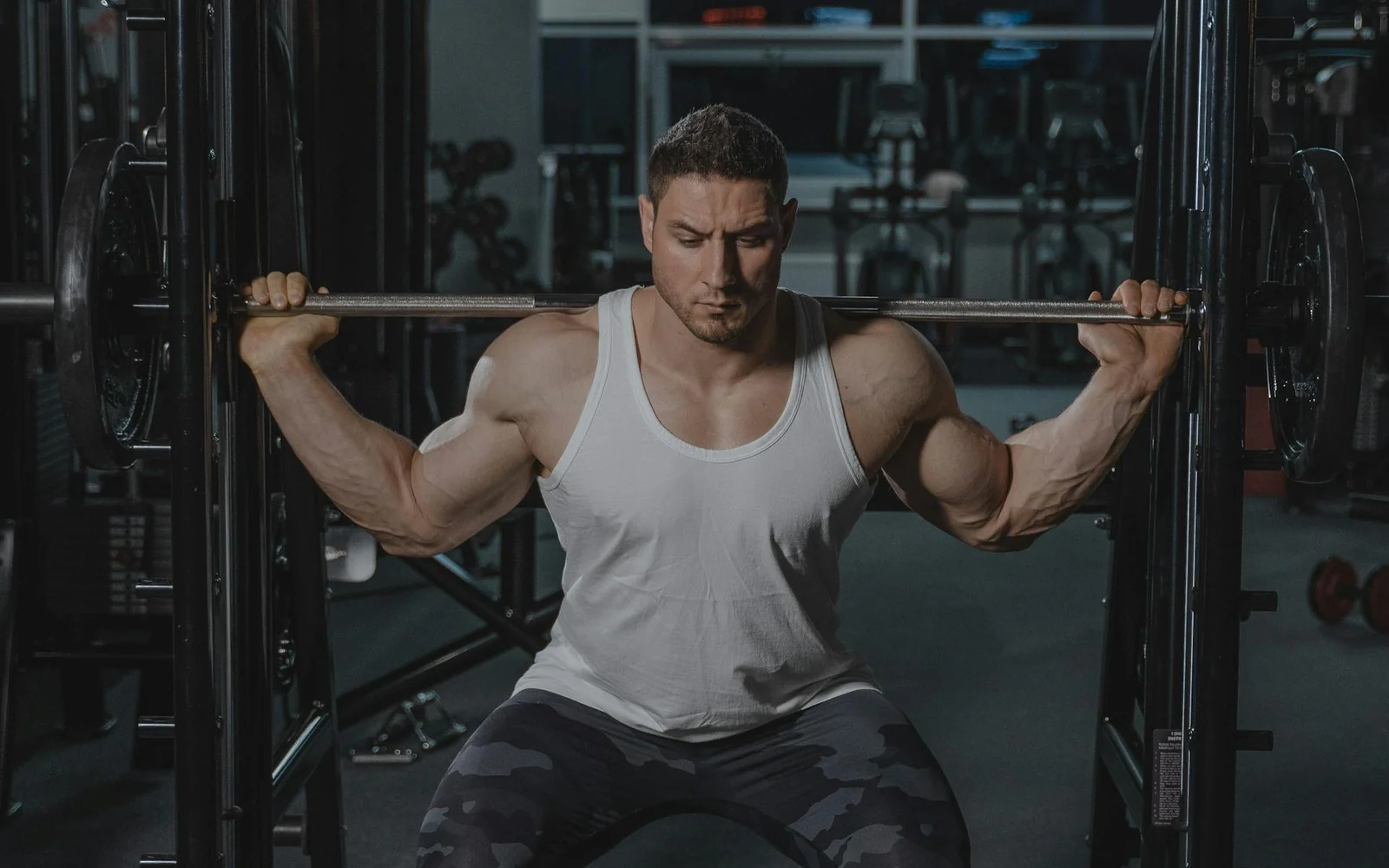
Ask any experienced lifter what they regret most about their first year training, and the answer is almost always the same: skipping leg day. Legs are the largest muscle group in your body, the biggest driver of full-body strength, and — inconveniently — the most uncomfortable to train hard. This guide is a no-nonsense walkthrough of how to build stronger legs as a beginner, from the anatomy you're actually developing to the five exercises that matter, realistic volume targets, and a 12-week progression that won't fry you in the first month.
Key Takeaways
- Hypertrophy rep range: 8–12 reps per set; strength rep range: 3–6 reps per set — both work, but beginners should start in the 8–12 window.
- The research-backed weekly volume sweet spot is 10–20 hard sets per muscle group — below 10 slows progress, above 20 adds junk volume without extra gains.
- Progressive overload target: add 5 lb (lower body) when you hit the top of your rep range on every set — expect to do this every 1–2 weeks as a beginner.
- Train legs 2 times per week — two moderate sessions outperform one marathon session for both hypertrophy and strength.
- Your legs are three distinct groups: quadriceps, hamstrings, and glutes — all three need direct work or imbalances and injury follow.
- A 2021 meta-analysis found creatine monohydrate produces a ~8% increase in strength and ~14% increase in reps-to-failure — the only beginner supplement with that level of evidence.
Leg Anatomy: The Three Groups You're Actually Training
Before the exercises, a 60-second anatomy check. When people say "legs," they usually mean three distinct muscle groups that need to be trained differently.
Quadriceps (front of the thigh)
Four heads — rectus femoris, vastus lateralis, vastus medialis, and vastus intermedius — responsible for knee extension. These are the muscles that drive you out of the bottom of a squat and up a flight of stairs. They respond well to deep knee flexion under load (think full-depth squats and split squats).
Hamstrings (back of the thigh)
Three muscles (biceps femoris, semitendinosus, semimembranosus) that handle both knee flexion and hip extension. Because hamstrings cross two joints, they need two kinds of work: hinge-pattern movements (like RDLs) and knee-flexion movements (like leg curls or Nordic curls).
Glutes (your hips)
Gluteus maximus is the largest single muscle in the human body. Its primary job is hip extension — driving your hips forward against resistance. A strong posterior chain (glutes + hamstrings) is the single biggest predictor of athletic performance and lower-back health.
Tip: if a program hits quads hard but neglects hamstrings and glutes, you'll end up with imbalanced legs and knee pain within a few months. Train all three.
The 5 Best Exercises to Build Stronger Legs
You don't need 12 leg exercises. You need five movement patterns trained with intent and progressively overloaded over time. Every productive beginner leg program rotates through these.
1. Back Squat (or Goblet Squat)
The king of lower-body lifts. A 2019 review in Sports Medicine found that squat strength correlated more strongly with athletic performance metrics (sprint speed, jump height) than any other single lift. Beginners should start with goblet squats — holding a dumbbell at chest height — to learn the pattern before loading a barbell.
Target: 3–4 sets of 5–10 reps. Full depth (hip crease below knee).
2. Romanian Deadlift (RDL)
The best hamstring and glute builder a beginner can learn. Unlike a conventional deadlift, the RDL keeps tension on the posterior chain throughout the entire rep and is much easier to program safely. Research shows the RDL produces higher hamstring EMG activation than nearly any other common gym exercise (Contreras et al., 2013).
Target: 3 sets of 8–12 reps. Hinge at the hips, slight knee bend, bar travels down the shins.
3. Walking Lunge (or Split Squat)
Unilateral (single-leg) work is non-negotiable. Lunges expose and correct side-to-side strength imbalances that bilateral lifts hide, and they load the glutes harder than back squats at equivalent weights. Walking lunges also build knee stability, reducing injury risk in runners and athletes.
Target: 3 sets of 10–12 reps per leg. Long stride, front knee over midfoot.
4. Hip Thrust
Developed and popularized by biomechanist Bret Contreras, the hip thrust isolates the glutes with minimal lower-back strain. Studies have shown peak glute activation in hip thrusts is roughly double that of back squats at matched relative loads. For glute development, nothing beats it.
Target: 3 sets of 8–15 reps. Upper back on bench, full hip extension, pause at the top.
5. Standing Calf Raise
Calves are stubborn — they need volume, stretch, and frequency. A standing calf raise (or single-leg calf raise from a step) with a controlled 2-second eccentric and a full stretch at the bottom is the most efficient way to train them.
Target: 4 sets of 12–20 reps. Full range of motion, pause at the bottom.
Exercise Selection at a Glance
| Exercise | Primary Muscle | Secondary Muscle | Best Rep Range | Equipment | |---|---|---|---|---| | Goblet Squat | Quadriceps | Glutes, Core | 8–12 | Dumbbell | | Back Squat | Quadriceps | Glutes, Hamstrings | 5–10 | Barbell or Dumbbell | | Romanian Deadlift | Hamstrings | Glutes, Spinal Erectors | 8–12 | Dumbbells or Barbell | | Walking Lunge | Quadriceps | Glutes, Hamstrings | 10–12 per leg | Dumbbells or Bodyweight | | Hip Thrust | Glutes | Hamstrings, Core | 8–15 | Dumbbells or Resistance Band | | Split Squat | Quadriceps | Glutes | 10–12 per leg | Dumbbells or Bodyweight | | Standing Calf Raise | Gastrocnemius | Soleus | 12–20 | Dumbbells or Bodyweight |
The LBE Leg Day Priority System
Most beginners program leg day by picking exercises at random. The LBE (Load — Balance — Endurance) Leg Day Priority System gives every session a clear structure so nothing gets skipped and nothing gets over-trained.
L — Load (the heavy compound first) Start each session with your primary bilateral lift: back squat or goblet squat on Day A, hip thrust or RDL on Day B. This is the lift you add weight to every week. Train it when you're freshest, with the most sets.
B — Balance (the unilateral second) Follow the compound with a single-leg movement — walking lunge or split squat. Single-leg work corrects the side-to-side imbalances that bilateral lifts hide. It's also the movement most beginners skip. It's non-negotiable in the LBE system.
E — Endurance (the isolation finisher) Close the session with a higher-rep isolation: calf raises, banded hip abductions, or leg curls. These accessory movements accumulate volume for the muscles that heavy compounds under-serve. Keep rest periods short (60 seconds) and reps in the 15–20 range.
Every session should have at least one L, one B, and one E movement. That's the whole system.
How Much Volume You Actually Need
A 2022 meta-analysis in Journal of Sports Sciences reviewed dozens of hypertrophy studies and converged on the now-standard recommendation: 10–20 hard sets per muscle group per week for optimal growth. Below 10, progress slows. Above 20, junk volume piles up without additional gains.
Beginner weekly leg volume targets:
- Quads: 10–14 sets/week
- Hamstrings: 8–12 sets/week
- Glutes: 10–14 sets/week (with 6+ from hip-dominant work like RDLs and hip thrusts)
- Calves: 8–12 sets/week
Spread these across 2 leg sessions per week. Beginners who try to do "one massive leg day" almost always show up flat and under-recovered to the second session — and the research is clear that two moderate sessions beat one marathon session for hypertrophy and strength.
Training Frequency by Experience Level
| Experience Level | Sessions/Week | Sets per Session (per muscle group) | Notes | |---|---|---|---| | Beginner (0–6 months) | 2 | 5–7 | Focus on form; stop 2–3 reps short of failure | | Early Intermediate (6–18 months) | 2–3 | 6–8 | Last set of each exercise to near-failure | | Intermediate (18+ months) | 3 | 7–10 | Periodised intensity; deload every 4–6 weeks |
Equipment You Actually Need
You can build strong legs in a commercial gym or at home with remarkably little gear. The rule is simple: whatever equipment you have, you need a way to progressively add load or difficulty over time.
Amazon · Affiliate
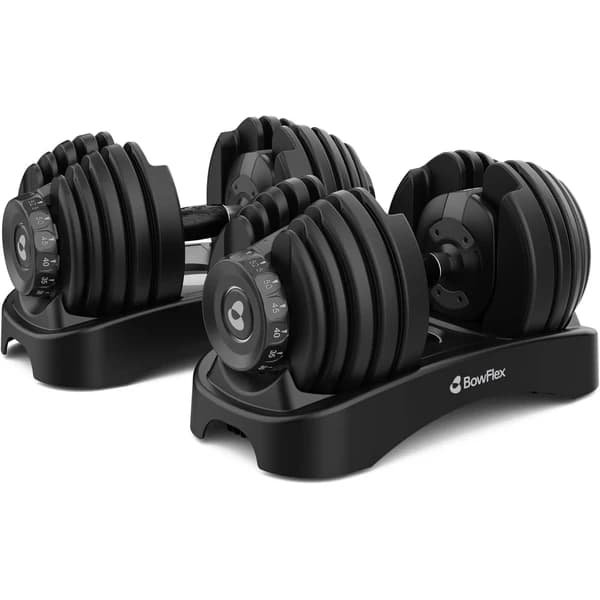
Bowflex SelectTech 552 Adjustable Dumbbells
4.8
Replace 15 sets of weights. Dial adjusts from 5 to 52.5 lbs. Space-saving design for home gyms.
$300–$400Check Price on Amazon
Adjustable dumbbells are the single most versatile tool a home lifter can own. Every exercise in this guide except the barbell squat can be done — often more safely — with a pair of adjustable dumbbells. Goblet squats, RDLs, lunges, hip thrusts, and calf raises all scale cleanly from 10 lb up through 50+ lb per hand, which covers beginner through intermediate progress.
Amazon · Affiliate
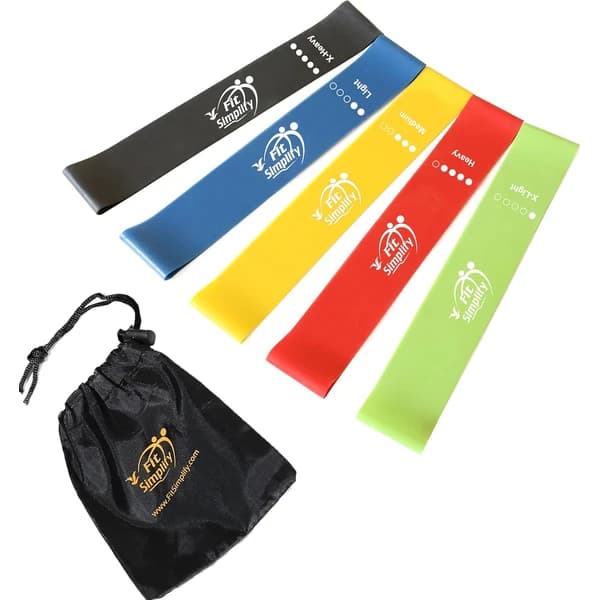
Fit Simplify Resistance Loop Bands (5-Pack)
4.7
Premium latex resistance bands for all fitness levels. Perfect for home workouts, stretching, and rehab.
$10–$15Check Price on Amazon
A quality band set adds two things a beginner lift plan desperately needs: banded hip thrusts and glute activation work for warm-ups. Bands are also how you bridge the gap between "I can do bodyweight split squats" and "I'm ready for loaded dumbbell split squats." A heavy loop band strapped around your knees during hip thrusts will also wake up your glutes in a way no amount of squatting ever will.
Tip: you don't need a squat rack to get started. Goblet squats with adjustable dumbbells will carry you through months 1–4 of serious training.
Recovery, Sleep, and Creatine
Legs take longer to recover than any other muscle group. Miss sleep, skip protein, or train the same muscles two days in a row and progress stalls. Two non-negotiables for beginners:
- Sleep 7–9 hours. Muscle protein synthesis peaks during deep sleep. Cutting sleep to 5–6 hours reduces testosterone and slows recovery by measurable margins.
- Eat enough protein. Target 0.7–1.0 g per pound of body weight per day, spread across 3–4 meals.
For beginners, there is exactly one supplement with decades of evidence behind it: creatine monohydrate. A 2021 meta-analysis in the Journal of the International Society of Sports Nutrition concluded that creatine produces a ~8% increase in strength and ~14% increase in reps-to-failure in resistance-trained individuals, with essentially no serious side effects.
Five grams a day, taken at any time, is the entire protocol. No loading phase is required for beginners — just consistency. Creatine shines on leg day because squats, RDLs, and lunges are precisely the kind of ATP-depleting, multi-joint lifts that benefit most from increased phosphocreatine stores.
Amazon · Affiliate
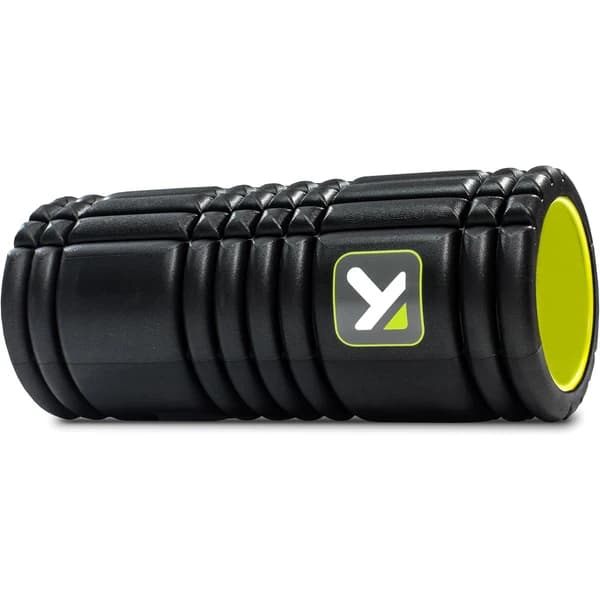
TriggerPoint GRID Foam Roller
4.7
Multi-density foam roller for muscle recovery and myofascial release. Used by pro athletes.
$30–$40Check Price on Amazon
Post-leg-day soreness is real — delayed onset muscle soreness (DOMS) in the quads and hamstrings can peak 24–48 hours after a hard session. A foam roller used for 60–90 seconds per muscle group before and after training meaningfully reduces perceived soreness and improves range of motion for the next session.
Amazon · Affiliate
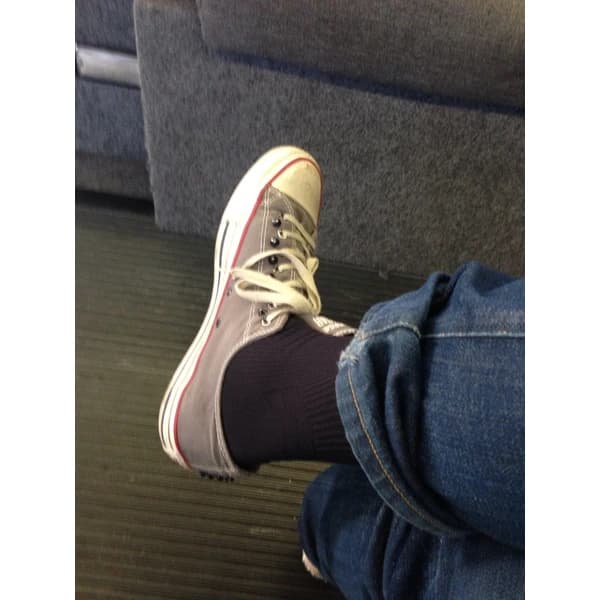
Physix Gear Sport Compression Socks (3-Pack)
4.6
20-30 mmHg graduated compression. Reduces soreness, swelling, and fatigue during and after exercise.
$14–$22Check Price on Amazon
Compression socks improve venous blood return from the lower legs, reducing swelling and fatigue after heavy leg sessions. For beginners whose calves and feet are unaccustomed to training load, they're a cheap and effective recovery tool.
The 12-Week Beginner Leg Progression
This is a sensible progression that assumes two leg sessions per week (Monday / Thursday, or Tuesday / Friday). It uses the same five lifts throughout; only loading, reps, and intensity change.
Weeks 1–4: Pattern and Tolerance
Day A: Goblet squat 3×8, RDL 3×10, walking lunge 2×10/leg, calf raise 3×15 Day B: Goblet squat 2×10, hip thrust 3×12, split squat 2×10/leg, calf raise 3×15
Goal: learn the movements, build connective-tissue tolerance, finish every set 2–3 reps shy of failure. Add 5 lb when you hit the top of the rep range on every set.
Weeks 5–8: Overload
Day A: Back squat (or heavier goblet) 4×6–8, RDL 3×8, walking lunge 3×10/leg, calf raise 4×15 Day B: Front squat or heavy goblet 3×8, hip thrust 3×10, split squat 3×10/leg, calf raise 4×15
Goal: now you're training close to failure on the last set of each exercise. Weight goes up every 1–2 weeks on the main lifts.
Weeks 9–12: Intensify
Day A: Back squat 4×5–6, RDL 4×6–8, walking lunge 3×12/leg, single-leg calf raise 4×12 Day B: Goblet or front squat 3×8, hip thrust 4×8, split squat 3×10/leg, standing calf raise 4×20
Goal: push strength on the main lifts. At 12 weeks, a typical beginner can expect a 50–100% increase in working weights on squat and RDL, plus visibly fuller quads and glutes.
Common Mistakes Beginners Make
A few traps that derail more beginner leg programs than anything else.
- Quarter-depth squats. Research is unambiguous: full-depth squats produce significantly more quad and glute growth than partials. If you can't reach depth with a given weight, the weight is too heavy.
- Skipping hamstrings. Quad-only leg training is the fastest path to knee pain and a ratio-ed physique. RDLs, leg curls, or Nordic curls need to be in every program.
- Too much, too soon. Beginners who do five leg exercises per session six days after starting will be too sore to train again for a week. Two sessions, five exercises total per session, 2–3 reps in reserve on weeks 1–4.
- Ignoring unilateral work. Single-leg imbalances hidden under a barbell become injuries under load. Lunges and split squats aren't optional.
- No progressive overload tracker. If you don't log sets, reps, and weight, you have no idea whether you're progressing. Use a notebook or an app — doesn't matter which, just track it.
Final Thoughts
Building stronger legs as a beginner is mostly about showing up twice a week, running the same handful of movements for months on end, and adding a little weight or a rep whenever the program calls for it. The LBE Leg Day Priority System keeps every session structured: lead with a heavy bilateral compound, follow with unilateral balance work, and finish with high-rep isolation. Stack that pattern against 10–20 sets of weekly volume per muscle group, sleep 7–9 hours, eat enough protein, and take your five grams of creatine.
It isn't complicated — it's just hard. Five exercises, full range of motion, enough sleep, enough protein. Do that for 12 weeks and the difference in your squat, your walking pace, and the way your jeans fit will be impossible to miss. Pick your first session this week, grab the equipment you need, and start logging.
Affiliate disclosure: Some links in this article are affiliate links. If you purchase through them, we may earn a small commission at no extra cost to you. We only recommend products we genuinely believe in.
About the author
Nathan reviews the research, tests the tools, and writes the guides at LeanBodyEngine — evidence-first, no sponsored content, no supplement shilling.
Related articles


Subscribe
Never miss a new article
Get an email whenever we publish a new fitness guide, supplement review, or workout plan. One short email per post — that's it.
Unsubscribe anytime. We only email when there's a new post.