
Progressive Overload: The #1 Rule for Building Muscle (With 6-Month Plan)
Learn progressive overload — the one training principle that separates lifters who plateau from those who keep building muscle for years.

Most people who train consistently for six months see almost no change in their physique. They show up, they sweat, they go home — and wonder why nothing is happening. The answer is almost always the same: they are not applying progressive overload.
Progressive overload is not a technique, a program, or a supplement. It is the single governing principle behind every pound of muscle ever built. Skip it and you are essentially repeating the same workout forever, asking your body to adapt to a stress it already adapted to months ago. Apply it correctly and your body has no choice but to grow.
This guide covers exactly what progressive overload is, the five methods you can use to apply it, how to track it, which equipment makes it easiest at home, how to support it nutritionally, and a concrete 6-month plan you can start this week.
Key Takeaways
- Progressive overload = systematically increasing training stimulus over time so your muscles are forced to adapt continuously.
- The most practical method for beginners is adding weight to the bar when you can complete all reps with good form.
- A training log is non-negotiable — you cannot overload what you cannot measure.
- Nutrition (protein + creatine) amplifies the results you get from progressive overload.
- Most beginners can add meaningful weight every 1–2 weeks for their first 6 months.
What Is Progressive Overload?
Progressive overload is the principle of gradually increasing the demand placed on your muscles over time so that they are continually forced to adapt — that is, to grow stronger and larger.
The physiological logic is straightforward. Muscle hypertrophy (growth) is an adaptive response to mechanical tension and metabolic stress. Once your muscles have adapted to a given level of tension, performing the same workout produces no new growth stimulus. You must present a novel challenge.
This was formalized by Dr. Thomas DeLorme in the 1940s, who used progressive resistance to rehabilitate World War II soldiers. His "progressive resistance exercise" protocol — now the foundation of all modern strength and hypertrophy training — demonstrated that muscles respond to increasing loads by growing both in size and strength.
A landmark 2010 meta-analysis by Brad Schoenfeld in the Journal of Strength and Conditioning Research confirmed that progressive overload is required for continued hypertrophy beyond initial beginner adaptations. Without it, trainees enter a plateau, typically within 8–12 weeks of consistent training.
The good news: if you have been training without progressive overload, you likely have months of gains waiting for you the moment you start applying it.
The 5 Methods of Progressive Overload
There is more than one way to make a workout harder. Here are the five main levers you can pull, ranked roughly in order of usefulness for beginners.
1. Increase Weight (Load Progression)
The most straightforward method. If you bench pressed 100 lbs for 3 sets of 8 last week, try 105 lbs this week.
When to use it: Every 1–2 weeks for beginners on compound lifts. Once you can complete all target reps with good form for two consecutive sessions, add weight.
How much to add:
- Upper body exercises: 2.5–5 lbs per session
- Lower body exercises: 5–10 lbs per session
- Small increments matter — a 2.5 lb increase every week is 130 lbs per year
2. Increase Reps (Rep Progression)
Instead of adding weight, add repetitions. If you did 3 sets of 8, try 3 sets of 9.
When to use it: Great when you cannot add weight (e.g., fixed dumbbells, bodyweight exercises, or resistance bands). It is also useful at the top of a rep range before increasing load — for example, working from 8 reps up to 12 before bumping weight.
3. Increase Sets (Volume Progression)
Add another working set to your exercise. Going from 3 sets to 4 sets of a given movement increases total training volume, which is one of the strongest predictors of hypertrophy.
A 2017 dose-response meta-analysis published in the Journal of Sports Sciences by Ralston et al. found that higher set volumes (6+ sets per muscle per week) produced significantly greater strength and size gains than lower volumes — but only when load is also progressing.
When to use it: When you have reached your target rep range and adding weight feels like too large a jump. Also useful in later training phases as a deliberate intensification tool.
4. Decrease Rest Periods
Performing the same work in less time increases the metabolic demand of the workout. Cutting rest from 3 minutes to 2 minutes for the same sets and reps is a real increase in difficulty.
When to use it: Best used as a secondary method when load and volume progression stall. Be cautious: shorter rest periods may reduce the weight you can lift, temporarily slowing load progression.
5. Improve Exercise Difficulty (Mechanical Progression)
Progressing to a harder variation of an exercise. Knee push-up → full push-up → weighted push-up → decline push-up. Band-assisted pull-up → full pull-up → weighted pull-up.
When to use it: Ideal for bodyweight training or when gym access is limited. It is slower-moving than load progression but highly effective when equipment is minimal.
Comparison Table: Progressive Overload Methods
| Method | Best For | Frequency | Beginner Ease | |--------|----------|-----------|---------------| | Add weight | Compound lifts, barbells, dumbbells | Every 1–2 weeks | ★★★★★ | | Add reps | Any exercise | Week to week | ★★★★★ | | Add sets | Volume phases | Every 3–4 weeks | ★★★★☆ | | Reduce rest | Metabolic conditioning | Every 2–3 weeks | ★★★☆☆ | | Harder variation | Bodyweight, bands | As needed | ★★★☆☆ |
How to Track Your Progress
You cannot apply progressive overload without a training log. This is not optional. If you are relying on memory, you will misjudge your numbers, skip progress when you should push, and stall far earlier than necessary.
What to track for every set:
- Exercise name
- Weight used
- Reps completed
- Rest period (optional but useful)
- RPE (Rate of Perceived Exertion, 1–10 scale) or reps in reserve
The simplest system that works: A notebook or a free app (Strong, Hevy, or even Google Sheets). The format does not matter — consistency does. Review last week's numbers before every session and set a target that is slightly above last time.
Tracking Progressive Overload Over 6 Months — Example (Bench Press)
| Week | Weight | Sets x Reps | Notes | |------|--------|-------------|-------| | 1 | 95 lbs | 3 × 8 | Baseline | | 4 | 105 lbs | 3 × 8 | +10 lbs | | 8 | 115 lbs | 3 × 8 | +20 lbs from start | | 12 | 125 lbs | 3 × 9 | Added rep when load felt heavy | | 16 | 130 lbs | 3 × 8 | Reset reps after weight jump | | 20 | 140 lbs | 3 × 8 | +45 lbs total in 5 months | | 24 | 150 lbs | 3 × 8–10 | On track for intermediate |
A 55 lb increase in bench press over 6 months is entirely realistic for a beginner applying progressive overload consistently — and that kind of strength increase correlates directly with measurable muscle gain.
Equipment for Progressive Overload at Home
The best progressive overload tool is one that gives you fine-grained control over resistance. That means you need small, incremental weight options — not fixed dumbbells that jump from 10 lbs to 25 lbs with nothing in between.
Best Overall: Adjustable Dumbbells
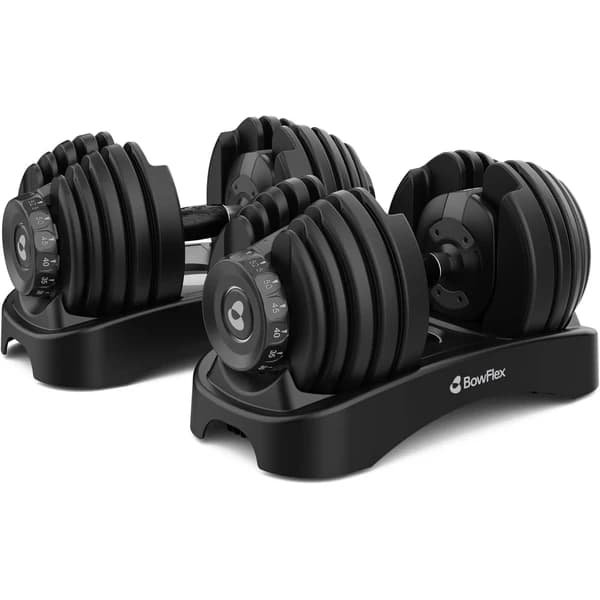
For home training with true progressive overload, adjustable dumbbells are the gold standard. They let you micro-load (add 2.5 lbs at a time), cover a wide range of exercises (presses, rows, curls, lunges, RDLs), and take up almost no floor space.
The Bowflex SelectTech 552 adjusts from 5 to 52.5 lbs per hand in 2.5 lb increments up to 25 lbs — exactly the resolution you need for upper body load progression. With a 4.8-star rating across thousands of Amazon reviews and a dial-select mechanism that changes weight in seconds, they are the most practical home gym investment for anyone serious about progressive overload.
Amazon · Affiliate
Bowflex SelectTech 552 Adjustable Dumbbells
4.8
Replace 15 sets of weights. Dial adjusts from 5 to 52.5 lbs. Space-saving design for home gyms.
$300–$400Check Price on Amazon
Best Budget Option: Resistance Bands
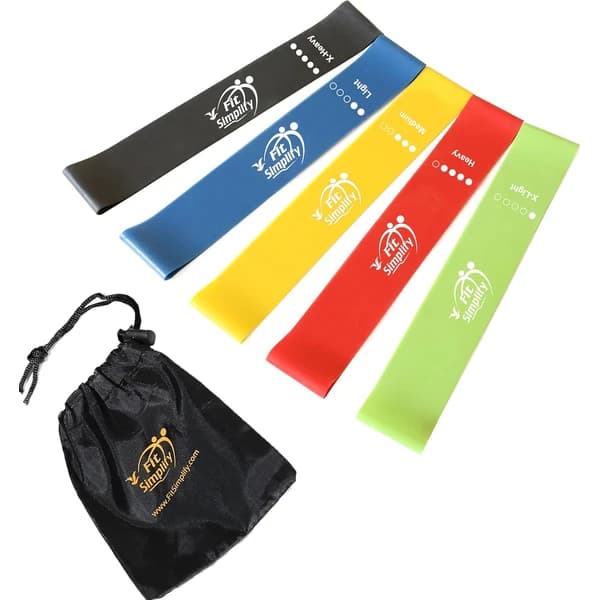
If you are not ready to invest several hundred dollars in dumbbells, resistance bands can still support progressive overload — you just apply it differently. Instead of adding load, you progress through band thicknesses (lighter to heavier) and move on to harder exercise variations.
The Fit Simplify Resistance Loop Bands 5-Pack comes with five bands of increasing resistance (2–35 lbs equivalent), giving you a full spectrum to work through. Rated 4.7 stars with thousands of verified reviews, they are the most commonly recommended entry-level home gym tool. At under $15, the price-to-value ratio is unmatched.
The honest trade-off: bands are harder to measure precisely, and tension varies throughout the range of motion. For true load-based progression, you will eventually want dumbbells or a barbell. But for beginners on a budget, or as a supplement to dumbbell training, bands are an excellent starting tool.
Amazon · Affiliate
Fit Simplify Resistance Loop Bands (5-Pack)
4.7
Premium latex resistance bands for all fitness levels. Perfect for home workouts, stretching, and rehab.
$10–$15Check Price on Amazon
When dumbbells are worth it vs bands:
- If you can afford it and have the space, start with adjustable dumbbells. The ability to increase load by exactly 2.5 lbs is the cleanest implementation of progressive overload.
- If budget is the primary constraint, start with bands, apply rep/variation progression, and upgrade to dumbbells within 3–6 months as your budget allows.
Nutrition for Progressive Overload
No training principle works without adequate nutrition to support it. Progressive overload creates the signal for muscle growth; nutrition provides the raw material. Two aspects matter most.
Protein: The Building Block
Muscle protein synthesis — the process by which your body builds new muscle tissue — requires dietary protein. A 2018 systematic review and meta-analysis in the British Journal of Sports Medicine (Morton et al.) found that protein intakes of ~1.6 g per kg of bodyweight per day maximized muscle gain during resistance training. For a 180 lb (82 kg) person, that is about 130–145 g of protein per day.
Getting that amount from whole food alone is possible but requires deliberate planning. A high-quality protein powder taken post-workout simplifies hitting your targets, especially on busy days.
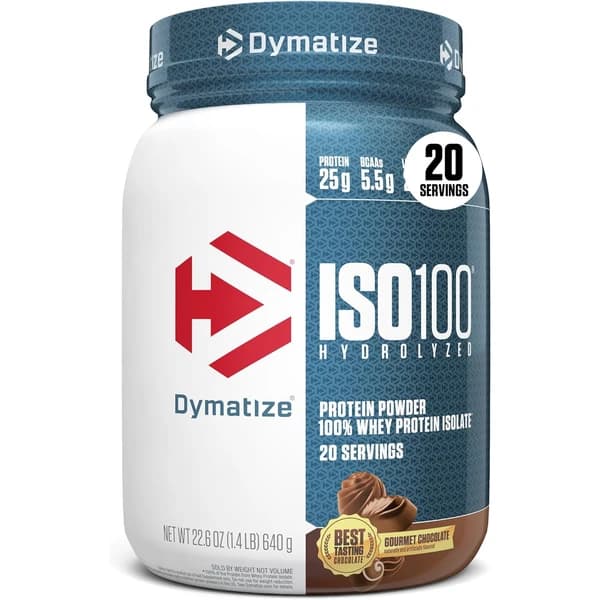
Dymatize ISO100 Whey Protein Isolate delivers 25g of fast-absorbing protein per serving with under 1g of fat and sugar. As an isolate (not a concentrate), it digests quickly — ideal for the post-workout window when muscle protein synthesis rates are elevated. It carries a 4.7-star rating with thousands of reviews, and the clean macro profile means it fits into any diet structure.
Amazon · Affiliate
Dymatize ISO100 Whey Protein Isolate
4.7
Fast-absorbing whey isolate with 25g protein and under 1g of fat and sugar per serving. Great for post-workout.
$35–$60Check Price on Amazon
Creatine: The Most Proven Supplement for Progressive Overload
If you take one supplement to amplify progressive overload, make it creatine monohydrate. The evidence is overwhelming and consistent: creatine supplementation increases phosphocreatine stores in muscle, allowing you to complete more reps at a given weight — which directly supports load and volume progression.
A 2017 meta-analysis in the Journal of the International Society of Sports Nutrition found that creatine supplementation during resistance training produced an average 8% greater increase in strength and 14% greater increase in weightlifting performance compared to placebo. That difference compounds significantly over six months of progressive overload.
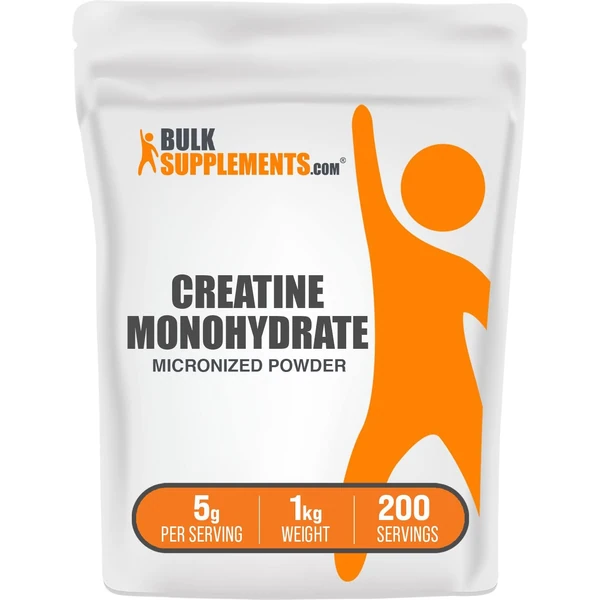
BulkSupplements Creatine Monohydrate is pure micronized creatine with no fillers, no artificial additives, and no proprietary blends — just creatine monohydrate. It is third-party lab-tested for purity and priced at $20–$40 depending on batch size, making it the most cost-effective performance supplement available. It earns a 4.7-star rating across thousands of reviews.
Dosing: 3–5 grams per day, taken at any time. No loading phase is required, though a loading protocol (20g/day for 5 days) does accelerate saturation.
Amazon · Affiliate
BulkSupplements Creatine Monohydrate
4.7
Pure micronized creatine monohydrate. No fillers, no additives. Lab-tested for purity.
$20–$40Check Price on Amazon
Caloric Context
Progressive overload works best in a slight caloric surplus (250–500 calories above maintenance). This provides the energy for heavier sessions and the raw materials for tissue repair and growth. If you are simultaneously trying to lose fat, progressive overload still works — but weight on the bar will increase more slowly, and you will need to be especially diligent with protein intake (aim for the higher end: 1.8–2.2 g/kg).
6-Month Progressive Overload Plan
This plan is designed for a beginner training 3 days per week (Monday/Wednesday/Friday or equivalent). It uses a full-body structure, applies load progression as the primary overload method, and shifts progressively toward higher volume as the months progress.
Month 1–2: Foundation Phase (Learn the Lifts + Start Loading)
Goal: Build movement quality, establish baseline numbers, begin weekly load progression.
Session Structure (45–55 min):
- Squat variation: 3 × 8
- Hip hinge: 3 × 8
- Horizontal push: 3 × 8
- Horizontal pull: 3 × 8
- Vertical push: 2 × 10
- Core (plank/dead bug): 2 × 30 sec
Progressive overload rule: Add 2.5–5 lbs to upper body lifts and 5 lbs to lower body lifts every session you complete all reps with good form.
| Week | Squat Target | Bench Press Target | Dumbbell Row Target | |------|-------------|-------------------|---------------------| | 1 | 65 lbs | 75 lbs | 30 lbs | | 2 | 70 lbs | 80 lbs | 32.5 lbs | | 3 | 75 lbs | 82.5 lbs | 35 lbs | | 4 | 80 lbs | 85 lbs | 37.5 lbs | | 5 | 85 lbs | 87.5 lbs | 40 lbs | | 6 | 90 lbs | 90 lbs | 42.5 lbs | | 7 | 95 lbs | 92.5 lbs | 45 lbs | | 8 | 100 lbs | 95 lbs | 47.5 lbs |
(Adjust starting numbers to your actual baseline — these are illustrative for a 150 lb beginner.)
Month 3–4: Volume Phase (More Sets, Sustained Load Increases)
Goal: Increase weekly volume to 12–15 sets per muscle group. Continue loading but accept slower weekly jumps.
Changes from Month 1–2:
- Add a 4th set to main compound lifts
- Introduce 2–3 accessory exercises (curls, tricep pushdowns, lateral raises)
- Load progression shifts to every 2 sessions instead of every session
Session Structure (55–70 min):
- Main compounds: 4 × 6–8
- Secondary compounds: 3 × 8–10
- Accessories: 2–3 × 10–15
| Week | Primary Lift Target | Volume | |------|---------------------|--------| | 9 | +5 lbs from Month 2 peak | 4 × 8 | | 10 | Hold weight, add reps to 9 | 4 × 9 | | 11 | +5 lbs, reset to 8 reps | 4 × 8 | | 12 | Hold weight, add reps | 4 × 9–10 | | 13 | +5 lbs | 4 × 8 | | 14 | Hold, add reps | 4 × 9 | | 15 | +5 lbs | 4 × 8 | | 16 | Deload — 60% of top weight | 3 × 10 |
Deload: Week 16 is an intentional deload. Reduce weight to ~60% of your peak, keep reps moderate, and let connective tissue and nervous system recover. This prevents overuse injuries and typically results in a performance jump in week 17.
Month 5–6: Intensification Phase (Heavier Loads, Targeted Accessory Work)
Goal: Push primary lifts toward intermediate territory. Introduce double progression (reps then weight). Address any lagging muscle groups.
Double Progression Model:
- Set a rep range (e.g., 3 × 6–10)
- Work within that range until you hit the top (3 × 10) for two consecutive sessions
- Then increase weight by 5 lbs and reset to the bottom of the range (3 × 6)
| Week | Bench Press Example | Method | |------|---------------------|--------| | 17 | 115 lbs × 3 × 6 | New cycle start | | 18 | 115 lbs × 3 × 8 | Rep progression | | 19 | 115 lbs × 3 × 10 | Top of range | | 20 | 120 lbs × 3 × 6 | Weight jump | | 21 | 120 lbs × 3 × 8 | Rep progression | | 22 | 120 lbs × 3 × 10 | Top of range | | 23 | 125 lbs × 3 × 6–8 | Weight jump | | 24 | Deload | Recovery |
6-Month Expected Results (Beginner Starting From Zero):
- Squat: +60–100 lbs
- Bench Press: +40–70 lbs
- Dumbbell Row: +30–50 lbs
- Bodyweight: +5–15 lbs lean mass (in a slight surplus)
- Visible changes: Shoulders, arms, and chest typically become noticeably more developed within 3–4 months
Common Mistakes That Kill Progressive Overload
1. Training Without a Log
If you cannot tell me what weight you used for bench press three weeks ago, you are not doing progressive overload — you are guessing. Start a log today, even if it is a piece of paper.
2. Trying to Add Weight Every Session After Month 2
Beginners can often add load session-to-session for the first 2–3 months. After that, trying to add weight every workout leads to form breakdown, injury, and frustration. Slow down — weekly or biweekly progress is still extraordinary progress.
3. Ignoring Recovery
Progressive overload creates a training stress. Your body responds to that stress during recovery — not during the workout. Sleeping 6 hours, skipping meals, and going out on weekends will blunt the adaptation signal. Aim for 7–9 hours of sleep and consistent protein intake.
4. Chasing Soreness as a Proxy for Progress
Delayed onset muscle soreness (DOMS) is not a reliable indicator of productive training. You can be extremely sore from a new exercise without progressing, and you can progress significantly without being sore at all. Track performance numbers, not how much you hurt.
5. Skipping Deloads
Every 8–12 weeks, your joints, tendons, and nervous system accumulate fatigue. Skipping deloads in the name of "consistency" sets you up for overuse injuries that can sideline you for weeks. A planned week of reduced intensity costs you nothing and typically results in personal records the following week.
6. Changing Programs Too Frequently
"Program hopping" — switching to a new routine every 3–4 weeks — prevents you from ever building enough history on any given lift to apply consistent overload. Pick a program, run it for at least 3 months, and track every session.
Final Thoughts
Progressive overload is the closest thing to a guarantee in fitness: if you consistently ask a little more of your muscles than last time, and you support that work with adequate protein and recovery, you will grow. It is not complicated — but it does require patience, consistency, and a willingness to track your work.
For the next six months, commit to three things: log every session, add weight or reps whenever the target is hit, and keep your protein above 1.6g per kg of bodyweight. If you do those three things, you will look back at where you started and barely recognize yourself.
The equipment does not need to be expensive. A set of adjustable dumbbells or even a resistance band set and a training log is all you need to get started. The supplement stack is simple: a quality protein powder and creatine monohydrate. Everything else is secondary.
Start your first session this week. Log the numbers. Come back next session and beat them.
Affiliate disclosure: Some links in this article are affiliate links. If you purchase through them, we may earn a small commission at no extra cost to you. We only recommend products we genuinely believe in.
About the author
Nathan reviews the research, tests the tools, and writes the guides at LeanBodyEngine — evidence-first, no sponsored content, no supplement shilling.
Related articles


Subscribe
Never miss a new article
Get an email whenever we publish a new fitness guide, supplement review, or workout plan. One short email per post — that's it.
Unsubscribe anytime. We only email when there's a new post.