
How to Get Bigger Arms: A Beginner's Complete Training Guide
Learn how to get bigger arms with this evidence-based beginner guide — the best exercises, set/rep schemes, weekly volume targets, and recovery rules.
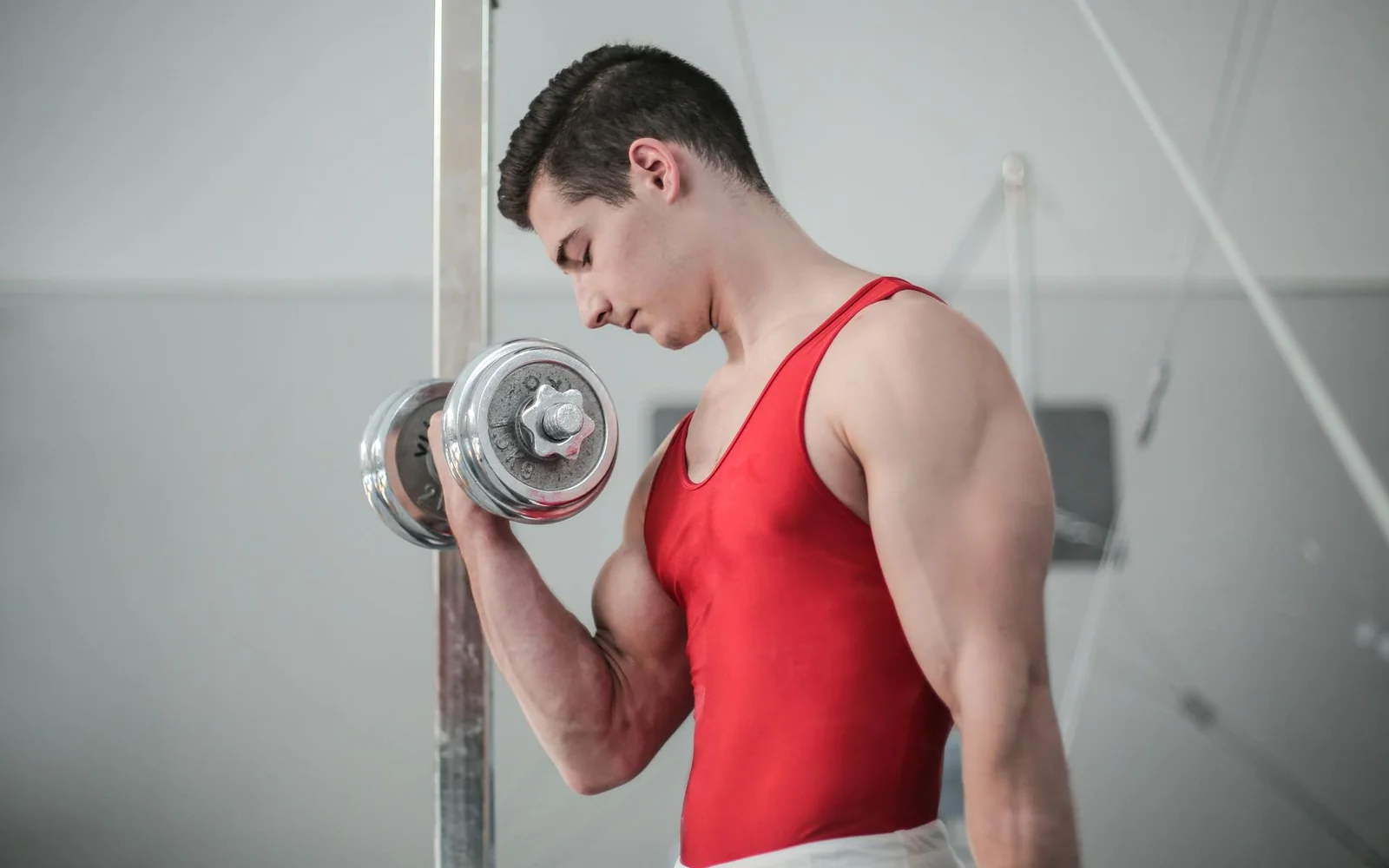
Arms are the most obvious muscle group on any physique — the one visible in a t-shirt, the first thing flexed in every mirror, and the single most common goal stated by new lifters. The frustrating truth? Arms also grow slower than nearly every other muscle group, which is why "I've been training for 6 months and my arms look the same" is the most common complaint in beginner gym forums. This guide lays out how to get bigger arms with the exact exercises, weekly volume, and recovery protocol that actually move the tape measure.
Key Takeaways
- Triceps make up 60–70% of upper arm mass — most beginners under-train them while obsessing over curls.
- The effective weekly volume range for arm hypertrophy is 10–16 hard sets per muscle (8 is the floor, 20+ is junk volume).
- Rep ranges of 6–12 for strength-focused sets and 10–15 for isolation work hit the full hypertrophy spectrum.
- Train arms 2–3 times per week — one massive arm day is less effective than the same volume split across two sessions.
- Stretch-emphasized positions (incline curl, overhead extension) produce ~20% more hypertrophy than contracted-only variations.
- Compound movements (rows, pull-ups, close-grip press) should form the base — direct isolation work is the polish, not the foundation.
Arm Anatomy: What You're Actually Growing
Your arm is not "the biceps." It's three muscle groups working together, and the biggest of them is probably not the one you're training most.
Triceps (60–70% of upper arm mass)
The back of your arm. Three heads — long, lateral, medial — and responsible for most of the size you see in a flexed arm from the side. The triceps is the biggest contributor to arm circumference, but most beginners train biceps 2× as often.
Biceps (20–25% of upper arm mass)
The front of your arm. Two heads — long (outer) and short (inner) — plus the underlying brachialis, which adds width when developed.
Forearms (15–20%)
Underrated. A bigger forearm makes the biceps peak look larger by contrast, and grip-dependent compounds (rows, pull-ups, deadlifts) develop them naturally.
Implication: if you want bigger arms, triceps work should match or exceed biceps work. Not the other way around.
The Contrarian Truth Most Beginners Miss
Here is the uncomfortable fact: most beginners do too much direct arm isolation work and not nearly enough compound training. Endless sets of curls and pushdowns on a weak compound base is like painting a house that has no frame. Heavy rows and pull-ups build the biceps foundation. Close-grip presses and dips build the triceps foundation. Direct isolation work then polishes what the compounds built.
If you are less than 6 months into training and your weekly routine does not include at least 2–3 heavy compound pulling movements and 2–3 heavy compound pushing movements, no amount of arm specialization will save you. Fix the base first — the isolation work pays off much more once compounds are in place.
The LBE Arm Growth Formula
The LBE Arm Growth Formula is a three-part system that determines whether your arm training actually produces size:
L — Load the stretch. Always include at least one exercise per muscle that emphasizes the stretched position (incline curl for biceps, overhead extension for triceps). Stretch-mediated hypertrophy is real and measurable.
B — Balance the ratio. Match or exceed triceps sets relative to biceps sets. A 55/45 triceps-to-biceps split is the minimum; 60/40 is better. Imbalancing toward biceps produces the "noodle arms" look — big front, nothing behind.
E — Earn the isolation. Compound movements earn the right to effective isolation work. If your rows, pull-ups, and presses are progressing, your isolation work will compound on top of a growing base. If the compounds are stagnant, add isolation volume cautiously.
Apply all three and you have the framework. Violate any one of them and results plateau predictably.
The Volume Sweet Spot for Arm Growth
A 2022 meta-analysis in Journal of Sports Sciences examined hypertrophy-per-set across 20+ studies and found the effective range for small muscles (arms, calves, rear delts) sits around 8–15 hard sets per muscle per week. Below 6 sets, growth stalls. Above 20, junk volume accumulates without added gains.
Target volume (intermediate beginners, 3–12 months in):
- Biceps: 10–14 sets/week
- Triceps: 12–16 sets/week
- Forearms: 4–6 dedicated sets (plus whatever you get from grip-work)
Spread across 2–3 sessions per week. One massive "arm day" with 25 sets of curls is worse than 10 sets of curls split across two days — the research is unambiguous.
The 7 Arm Exercises That Actually Work
Biceps (3 exercises)
1. Barbell or dumbbell curl — the anchor. Heavy, strict form, 3 sets of 6–10.
2. Incline dumbbell curl — puts the long head of the biceps on stretch. Stretch-emphasized positions have been shown to produce ~20% more hypertrophy than contracted-emphasized versions (Oranchuk et al., 2019). 3 sets of 8–12.
3. Hammer curl — trains the brachialis (the muscle under the biceps that adds width) and brachioradialis (forearm). 2–3 sets of 10–12.
Triceps (3 exercises)
4. Close-grip bench press or dip — heavy compound. 3 sets of 6–10. If you can't dip yet, sub weighted close-grip push-ups or tricep-focused bench.
5. Overhead triceps extension (dumbbell or rope) — puts the long head on stretch. Same stretch-mediated hypertrophy principle as the incline curl. 3 sets of 10–12.
6. Triceps pushdown (band or cable) — lateral and medial head emphasis. 2–3 sets of 10–15, high-rep burnout.
Forearms (1 exercise)
7. Reverse curl or wrist curl — direct forearm loading. 2–3 sets of 12–15 at the end of the session.
Exercise Comparison: Biceps vs. Triceps
| Exercise | Peak Contraction | Best For | Sets / Reps | |---|---|---|---| | Barbell curl | Short/contracted | Overall bicep mass | 3–4 × 6–10 | | Incline dumbbell curl | Long head stretched | Bicep peak & length | 3 × 8–12 | | Hammer curl | Neutral / brachialis | Arm width & thickness | 2–3 × 10–12 | | Preacher curl | Short head contracted | Lower bicep fullness | 2–3 × 10–12 | | Close-grip bench / dip | All heads (compound) | Tricep mass base | 3–4 × 6–10 | | Overhead extension | Long head stretched | Long-head size | 3 × 10–12 | | Tricep pushdown | Lateral / medial | Lateral head detail | 2–3 × 10–15 | | Tricep kickback | Contracted position | Medial head polish | 2 × 12–15 |
The Equipment You Need
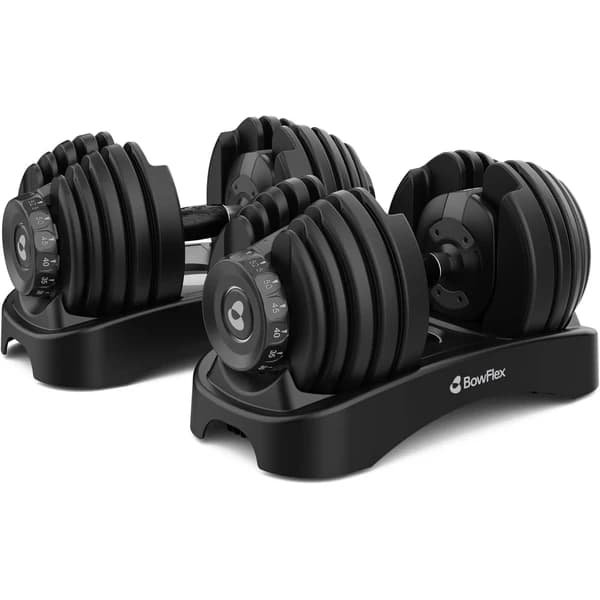
You don't need a commercial gym. A pair of quality adjustable dumbbells covers every exercise on this list except pull-up chins and dips — and a doorway bar fixes that.
Amazon · Affiliate
Bowflex SelectTech 552 Adjustable Dumbbells
4.8
Replace 15 sets of weights. Dial adjusts from 5 to 52.5 lbs. Space-saving design for home gyms.
$300–$400Check Price on Amazon
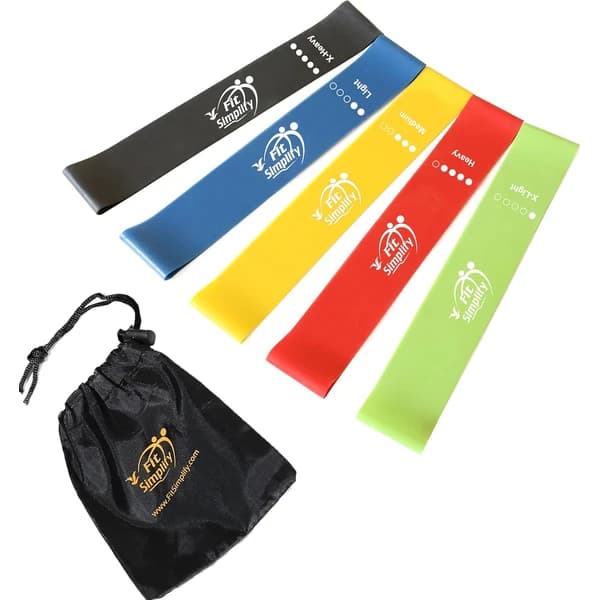
For resistance band pushdowns and band-assisted chin-up progressions, a quality resistance band set replaces the cable stack entirely at home.
Amazon · Affiliate
Fit Simplify Resistance Loop Bands (5-Pack)
4.7
Premium latex resistance bands for all fitness levels. Perfect for home workouts, stretching, and rehab.
$10–$15Check Price on Amazon
Sample 2-Day Arm Split (Added to an Existing Program)
This slots onto the end of two training days per week. Takes ~20 extra minutes each session.
Day A — Arm work after pulling day
- Barbell curl — 4 × 6–8
- Incline dumbbell curl — 3 × 10–12
- Hammer curl — 3 × 12
- Band pushdown — 3 × 15
- Reverse curl — 2 × 15
Day B — Arm work after pushing day
- Close-grip dumbbell press — 4 × 8
- Overhead dumbbell extension — 3 × 10–12
- Chin-up (or band-assisted) — 3 × max
- Zottman curl — 2 × 10
- Wrist curl — 2 × 20
Total weekly volume: 12 biceps sets, 13 triceps sets, 4 forearm sets. Right in the sweet spot.
Arm Training Programming: 8-Week Volume Progression
| Week | Sets — Biceps | Sets — Triceps | Notes | |---|---|---|---| | 1–2 | 10 | 12 | Establish form, find working weights | | 3–4 | 11 | 13 | Add 1 set per muscle; increase load where reps top out | | 5–6 | 12 | 14 | Introduce stretch-emphasis variation if not already using | | 7 | 14 | 16 | Peak week — push volume ceiling | | 8 | 6 | 8 | Deload — reduce sets by ~40%, keep intensity |
After the deload, restart at Week 3 volume with heavier loads than Week 1. This is how you turn 8 weeks of training into compounding progress rather than a flat line.
The Three Rules That Separate Growth From Waste
1. Leave 1–2 reps in reserve (most sets)
Going to absolute failure every set is a beginner mistake — it wrecks recovery without adding proportional growth. Leave "1–2 reps in the tank" for most sets; save failure work for the last set of an exercise.
2. Slow the eccentric (lowering) phase
Lift in 1 second, lower in 3. The eccentric portion is where most muscle damage and growth signaling happens. A 2019 review showed eccentric-focused training produces 15–20% more hypertrophy than concentric-focused at matched volume.
3. Progressive overload every 1–2 weeks
Write down your weight and reps. Next session, do one more rep or add 2.5 lbs. If you did the same 3×10 at 25 lb for six weeks, that's why your arms haven't grown.
Recovery: Where Arms Actually Grow
Arms are small muscles with fast recovery. They can often train every 48 hours — but only if you feed and sleep them.
Protein
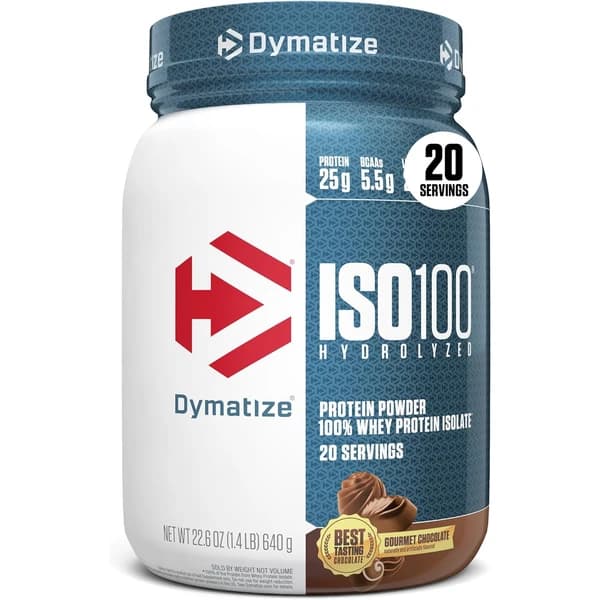
Arms need 0.7–1.0 g protein per lb bodyweight, same as any muscle. Under-feeding is the single most common reason beginner arm training "doesn't work." A whey shake is the fastest way to close the gap on training days.
Amazon · Affiliate
Dymatize ISO100 Whey Protein Isolate
4.7
Fast-absorbing whey isolate with 25g protein and under 1g of fat and sugar per serving. Great for post-workout.
$35–$60Check Price on Amazon
BCAAs and intra-workout support
On high-volume arm days, intra-workout BCAAs can reduce soreness and support muscle protein synthesis during the session — useful when you're pushing 13–16 weekly triceps sets.
Amazon · Affiliate
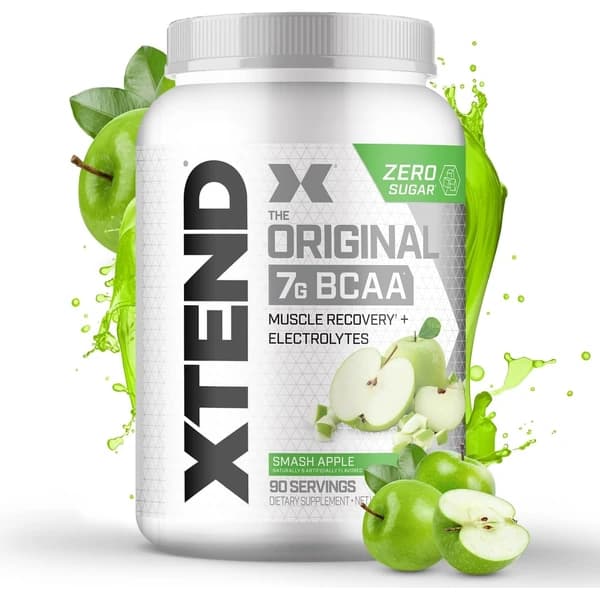
Xtend Original BCAA Powder
4.6
7g BCAAs per serving in the proven 2:1:1 ratio. Zero sugar, hydration minerals, and 14 flavors. Supports muscle recovery and endurance.
$25–$40Check Price on Amazon
Creatine monohydrate
The most-studied ergogenic in the world. 3–5 g daily improves volume capacity by ~15% across 200+ trials — which for arm training means more reps per set, which means more growth stimulus. No loading phase needed; take it anytime.
Expert tip: Dr. Mike Israetel (Renaissance Periodization) puts it bluntly: "If your arms aren't growing and you're not taking creatine, you're leaving maybe 10–15% of your potential size on the table for no reason."
What Beginners Expect vs What's Realistic
Rough beginner timelines for arm growth (assuming 3–6 hrs training/week, protein hit, sleep sufficient):
- Month 1–2: strength gains, slight pump-fullness, no visible size yet
- Month 3–4: 0.25–0.5 inch arm circumference gain
- Month 6: 0.5–1.0 inch gain — noticeable to others
- Year 1: 1–1.5 inches for most men, 0.5–1 inch for most women
- Year 2–3: growth slows dramatically; 0.25–0.5 inch/year is realistic
Anyone promising "2 inches in 30 days" is selling a supplement, a routine, or both. Arm growth is a 1–3 year project.
Common Mistakes
- Only training biceps — triceps are 60–70% of arm mass. Skewing work to the smaller muscle guarantees small arms.
- Cheating form — swinging the weight or using momentum recruits other muscles and reduces tension on the arms. Strict form with 25 lbs beats ego reps at 40.
- Using the same exercises forever — after 2–3 months, rotate in variations (preacher curl, spider curl, tricep kickback) to hit different fiber recruitment patterns.
- No compound training — curl-only routines build small, soft arms. Heavy rows, pull-ups, and presses build the foundation isolations polish.
- Neglecting sleep — growth hormone pulses heaviest in the first 2 hours of sleep. Sub-6-hour sleepers consistently show 20–40% less hypertrophy response to identical training.
Final Thoughts
Understanding how to get bigger arms isn't about finding the "perfect" exercise — it's about applying the LBE Arm Growth Formula consistently for long enough that biology has to respond. Load the stretch. Balance the ratio. Earn the isolation. Hit 12–15 weekly sets on each muscle group, eat enough protein, lift progressively heavier, and 6 months in, your t-shirts will fit differently.
The compound base is not optional. The triceps-first mindset is not optional. Progressive overload is not optional. Everything else — exercise selection, rep ranges, which protein powder you use — is secondary to those three realities.
For the rest of the physique work, pair this with our compound vs isolation exercises guide or subscribe to the LeanBodyEngine newsletter for a new muscle-group specialization program each month.
Affiliate disclosure: Some links in this article are affiliate links. If you purchase through them, we may earn a small commission at no extra cost to you. We only recommend products we genuinely believe in.
About the author
Nathan reviews the research, tests the tools, and writes the guides at LeanBodyEngine — evidence-first, no sponsored content, no supplement shilling.
Related articles


Subscribe
Never miss a new article
Get an email whenever we publish a new fitness guide, supplement review, or workout plan. One short email per post — that's it.
Unsubscribe anytime. We only email when there's a new post.