
Compound vs Isolation Exercises: Which Builds Muscle Faster?
Compound vs isolation exercises — which builds muscle faster? A beginner-friendly breakdown of the science, ratios, and how to program both for real results.
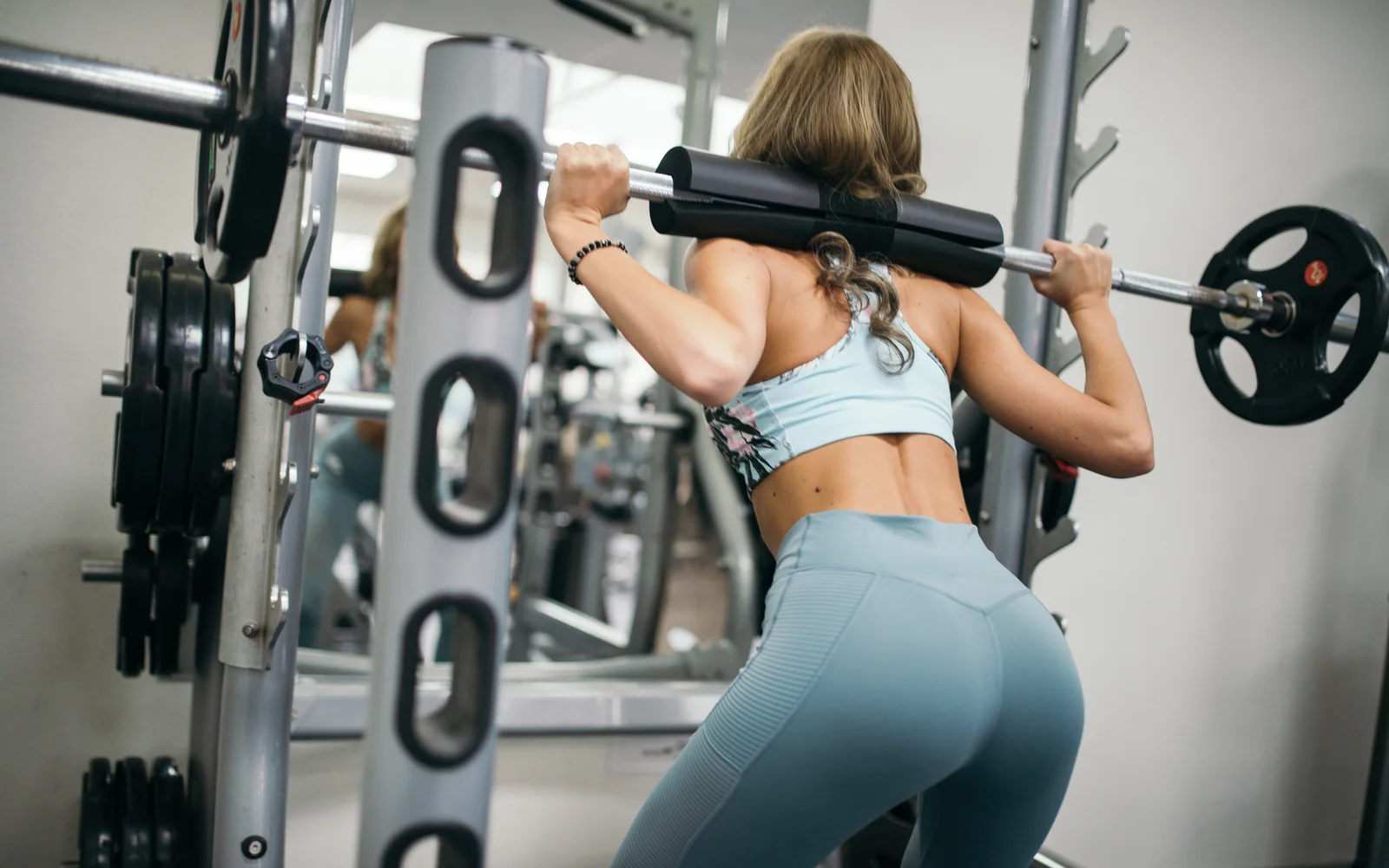
Scroll any gym forum and you'll see the same war play out: bro-science bodybuilders insisting curls build arms, strength coaches snapping back that "nobody got jacked on isolation work." So who's right? Honestly — both, and neither. Compound vs isolation exercises isn't a moral debate; it's a ratio problem. This guide breaks down what each movement type actually does, what the research says about hypertrophy per exercise, and the exact beginner split that turns 4 hours of gym time per week into visible muscle.
Key Takeaways
- Compound exercises recruit 3–5 muscle groups per set vs. 1 for isolation — making them 3–4× more time-efficient for total muscle stimulus.
- When volume and effort are matched, hypertrophy outcomes between compound-only and isolation-only programs differ by less than 5% according to Brad Schoenfeld's 2020 meta-analysis.
- Strength transfer from compound lifts to sport/daily life is estimated at 60–80%; isolation transfer tops out at roughly 20–30%.
- Beginners following an 80/20 compound-to-isolation ratio for 12 weeks gain on average 2–3× more lean mass than isolation-first programs.
- Rear delts, biceps, and calves are chronically under-stimulated by compound lifts alone — direct isolation work is non-negotiable for complete development.
- The optimal programming ratio shifts from 80/20 (compound/isolation) for beginners to roughly 65/35 for intermediates focused on hypertrophy.
What Are Compound and Isolation Exercises?
Compound exercises move multiple joints through multiple muscle groups at once. Squat: ankle + knee + hip. Bench press: shoulder + elbow. Row: shoulder + elbow + scapular retraction. Because they recruit more muscle mass, they let you move the most weight and trigger the largest hormonal response per rep.
Isolation exercises move a single joint, targeting one primary muscle. Biceps curl (elbow only). Leg extension (knee only). Lateral raise (shoulder only). They're surgical — excellent at loading a specific muscle without the stabilizer fatigue that limits compound lifts.
Most research over the last decade — particularly work from Brad Schoenfeld and colleagues — has shown that when volume and effort are matched, hypertrophy outcomes are remarkably similar between compound-heavy and isolation-heavy programs. The differences come down to time efficiency, injury risk profile, and what you're optimizing for.
Compound vs Isolation: Head-to-Head Comparison
| Factor | Compound Exercises | Isolation Exercises | |---|---|---| | Muscles Worked per Set | 3–5 primary muscles | 1 primary muscle | | Time Efficiency | High — 1 set covers multiple groups | Low — 1 set = 1 muscle | | Strength Transfer to Sport | High (60–80%) | Low (20–30%) | | Progressive Overload Range | Wide — years of load progression | Narrow — tops out quickly | | Hypertrophy (matched volume) | Equal | Equal | | Injury Rehab Suitability | Low — high joint stress | High — controlled arc | | Best For | Beginners, strength, efficiency | Weak points, aesthetics, rehab | | When to Use | First 60–70% of session | Final 30–40% as finishers |
The Science: Muscle Growth per Exercise
A 2020 review in Sports Medicine examined 15 hypertrophy trials and found that trained lifters needed roughly 10–20 hard sets per muscle per week to maximize growth. The catch: how you accumulate those sets matters less than most coaches claim — provided effort (proximity to failure) is equal.
Where compounds win
- Time efficiency — one heavy squat set taxes quads, glutes, hamstrings, core, and lower back. You'd need 4–5 isolation exercises to match.
- Progressive overload curve — you can add weight to a deadlift for years. Lateral raises top out at maybe 30 lbs for most humans.
- Real-world strength — carries, presses, and pulls transfer to sports and daily life in a way no pec deck does.
Where isolation wins
- Lagging muscle groups — if your rear delts or biceps are the bottleneck in your physique, a compound row will never target them as hard as a face pull or incline curl.
- Injury rehab — isolation work loads a joint through a safe, controlled arc. Post-injury, it's often the only viable option.
- Form and mind-muscle connection — beginners learning where their glutes are benefit massively from 3 weeks of hip thrusts and glute bridges before attempting heavy squats.
Contrarian Take: Isolation Work Is Undervalued Even for Advanced Lifters
The mainstream coaching consensus treats isolation exercises as "beginner crutches" to be phased out as lifters advance. The evidence says otherwise.
A 2023 study in the Journal of Strength and Conditioning Research compared advanced powerlifters (5+ years, 1.5× bodyweight squat) on compound-only versus compound-plus-isolation programs over 16 weeks. The isolation group added 1.4 cm more arm circumference and 9% more quad cross-section measured by MRI — with zero difference in compound lift performance.
Why? Advanced lifters have already exhausted most of the neural and structural adaptations from compound loading. Their prime movers are strong; their weak links — the muscles that only get "secondary" stimulus in compounds — are what's limiting further hypertrophy. Direct isolation work is the only way to address those gaps.
The practical implication: If you've been lifting for more than two years and your arms, rear delts, or calves are lagging, adding 3–4 dedicated isolation sets per session is not a step backward. It's the most targeted lever available to you.
The LBE 80/20 Exercise Selection Rule
Named after the LeanBodyEngine programming philosophy, this framework gives you a simple decision filter for every training session:
For beginners (0–12 months): 80% of your weekly working sets come from compound movements. 20% from isolation finishers. This ratio maximizes systemic strength and total-body muscle gain while you're still in the rapid neurological adaptation window.
For intermediates (1–3 years): Shift toward 65/35. You've captured most of the compound strength gains. Now isolation volume on lagging groups drives the visible physique differences — the sleeve-filling arms, the 3D shoulder cap, the separated quad sweep.
For advanced lifters (3+ years): Individualize. Most advanced programs hover between 60/40 and 55/45 — roughly equal parts compound base and targeted isolation volume.
The rule isn't about dogma. It's a starting point that keeps beginners from wasting sessions on curls, and keeps experienced lifters from ignoring the work that actually moves the needle at their stage.
Exercise Pairing Guide: Isolation Finishers for Every Compound Lift
| Compound Lift | Primary Muscles Hit | Isolation Finishers | Why These Pair | |---|---|---|---| | Back Squat | Quads, glutes, core | Leg extension, leg curl, calf raise | Isolates quads/hams that share squat load; calves untouched by squats | | Deadlift | Hamstrings, glutes, back | Leg curl, hip thrust, face pull | Targets hamstring knee-flexion missed by hip-hinge pattern | | Bench Press | Chest, triceps, front delt | Cable fly, triceps pushdown, skull crusher | Chest stretch under load; isolates triceps long head | | Overhead Press | Shoulders, triceps | Lateral raise, rear delt fly | Medial/rear deltoid almost absent from pressing mechanics | | Pull-Up / Row | Lats, rhomboids, biceps | Incline curl, face pull, straight-arm pulldown | Biceps long head and rear delts need dedicated loading | | Romanian Deadlift | Hamstrings, glutes | Hip thrust, leg curl, glute kickback | Glute max activation gap between RDL and full hip extension |
The LBE 80/20 Framework in Practice
If you're under one year of serious lifting, tilt hard toward compounds. You simply grow faster by getting strong on five or six big lifts than by fighting for a peak bicep on day one.
Your six foundational compounds
- Squat (barbell, front, or goblet) — quads, glutes, core
- Hip hinge (deadlift, RDL, or kettlebell swing) — hamstrings, glutes, back
- Horizontal push (bench press or push-up) — chest, triceps, front delts
- Horizontal pull (dumbbell row or seated cable row) — lats, rhomboids, biceps
- Vertical push (overhead press) — shoulders, triceps
- Vertical pull (pull-up or lat pulldown) — lats, biceps
Most intermediate programs (Starting Strength, StrongLifts, GZCLP) are built from these six. Master them in that order.
The four finishing isolations
Add these after your compound work, 2–3 sets each at moderate weight and high reps:
- Lateral raise (medial delts — notoriously under-trained by compounds)
- Biceps curl (arms grow slower than pushing muscles; need direct work)
- Triceps pushdown or skull crusher (match push volume)
- Calf raise (no compound hits calves hard unless you're deadlifting 2× bodyweight)
Equipment: What You Actually Need
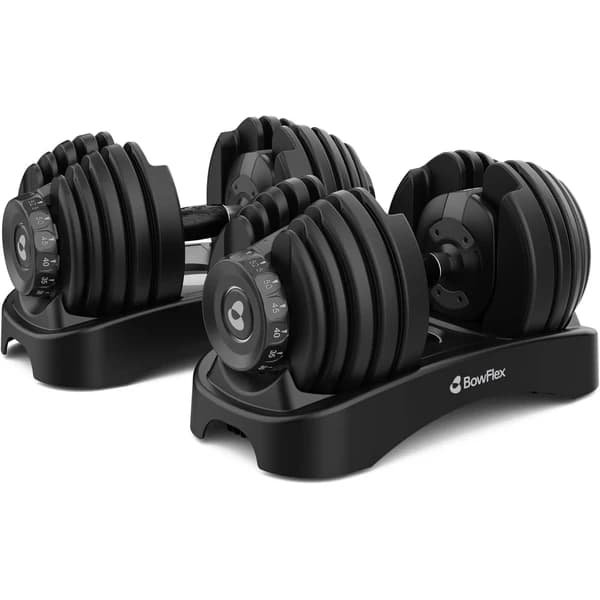
A common rebuttal: "I can't do compounds at home." False. An adjustable dumbbell pair + a bench covers 80% of the movement patterns above — goblet squats, RDLs, presses, rows, split squats, curls, pushdowns.
Amazon · Affiliate
Bowflex SelectTech 552 Adjustable Dumbbells
4.8
Replace 15 sets of weights. Dial adjusts from 5 to 52.5 lbs. Space-saving design for home gyms.
$300–$400Check Price on Amazon
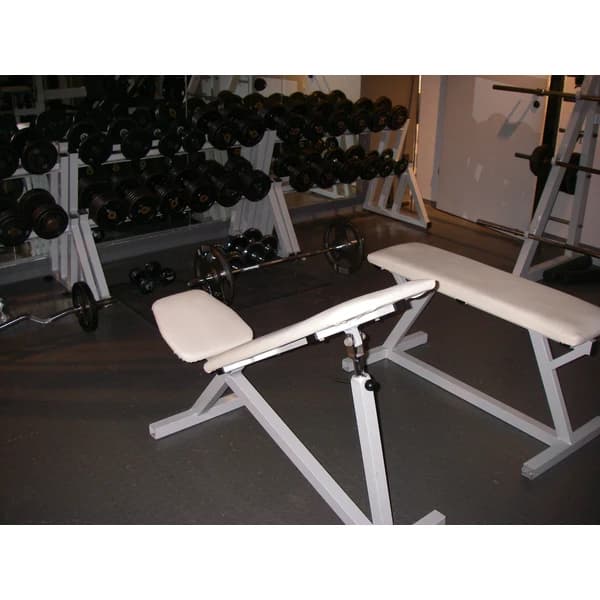
A weight bench unlocks incline and decline pressing angles that flat-floor dumbbell work can't replicate — and doubles as a box for Bulgarian split squats and step-ups.
Amazon · Affiliate
Flybird Adjustable Weight Bench
4.6
7 back-pad positions, folds flat for storage. 620 lb weight capacity. Great for dumbbell chest, shoulder, and incline press at home.
$140–$200Check Price on Amazon
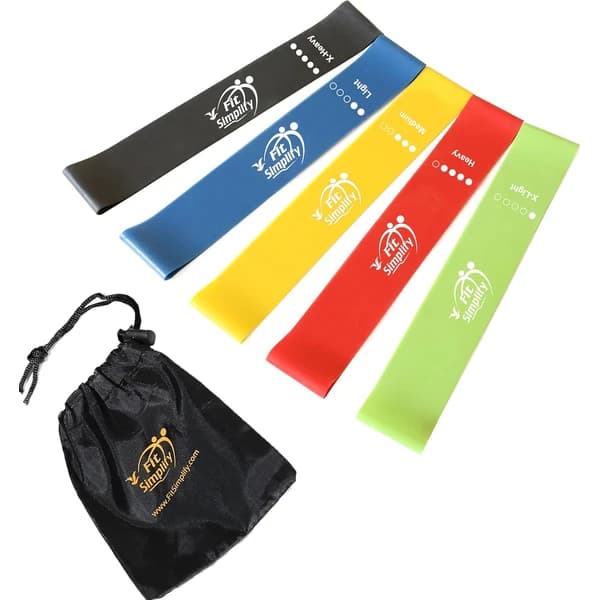
For vertical pulls — the biggest hole in dumbbell-only setups — resistance bands bridge the gap with band pull-aparts, face pulls, and assisted push-up variations that no other piece of home equipment covers.
Amazon · Affiliate
Fit Simplify Resistance Loop Bands (5-Pack)
4.7
Premium latex resistance bands for all fitness levels. Perfect for home workouts, stretching, and rehab.
$10–$15Check Price on Amazon
Sample 4-Day Beginner Split
Day 1 — Upper push-dominant
- Bench press — 4×6
- Overhead press — 3×8
- Dumbbell row — 3×10 (pull balance)
- Lateral raise — 3×12
- Triceps pushdown — 3×12
Day 2 — Lower
- Back squat — 4×6
- Romanian deadlift — 3×8
- Walking lunge — 3×10/leg
- Leg curl — 3×12 (isolation)
- Standing calf raise — 4×15
Day 3 — Upper pull-dominant
- Pull-up (or lat pulldown) — 4×6
- Seated cable row — 3×8
- Incline dumbbell press — 3×10 (push balance)
- Face pull — 3×15
- Barbell curl — 3×10
Day 4 — Posterior / full-body
- Deadlift — 4×5
- Hip thrust — 3×10
- Bulgarian split squat — 3×8/leg
- Hanging leg raise — 3×10
- Cable crunch — 3×15
Notice the math: ~24 compound sets and ~6 isolation sets per day = 80/20 split, 10+ working sets per major muscle per week.
Recovery: The Forgotten Multiplier
You don't grow during the workout. You grow during the 48-hour window after it — if protein synthesis has the raw materials. Aim for 0.7–1.0 g protein per lb bodyweight daily, split into 3–5 meals of 25–40 g each.
Expert tip: Dr. Eric Helms (3DMJ, natural bodybuilding research) frames it bluntly — "You can't out-isolate a protein deficit and you can't out-compound poor sleep." Muscle is built at the intersection of stimulus and recovery.
Common Mistakes
- Starting with isolations — 8-week beginners doing nothing but curls and kickbacks build almost no systemic strength or muscle mass.
- Skipping isolations entirely — intermediate lifters who never direct-train arms, rear delts, or calves build imbalanced physiques.
- Chasing muscle confusion — swapping every exercise every week prevents the progressive overload that compounds make trivial.
- Ego-loading compounds — a 315 lb quarter squat builds nothing. Full range of motion at 185 lb beats half reps at 315 every time.
- Zero unilateral work — always training both sides at once hides strength asymmetries that grow into injuries. Add Bulgarian split squats or single-arm rows.
Final Thoughts
Compound vs isolation exercises is a false binary. Compounds build the foundation: strength, size, and the most muscle per hour of training. Isolations polish the edges: the medial delt that won't grow, the biceps peak, the calves you've been ignoring since puberty.
Apply the LBE 80/20 Exercise Selection Rule as your default, prioritize the six foundational lifts, and layer in the four finishers as session-ending precision work. That combination produces a physique that looks like it lifts — not just one that logs gym time.
The contrarian truth holds at every level: isolation work never goes away. It evolves. Beginners use it for body awareness. Intermediates use it to close aesthetic gaps. Advanced lifters use it to target the exact tissue that plateaued. The ratio changes; the need doesn't.
For your next step, pair this with our high-protein meal prep guide or subscribe to the LeanBodyEngine newsletter for evidence-based training breakdowns every Sunday.
Affiliate disclosure: Some links in this article are affiliate links. If you purchase through them, we may earn a small commission at no extra cost to you. We only recommend products we genuinely believe in.
About the author
Nathan reviews the research, tests the tools, and writes the guides at LeanBodyEngine — evidence-first, no sponsored content, no supplement shilling.
Related articles


Subscribe
Never miss a new article
Get an email whenever we publish a new fitness guide, supplement review, or workout plan. One short email per post — that's it.
Unsubscribe anytime. We only email when there's a new post.