
Yoga for Beginners: A Complete Starter Guide for Flexibility and Strength
A complete yoga for beginners guide — equipment, foundational poses, a 4-week routine, and how yoga pairs with strength training to accelerate recovery.
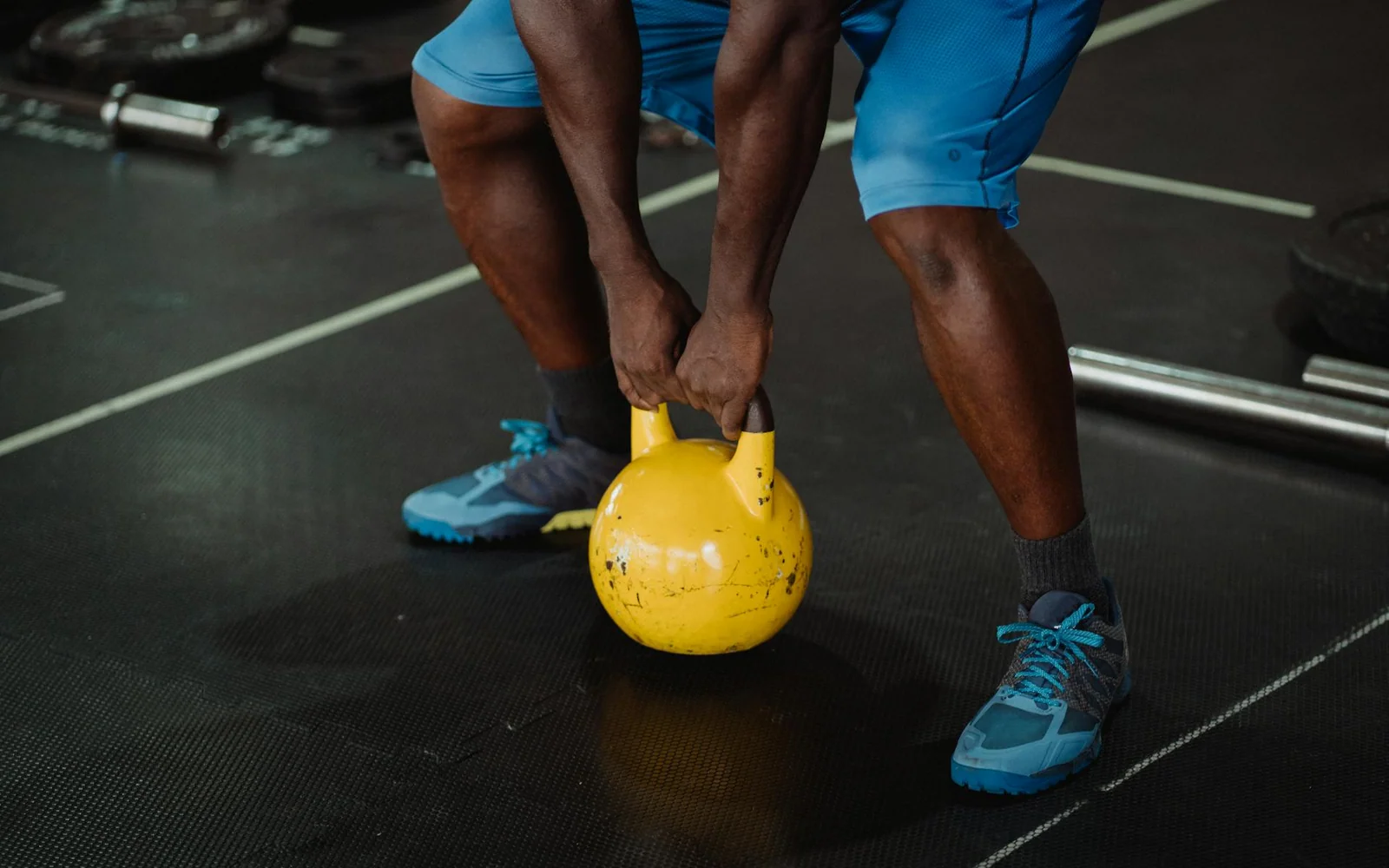
Yoga has a branding problem. For every beginner curious about flexibility and stress relief, there's a YouTube algorithm pushing bendy influencers contorting into arm balances that would take three years to build toward. The actual practice — the one that helped a 135-million-person global community get stronger, more flexible, and more resilient to injury — is far simpler and far more accessible than the Instagram aesthetic suggests. This yoga for beginners guide lays out exactly what to buy, which poses to master first, and a structured 6-week program that turns a foreign discipline into a sustainable habit.
Key Takeaways
- Beginners practicing yoga 2–3x per week gain an average of +35% flexibility (sit-and-reach) within 8 weeks, per a 2020 meta-analysis of 10,000+ participants
- Anxiety and depression markers improve with small-to-moderate effect sizes after 8 weeks — comparable to low-dose SSRI outcomes in some studies
- Start with 20-minute Hatha sessions (Week 1), build to 30 minutes by Week 3 — longer sessions are not required for measurable progress
- The 10 foundation poses in this guide cover 95% of all beginner sequences; master these before attempting arm balances or advanced flows
- Yoga does not blunt strength gains — a 2021 JSCR study confirmed lifters who added 2x weekly yoga matched control-group hypertrophy while improving squat depth by 20%
- Consistency beats intensity: 3 sessions per week for 6 weeks outperforms sporadic long sessions
What Yoga Actually Does for Your Body
The research is now robust enough to separate signal from hype. A 2020 meta-analysis in Complementary Therapies in Medicine (126 studies, 10,000+ participants) confirmed measurable benefits for beginners practicing yoga 2–3x per week over 8 weeks:
- Flexibility: +35% on average (sit-and-reach test)
- Back pain severity: -40% (chronic low-back pain subgroup)
- Anxiety and depression: small-to-moderate effect sizes (comparable to some SSRI outcomes at low doses)
- Resting heart rate: -5–8 bpm
- Sleep quality: +25% on standard measures
What yoga is not: a replacement for resistance training if your goal is muscle growth, or a magic calorie burner. A 60-min yoga session burns ~200–300 kcal — less than walking. Treat it as a recovery, mobility, and stress-management tool that layers brilliantly onto a strength program.
Styles of Yoga: What Actually Differs
Walking into a yoga studio without knowing the style is like ordering "coffee" at a bar with 30 specialty options. Use this comparison to pick the right entry point.
| Style | Intensity | Flexibility Focus | Stress Reduction | Best For | |---|---|---|---|---| | Hatha | Low | High | High | Absolute beginners — start here | | Vinyasa (Flow) | Low–Moderate | Moderate | Moderate | Beginners after 4–6 weeks of Hatha | | Yin | Very Low | Very High | Very High | Recovery days, deep hip mobility | | Restorative | Minimal | Low | Very High | Stress relief, post-injury, burnout | | Ashtanga | High | Moderate | Low | Advanced practitioners only | | Power Yoga | High | Low | Low | Athletes with existing yoga base | | Hot / Bikram | Moderate–High | Moderate | Low | Skip until 3+ months of practice |
Beginner path: Start with Hatha. Add Yin 1x/week after month 1. Graduate to Vinyasa when Hatha feels repetitive.
Styles to skip for month 1: Ashtanga (strict advanced sequence), Power Yoga (strength-demanding), Hot Yoga (heat adds unnecessary difficulty before you have form down), Bikram (rigid 26-pose heated sequence).
Essential Equipment (Under $100)
1. Yoga mat
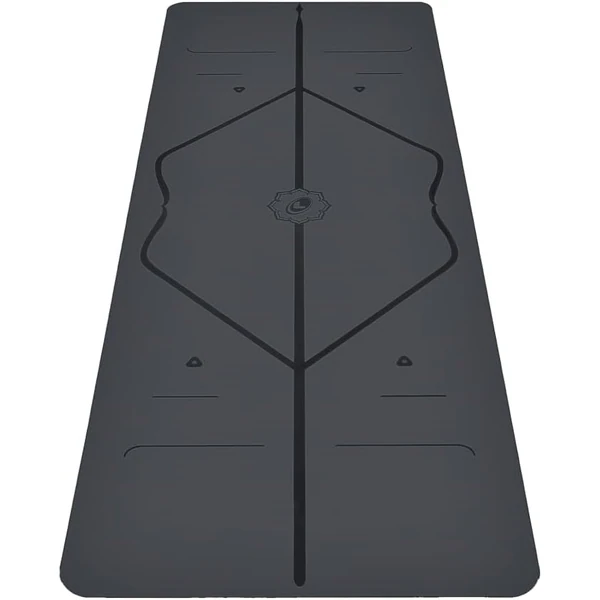
The single non-negotiable. Cheap thin mats slide on hardwood and compress flat within two months. A high-density mat with grip makes every pose easier and lasts a decade. The Manduka PRO is the category benchmark — 6mm thick, lifetime warranty, genuinely built to outlast your interest in yoga.
Amazon · Affiliate
Manduka PRO Yoga Mat
4.8
Lifetime guarantee yoga mat with supreme cushioning. 6mm thick, non-slip surface, eco-friendly.
$80–$120Check Price on Amazon
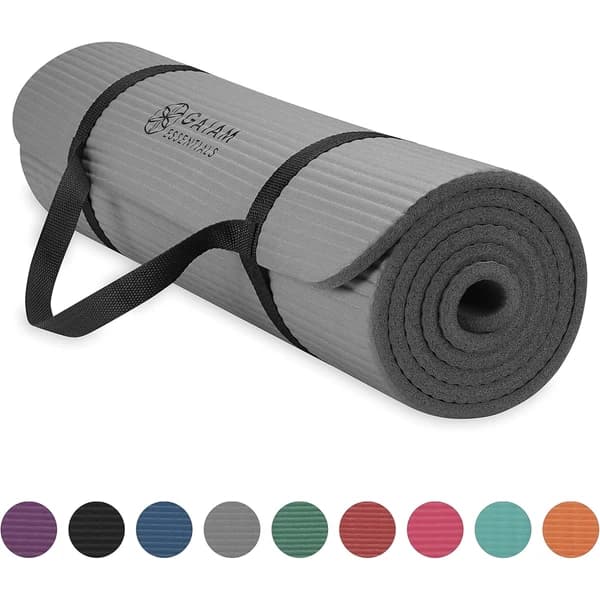
If the Manduka PRO is out of budget, a solid entry-level mat still beats any thin travel mat for grip and cushioning.
Amazon · Affiliate
Gaiam Essentials Thick Yoga Mat (10mm)
4.5
10mm extra-thick comfort mat with non-slip texture. Includes carrying strap. Great entry-level option for beginners.
$20–$30Check Price on Amazon
2. Foam roller (secondary but high-ROI)
Ten minutes of foam rolling before a yoga session increases range of motion by ~15% on average (Halperin et al., 2014). For beginners whose hips, thoracic spine, or lats are the bottleneck, rolling first dramatically improves what poses feel possible.
3. Equipment you don't need yet
- Yoga blocks (improvised with hardcover books for now)
- Yoga strap (a looped resistance band does this job)
- Bolster, wheel, props — zero value in month 1
The 10 Poses Every Beginner Should Master
Skip the fancy arm balances. These 10 build the foundation for 95% of future practice.
Standing
1. Mountain Pose (Tadasana) — the neutral standing posture. Looks like "just standing" but is genuinely the template for alignment.
2. Downward-Facing Dog (Adho Mukha Svanasana) — the full-body stretch. Hamstrings, calves, shoulders, and spine all in one shape.
3. Warrior II (Virabhadrasana II) — hips, quads, shoulders, focus. The most "strength-like" of the standing poses.
4. Tree Pose (Vrksasana) — single-leg balance. The anti-fall-as-you-age pose.
Seated / Floor
5. Child's Pose (Balasana) — the universal reset. Hips, spine, shoulders.
6. Seated Forward Fold (Paschimottanasana) — deep hamstring and back stretch. Use a band or strap around the feet.
7. Pigeon Pose (Eka Pada Rajakapotasana) — hip-opener. Office workers feel this one the most.
8. Cat-Cow (Marjaryasana / Bitilasana) — spinal mobility in flexion and extension. The best "stiff back" reset on earth.
Core / Strength
9. Plank Pose (Phalakasana) — total-body core. Build to 60 seconds.
10. Cobra Pose (Bhujangasana) — thoracic extension, anti-computer-posture. Often feels amazing on day one.
The LBE 6-Week Yoga Foundation Program
This structured progression is designed specifically for beginners who want a concrete roadmap — not just a pose list. It builds session length, pose complexity, and breath awareness in a deliberate sequence over six weeks.
Beginner Pose Progression by Week
| Week | Poses | Duration | Primary Focus | |---|---|---|---| | Week 1 | Mountain, Forward Fold, Downward Dog, Plank, Cobra, Child's Pose | 20 min | Alignment and breath awareness | | Week 2 | Week 1 poses + Sun Salutation A (3 rounds), Tree Pose | 25 min | Flow linking, balance | | Week 3 | Week 2 poses + Warrior II, Pigeon Pose, Cat-Cow | 30 min | Hip opening, longer holds (8 breaths) | | Week 4 | Full Week 3 sequence linked by breath, add Seated Forward Fold | 30 min | Breath-driven movement, moving meditation | | Week 5 | Introduce a 10-min Yin segment (Pigeon hold 3 min/side) after main flow | 35 min | Deep connective tissue work | | Week 6 | Full Hatha flow + Yin cooldown, assess flexibility benchmarks | 35–40 min | Consolidation and self-assessment |
Week-by-Week Instructions
Week 1 — Foundations (20 min)
Each pose for 5 breaths (~30 seconds). Flow: Mountain → Forward Fold → Downward Dog → Plank → Cobra → Downward Dog → Warrior II (both sides) → Tree Pose (both sides) → Child's Pose → Seated Forward Fold → Savasana (rest) 3 minutes.
Week 2 — Add a sun salutation (25 min)
Before the week 1 flow, do 3 sun salutations (surya namaskar A): Mountain → Forward Fold → Half-Lift → Low Lunge → Plank → Cobra/Upward Dog → Downward Dog → Low Lunge → Forward Fold → Mountain.
Week 3 — Deeper holds (30 min)
Hold each pose 8 breaths instead of 5. Add Pigeon Pose (both sides) and Cat-Cow (6 rounds) to the routine. Notice where breath gets shallow — that's where you're still tense.
Week 4 — First "flow" (30 min)
Link standing poses together with breath: inhale up, exhale down, inhale open, exhale fold. This is when yoga starts feeling different from a stretching routine — it becomes a moving meditation.
Week 5 — Introduce Yin (35 min)
After your main Hatha flow, hold Pigeon Pose for 3 minutes each side and add a 2-minute Supine Twist. This is where deep hip and thoracic mobility accelerates rapidly.
Week 6 — Consolidation and Assessment (35–40 min)
Perform your full flow from Week 4, add the Yin cooldown from Week 5, then re-test your sit-and-reach and plank hold time. Most beginners see measurable improvements in both.
The Expert Tip Nobody Tells Beginners
Your breath is the class, not the poses. Yoga coach Leslie Kaminoff (Yoga Anatomy) frames it this way: "A beginner fighting to touch their toes in a forward fold, holding their breath, is getting roughly nothing. A beginner three inches from their toes, breathing deeply, is getting the whole practice."
The rule: if you can't breathe smoothly in a pose, you've gone too deep. Back off 20% — you'll improve faster.
Yoga + Strength Training: The Underrated Pairing
A 2021 study in the Journal of Strength and Conditioning Research tracked 48 recreational lifters over 12 weeks. Half added 2x weekly yoga; half did not. The yoga group:
- Improved squat depth by 20% (ankle/hip mobility)
- Reported 30% less DOMS (delayed onset muscle soreness)
- Matched the control group's strength gains — yoga did not blunt hypertrophy
This contradicts the old bro-science worry that "stretching steals gains." Done at a separate time from heavy lifting (not immediately before), yoga improves the raw material your strength program needs — joint range of motion, tissue quality, and parasympathetic recovery.
Practical split:
- Strength training: 3–4 days/week
- Yoga: 2 days/week (one Hatha, one Yin)
- Optional: 1 day of light cardio
Common Beginner Mistakes
- Pushing past the breath — pain is not the goal. Slight discomfort is. Comparing to yourself yesterday beats comparing to the person on the next mat.
- Skipping Savasana — the final resting pose is where the nervous system actually processes the practice. Always give it 3+ minutes.
- Treating it as a flexibility competition — if you force into a pose with ego, you get worse at yoga, not better.
- Doing only yoga for fat loss — it's not calorically efficient. Pair with strength + nutrition for body composition goals.
- Going to an advanced class "to be humbled" — you'll either hurt yourself or give up. Start where you are.
Tracking Progress (Even Though It's Not About That)
Objective markers that improve in 6–8 weeks:
- Inches from fingertips to floor in a standing forward fold
- Distance between knees and chest in a seated forward fold
- Duration you can hold a plank without dropping hips
- Depth of your squat (ankle mobility improvement)
- Resting heart rate trend in a fitness tracker
Take a photo of yourself in Downward Dog at week 1 and again at week 8. The difference in shoulder opening alone is usually visible.
Final Thoughts
Yoga for beginners is less about chasing pretzels on Instagram and more about building a weekly practice that quietly improves every other athletic, physical, and mental system in your life. The research backs it plainly: 8 weeks at 2–3 sessions per week delivers +35% flexibility, meaningful stress reduction, and zero cost to your strength goals. The LBE 6-Week Yoga Foundation Program gives you a concrete path — buy a mat, follow 20–30 minute Hatha sessions three times a week, and let the structure do the work. In six weeks, you'll understand what 135 million people already know: yoga is one of the cheapest, most portable recovery tools ever invented.
For the recovery side of training, pair this with our how to recover faster after a workout guide or subscribe to the LeanBodyEngine newsletter for weekly mobility + strength programming breakdowns.
Affiliate disclosure: Some links in this article are affiliate links. If you purchase through them, we may earn a small commission at no extra cost to you. We only recommend products we genuinely believe in.
About the author
Nathan reviews the research, tests the tools, and writes the guides at LeanBodyEngine — evidence-first, no sponsored content, no supplement shilling.
Related articles


Subscribe
Never miss a new article
Get an email whenever we publish a new fitness guide, supplement review, or workout plan. One short email per post — that's it.
Unsubscribe anytime. We only email when there's a new post.