
Protein Distribution: Does When You Eat Protein Matter as Much as How Much?
Hitting your daily protein target is not enough. Here is what the MPS research says about optimal protein timing and distribution to maximize muscle gains.

You're eating 180g of protein per day. But are you leaving 10–15% of your muscle-building potential untapped by eating it all in two meals?
The honest answer is: it depends. But the data is more specific than "it depends."
Over the last several years, researchers like Dr. Stuart Phillips at McMaster University and Dr. Luc van Loon at Maastricht University have refined the picture considerably. The "anabolic window" debate has evolved from whether timing matters at all into a more precise question: how you distribute your total daily protein load actually does influence how much of it gets converted into contractile muscle tissue. The effect size is real — and it's specific enough to be actionable.
This article puts two protein distribution approaches head-to-head with equal rigor and then tells you exactly which one suits your situation.
Key Takeaways
- Distributing 30–40g of protein across 4 meals (spaced 3–5 hours apart) produces roughly 20–30% greater 24-hour MPS rates compared to skewed or bolus dosing patterns (Areta et al., 2013; Mamerow et al., 2014)
- A minimum leucine threshold must be hit per meal — roughly 0.25–0.40 g/kg body weight — to robustly activate mTORC1 and trigger MPS; doses below this threshold produce no meaningful anabolic response
- The "muscle full" effect limits MPS to a 2–2.5 hour window per dose; amino acids circulating beyond that window are oxidized, not converted to muscle tissue
- Evenly distributing protein across 3 meals raises 24-hour mixed MPS by 25% versus the common pattern of eating most protein at dinner (Mamerow et al., 2014)
- Short-term intermittent fasting does not impair MPS when total daily protein is maintained — the compressed eating window matters less than hitting the daily target (Williamson et al., 2024, Clinical Nutrition)
- Consuming 30–40g of casein protein 30 minutes before sleep elevates overnight MPS by approximately 22%, making pre-sleep protein one of the highest-leverage single-dose interventions regardless of overall distribution strategy (van Loon et al.)
Understanding the Machinery: MPS, Leucine, and the Muscle Full Effect
Before comparing approaches, you need to understand three mechanisms that govern everything downstream.
Muscle Protein Synthesis (MPS)
Skeletal muscle is constantly turning over — breaking down old, damaged protein and building new tissue. The ratio of muscle protein synthesis (MPS) to muscle protein breakdown (MPB) determines whether you net positive (grow), stay even (maintain), or go negative (lose muscle). Protein intake — specifically the amino acids from digestion — is the primary dietary signal that shifts this ratio toward synthesis.
The Leucine Threshold
Not all protein equally triggers MPS. The key switch is leucine, a branched-chain amino acid that directly activates mTORC1 — the cellular signaling complex that initiates protein synthesis. Research by Katsanos and colleagues established that a minimum leucine concentration in the blood is required to "flip the switch."
For practical purposes, this means there is a per-meal protein minimum below which MPS is not robustly stimulated. The table below translates this to real numbers:
| Body Weight | Minimum Leucine Per Dose | Minimum Protein Per Meal | Practical Food Equivalent | |-------------|--------------------------|--------------------------|---------------------------| | 130 lb (59 kg) | ~2.0 g leucine | ~20–22 g protein | 3 oz chicken breast or 1 scoop whey | | 160 lb (73 kg) | ~2.3 g leucine | ~23–25 g protein | 3.5 oz chicken breast or 1 scoop whey + milk | | 190 lb (86 kg) | ~2.8 g leucine | ~27–30 g protein | 4 oz chicken breast + 1 egg | | 220 lb (100 kg) | ~3.2 g leucine | ~32–35 g protein | 5 oz chicken breast or 1.5 scoops whey | | 250 lb (113 kg) | ~3.5 g leucine | ~36–40 g protein | 6 oz chicken breast or 2 scoops whey |
Note: Older adults (50+) typically require the upper end of these ranges due to age-related anabolic resistance.
These numbers assume high-quality, complete protein sources (meat, fish, dairy, eggs, whey). Plant proteins with lower leucine density may require 10–15% higher total protein per meal to hit the same leucine threshold.
The Muscle Full Effect
Here is the critical concept that defines the entire distribution debate. MPS does not stay elevated indefinitely after a protein dose. Research shows that after a protein-containing meal, MPS rises within 30–60 minutes, peaks between 60–90 minutes, and returns to baseline by approximately 2 to 2.5 hours — even if amino acids are still circulating in the blood.
This is the "muscle full" effect. Once the synthetic machinery has responded to the leucine signal and completed its anabolic response, it does not continue building just because more amino acids are available. The excess circulates briefly and is oxidized for energy or used for other metabolic functions — not converted to muscle.
This has a direct implication: there is a ceiling on how much MPS a single protein dose can generate, and there is a floor below which you haven't done anything. The question becomes how many times per day you want to trigger this cycle.
Approach A: Distributed Protein (3–5 Equal Doses Throughout the Day)
How It Works
Distributed dosing aims to trigger the MPS cycle multiple times per day by spacing protein intake evenly at intervals of 3–5 hours. Each dose hits the leucine threshold (approximately 0.25–0.40 g/kg body weight per meal), triggers a full MPS response, and by the time the next meal arrives, MPS has returned to baseline and is ready to be stimulated again.
Think of it like a series of individual training sessions for your protein synthesis machinery — you're maximizing the number of "sets" per day.
The Evidence Base
The most direct evidence comes from a landmark 2013 study by José Areta and colleagues (including Dr. Stuart Phillips) published in The Journal of Physiology. They gave 24 trained men 80g of whey protein over 12 hours after resistance exercise, distributed three different ways:
- PULSE: 8 × 10g every 1.5 hours
- INTERMEDIATE: 4 × 20g every 3 hours
- BOLUS: 2 × 40g every 6 hours
The 4 × 20g every 3 hours group showed significantly greater myofibrillar MPS than either alternative over the 12-hour recovery window. Both the too-frequent/too-small pulse and the too-infrequent/too-large bolus were inferior.
Supporting this, Mamerow et al. (2014) found that evenly distributing protein across three meals produced a 25% higher 24-hour mixed MPS rate compared to the common pattern of eating most protein at dinner.
A 2022 clinical study found that an evenly distributed protein intake over 3 meals augmented resistance exercise-induced muscle hypertrophy compared to a skewed pattern in healthy young men over a training period.
Key numbers: Distributing protein evenly (3–4 doses, ~0.25–0.4 g/kg per meal) produces roughly 20–30% greater 24-hour MPS rates compared to skewed or bolus approaches, based on acute MPS data. Long-term hypertrophy effect sizes are smaller — estimated at around 5–10% additional lean mass gains over matched total protein intakes.
Who It Suits
- Intermediate to advanced lifters maximizing hypertrophy within a tight total protein budget
- People who eat 3 meals plus a snack or pre-sleep protein hit — this naturally distributes protein
- Athletes with high training volumes requiring consistent amino acid availability throughout the day
- Anyone with a structured meal schedule who can reliably hit protein targets at each meal
Practical Trade-offs
Advantages:
- Maximizes the number of daily MPS triggers
- Easier to hit the leucine threshold per meal without overeating at any single sitting
- More satiating across the day — less hunger-driven overeating in the evening
- Aligns naturally with how most people prefer to eat
Disadvantages:
- Requires meal planning and preparation infrastructure
- Can feel restrictive if your schedule is irregular
- Pre-sleep protein (casein or cottage cheese ~30–40g before bed) adds a 4th or 5th eating occasion
- Harder to execute during travel or irregular schedules
Best Implementation
For a 180 lb (82 kg) lifter targeting 180g protein/day at 4 eating occasions:
| Meal | Timing | Protein Target | Example | |------|--------|----------------|---------| | Breakfast | 7–8 AM | 40g | 5 eggs + Greek yogurt, or protein shake + eggs | | Lunch | 12–1 PM | 45g | 6 oz chicken breast + legumes | | Post-workout | 4–5 PM | 45g | Whey shake + milk, or 6 oz lean beef | | Dinner/Pre-sleep | 7–9 PM | 50g | 7 oz salmon + cottage cheese, or casein shake |
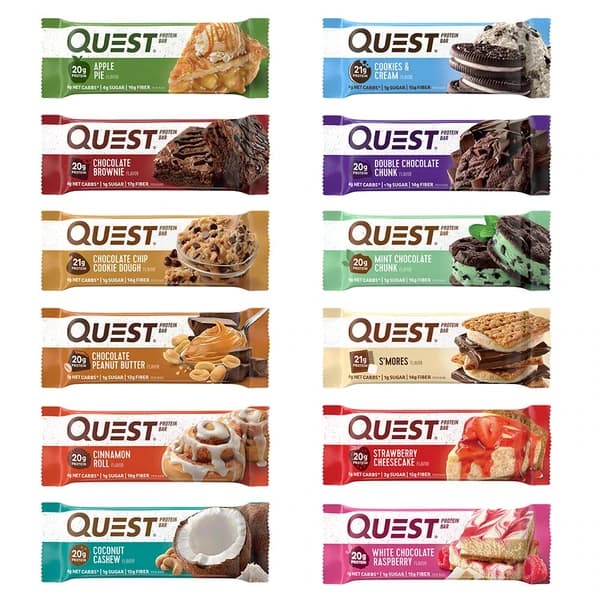
Portable protein for the gaps: When life makes structured cooking impossible, you need a grab-and-go option that hits your per-meal leucine threshold without derailing your macros. Quest bars deliver 20–21g of protein with low net carbs in a format that travels anywhere.
Amazon · Affiliate
Quest Nutrition Protein Bars (12-Pack)
4.6
20–21g protein, low net carbs, and high fiber. A convenient on-the-go snack that fits most diet plans.
$20–$30Check Price on Amazon
Approach B: Concentrated Protein (1–2 Large Doses, Common with IF)
How It Works
Concentrated dosing — eating most or all of your daily protein in 1–2 large meals — is the natural consequence of intermittent fasting protocols (16:8, OMAD, etc.) and common in cultures that traditionally eat 1–2 large meals per day. Instead of triggering multiple smaller MPS cycles, this approach relies on a single large anabolic stimulus, followed by a prolonged fasting period.
The mechanistic argument for this approach: if a larger bolus of amino acids stays in circulation longer, perhaps it stimulates MPS for a longer duration. The empirical question: does it?
The Evidence Base
The evidence here is more nuanced than the "distributed is always better" narrative suggests.
What the acute data shows: Large protein doses (40g+) do produce robust MPS — the response is simply not proportionally larger than a 20–25g dose. Dr. Phillips' group has shown that after ~20–25g of whey protein, MPS plateaus at rest, and even after resistance exercise, the benefit of going above 40g is marginal in younger adults. The muscle full effect limits how much synthesis can occur per dose regardless of how much protein is present.
What longer-term data shows: A 2022 randomized controlled trial by Williamson and colleagues comparing even versus skewed protein distribution in healthy older individuals found no significant difference in MPS or amino acid utilization between patterns — challenging the assumption that acute MPS data translates cleanly to chronic muscle outcomes.
A 2024 analysis published in the International Journal of Sport Nutrition and Exercise Metabolism challenged several assumptions about meal distribution, noting that multiple moderately-sized protein meals may not reliably produce greater anabolism than fewer larger meals in the context of adequate total daily intake.
The IF-specific data: A 2024 RCT published in Clinical Nutrition by Williamson et al. found that short-term intermittent fasting and energy restriction did not impair rates of MPS when total protein intake was controlled. This is significant — it suggests the compressed eating window in IF is not itself catastrophic for muscle, provided you still hit your total protein target.
Who It Suits
- People who practice intermittent fasting for adherence, metabolic, or lifestyle reasons
- Individuals who genuinely have only 1–2 windows during the day where they can eat proper meals
- People who find eating frequently stressful or appetite-suppressing
- Those for whom total daily protein is frequently under-consumed — fixing total intake provides more gains than optimizing distribution
Practical Trade-offs
Advantages:
- Simpler — fewer food decisions, less meal prep, more flexibility
- Strong adherence for people who do well skipping breakfast
- Fat loss context: caloric restriction is easier to maintain when meal frequency is low
- No degradation in MPS if total protein and resistance training are maintained
Disadvantages:
- Harder to hit the leucine threshold per dose without extremely large meals
- Risk of exceeding the practical protein absorption ceiling (~40–50g per dose at rest in young adults)
- Prolonged fasting periods increase MPB — net protein balance depends on whether fed-state MPS compensates
- Less forgiving of sub-threshold doses — one missed dose means a fully missed MPS trigger for the day
- Some research suggests older adults and women may be more negatively affected by infrequent protein dosing
Best Implementation
For a 180 lb (82 kg) IF practitioner targeting 180g protein/day in a 8-hour eating window (12–8 PM):
| Meal | Timing | Protein Target | Example | |------|--------|----------------|---------| | Break-fast | 12 PM | 80g | 10 oz chicken + 2 eggs + Greek yogurt | | Mid-window | 4 PM | 50g | Protein shake + 4 oz salmon | | Final meal | 7:30 PM | 50g | 7 oz lean beef + cottage cheese |
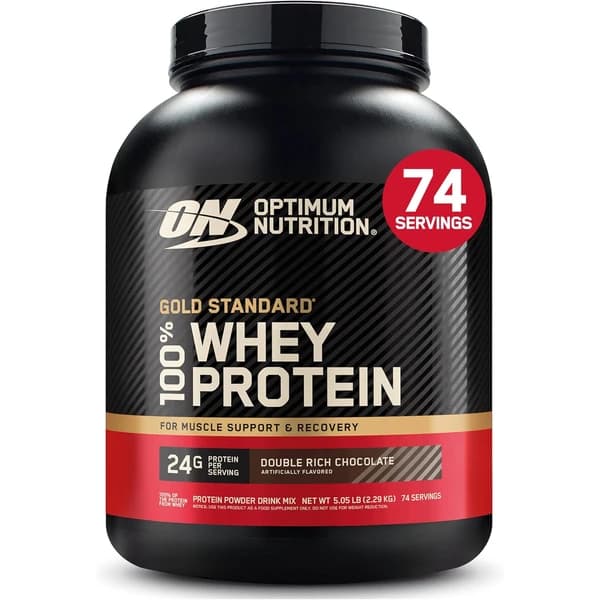
The post-workout priority: When your entire feeding window is compressed, the post-training protein dose is non-negotiable. A fast-digesting whey isolate delivers the leucine spike quickly — critical when you may not eat again for 15+ hours.
Amazon · Affiliate
Optimum Nutrition Gold Standard 100% Whey
4.8
The world's best-selling whey protein powder. 24g protein per serving, low sugar, mixes easily.
$30–$60Check Price on Amazon
The Precision Problem: Why Both Approaches Fail Without Accurate Tracking
Both approaches share one silent killer: underestimating portion sizes.
Research consistently shows that people who estimate portion sizes visually undercount protein by 20–35%. A "large" chicken breast that looks like 50g of protein is often 32g. A "protein-rich" meal that feels like 40g frequently delivers 22g — below the leucine threshold.
At 180g/day target, a 25% undercount means you're actually consuming 135g. You've optimized your distribution perfectly and missed your target by 45g — an error that dwarfs the distribution effect entirely.
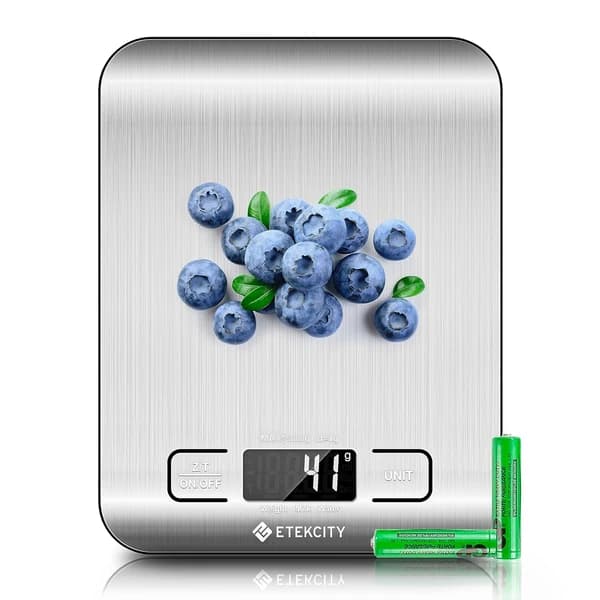
Most people wildly mis-estimate protein portions; a $12 food scale eliminates this variable entirely. Use one for at least 4–6 weeks until your eyeball calibration is accurate.
Amazon · Affiliate
Etekcity Digital Food Scale (0.1g precision)
4.7
Measures in grams, ounces, pounds, and milliliters. Tare function, backlit display, auto-off. Essential for accurate macro tracking.
$10–$16Check Price on Amazon
The Decision Table: Which Approach Wins for Your Goal?
| Goal | Schedule | Recommended Approach | Reasoning | |------|----------|---------------------|-----------| | Maximum hypertrophy | Flexible, can meal prep | Distributed (4 doses) | Maximizes daily MPS triggers; 20–30% acute MPS advantage | | Hypertrophy + fat loss | Flexible | Distributed (3–4 doses) | Better satiety management; maintains muscle during cut | | Fat loss (IF practitioner) | Compressed window (IF) | Concentrated but >3 doses in window | Total protein > distribution; aim for 3 doses in 8-hour window | | Maintenance | Busy, irregular | Minimum 3 threshold-hitting meals | Prevents MPS neglect without requiring perfect structure | | Athlete (high volume training) | AM + PM sessions | Distributed with peri-workout priority | Training sessions create extra MPS windows; capitalize on them | | Older adult (50+) | Any | Distributed (4 doses, higher per-meal target) | Anabolic resistance requires more frequent leucine stimulation | | Body recomposition | Any | Distributed, high per-meal protein | Simultaneous muscle gain and fat loss requires consistent MPS stimulus |
The Contrarian Take: Intermittent Fasting May Not Cost You as Much Muscle as the Distribution Research Implies
Here's the honest nuance the distribution research sometimes obscures: the effect size of protein distribution is real but not large.
When you control for total daily protein intake and resistance training volume, the advantage of perfect 4-meal distribution over an 8-hour compressed window narrows considerably. The Areta 2013 study — the most-cited evidence for distribution superiority — was an acute, 12-hour measurement, not a long-term hypertrophy study. The 4 × 20g group outperformed the 2 × 40g group on MPS rates, but this has not been fully replicated as a proportional advantage in 12-week lean mass gain trials.
What the evidence actually shows:
-
Total daily protein intake is responsible for roughly 80–85% of the protein-related contribution to muscle growth. If you're consistently hitting 1.6–2.2 g/kg/day, you're doing the heavy lifting.
-
Distribution accounts for perhaps 5–15% additional optimization beyond adequate total intake — a meaningful margin for competitive athletes or physique competitors, a rounding error for casual lifters.
-
Short-term IF does not impair MPS when protein intake is controlled (Williamson et al., 2024, Clinical Nutrition). The body compensates with higher MPS rates during the feeding window.
-
The practical compliance advantage of IF can outweigh the theoretical distribution disadvantage. If eating 3 meals a day requires more discipline than you have, and you're chronically under-eating protein on that schedule, dropping to 2 large meals that you actually execute hits more real-world protein than 4 theoretical meals you only manage on weekdays.
The practical heuristic: if you're consistently hitting your total daily protein target, worry about distribution second. If you're consistently hitting 80% of your target, fix that before adjusting meal frequency.
What the Research Actually Says About Pre-Sleep Protein
One distribution element that has stronger evidence than the general distribution debate: pre-sleep protein.
Dr. van Loon's group has produced multiple studies showing that consuming 30–40g of casein protein before sleep (approximately 30 minutes before bed) elevates overnight MPS by roughly 22% compared to sleep without protein. Since sleep is the longest fasting period most people experience (7–9 hours), this is a uniquely powerful MPS window that both distributed and IF practitioners should capitalize on.
For IF practitioners: consuming protein close to the end of your eating window accomplishes the same goal. The fasting period itself is not the problem — leaving a full night of potential MPS unstimulated is.
Final Thoughts
The coaching recommendation, based on the current literature:
If you lift 3–5x per week and your goal is muscle gain: Structure 3–4 protein doses per day, each hitting 0.25–0.40 g/kg body weight, spaced roughly 3–5 hours apart. Add a casein or cottage cheese dose before sleep. This maximizes daily MPS triggers without requiring obsessive precision.
If you practice intermittent fasting: Compress into 3 doses within your eating window (not 2). Prioritize the post-workout dose. Hit your total daily protein target regardless of window. The compressed window costs you less than most IF critics claim — but only if you're actually hitting your numbers.
If you're an athlete with 2-a-day training sessions: Each training session opens an additional MPS window. Structure a protein dose (30–40g, rapidly absorbed) within 1–2 hours of each session. This is the one context where timing closest to exercise matters most.
If you eat 3 square meals a day: You're already close to the optimal pattern. Ensure each meal hits your per-bodyweight leucine threshold (see table above) rather than loading protein only at dinner. Add a pre-sleep protein dose and you've covered 90% of what the research supports.
The bottom line: you cannot out-distribute a protein deficit. Fix your daily total first. Then optimize the pattern. The gap between "good distribution" and "perfect distribution" is worth chasing once everything else is in order — and not a moment before.
Affiliate disclosure: Some links in this article are affiliate links. If you purchase through them, we may earn a small commission at no extra cost to you. We only recommend products we genuinely believe in.
About the author
Nathan reviews the research, tests the tools, and writes the guides at LeanBodyEngine — evidence-first, no sponsored content, no supplement shilling.
Related articles

Subscribe
Never miss a new article
Get an email whenever we publish a new fitness guide, supplement review, or workout plan. One short email per post — that's it.
Unsubscribe anytime. We only email when there's a new post.