
On GLP-1 Drugs? Here's How to Not Lose Your Muscle
Clinical trials show 25-40% of weight lost on GLP-1 drugs is lean mass. Here's the exact protein strategy and training approach to change that ratio in your favor.

You made a decision about your health. You're on semaglutide, tirzepatide, or one of the other GLP-1 drugs, and the weight is moving. No judgment here — these are legitimate medical tools, and using them is a reasonable choice.
But here's something your prescriber may not have stressed: a meaningful chunk of that weight you're losing isn't fat. It's muscle. And muscle is the thing that keeps your metabolism running, your joints stable, and the weight off long-term.
The good news is that this is almost entirely preventable — if you know what to do.
Key Takeaways
- In the STEP 1 trial, semaglutide users lost approximately 40% of total weight as lean mass — not fat — in sedentary participants with no protein targets.
- Combining GLP-1 therapy with resistance training and high protein intake preserved roughly 93% of lean mass versus 78% in the medication-only group.
- GLP-1 users need a minimum of 1.2–1.6 g of protein per kilogram of bodyweight daily (0.55–0.73 g/lb), with the higher end recommended for those who are also training.
- Each protein meal should contain at least 25–30 g of high-quality protein to reliably stimulate muscle protein synthesis.
- The minimum effective dose for muscle preservation is 2 full-body resistance training sessions per week; compound lifts (squats, rows, presses) deliver the most stimulus per unit of energy.
- Tirzepatide users fared better than semaglutide users in trials, losing lean mass equal to roughly 25% of total weight loss — but both outcomes improve significantly with the right protein and training protocol.
Step 1: Understand the Actual Risk
Before you can fix something, you need to know how bad the problem actually is.
The STEP 1 trial — the landmark semaglutide trial — found that participants treated with semaglutide lost approximately 6.9 kg of lean soft tissue alongside 10.4 kg of fat mass. That works out to roughly 40% of total weight loss coming from lean mass, not fat.
Tirzepatide (Mounjaro/Zepbound) does somewhat better. In the SURMOUNT-1 trial, the DXA subset data showed lean soft tissue loss representing approximately 25% of total weight loss — still significant, but better than semaglutide alone.
To put numbers on this: if you lose 50 lbs on semaglutide without any intervention, you may lose 15–20 of those pounds as lean mass. That's roughly equivalent to losing the muscle mass of a full arm and a leg.
Why does this happen?
GLP-1 drugs work by slowing gastric emptying and suppressing appetite — both through central and peripheral mechanisms. This creates a caloric deficit, which drives weight loss. But caloric deficits don't discriminate. Without the right inputs, your body will burn muscle as well as fat for fuel.
The important caveat: the STEP and SURMOUNT trials were conducted mostly in sedentary participants with no specific protein targets. That's not you — or it doesn't have to be.
Research published in Diabetes, Obesity and Metabolism found that when GLP-1 therapy is combined with structured resistance training and high protein intake, lean mass loss drops dramatically — with exercise groups preserving roughly 93% of lean mass versus 78% in the medication-only group.
The gap between a bad outcome and a good one isn't the drug. It's what you do alongside it.
Myth vs. Reality
Before diving into strategy, let's clear out three pieces of conventional wisdom that are either wrong or missing nuance:
Myth: "You'll lose all your muscle on GLP-1 drugs." Reality: Lean mass loss is real, but it's largely preventable. Multiple studies show that the combination of adequate protein and resistance training can preserve most of your lean mass — and some GLP-1 users actually gain muscle while losing fat.
Myth: "You don't need as much protein when you're on a GLP-1 because you're eating less anyway." Reality: The opposite is true. During a caloric deficit — especially an aggressive one induced by appetite suppression — protein requirements increase relative to maintenance. Your body is under higher muscle-breakdown pressure, not lower.
Myth: "Cardio is enough to offset the muscle loss." Reality: Aerobic exercise doesn't provide the mechanical tension stimulus that muscle tissue requires to survive a deficit. Resistance training is categorically different from cardio for this purpose. You need both, but resistance training is the non-negotiable.
Step 2: Calculate Your Protein Floor
The "LBE GLP-1 Protein Floor" is your daily minimum — the number below which muscle loss becomes significantly more likely. Think of it as a floor, not a ceiling.
Current evidence suggests GLP-1 users need 1.2–1.6 g of protein per kilogram of bodyweight per day as a minimum, with the higher end recommended for those who are also training. If you're using pounds, that's roughly 0.55–0.73 g per pound of bodyweight.
The table below gives you your floor based on bodyweight:
| Bodyweight | Minimum Daily Protein | Minimum Per Meal (3 meals) | Minimum Per Meal (4 meals) | |---|---|---|---| | 140 lbs (64 kg) | 90–100g | 30–33g | 23–25g | | 160 lbs (73 kg) | 103–117g | 34–39g | 26–29g | | 180 lbs (82 kg) | 115–130g | 38–43g | 29–33g | | 200 lbs (91 kg) | 128–145g | 43–48g | 32–36g | | 220 lbs (100 kg) | 140–160g | 47–53g | 35–40g | | 250 lbs (113 kg) | 159–181g | 53–60g | 40–45g |
How to find your per-meal target: Take your daily minimum and divide by the number of eating occasions you can realistically manage on your GLP-1-suppressed appetite. For most GLP-1 users, 3 meals works better than 5–6 smaller ones, because the drug makes eating feel effortful — fewer, denser protein hits are easier to execute than grazing throughout the day.
The minimum per-meal dose for muscle protein synthesis (MPS) stimulation is approximately 25–30g of high-quality protein per sitting. Below that threshold, you're likely not triggering meaningful MPS. This is why skimping on protein at any meal — even when you're not hungry — is counterproductive.
Step 3: Hit Your Protein on a GLP-1-Suppressed Appetite
The hardest part isn't knowing what to eat. It's eating anything at all when you're not hungry.
GLP-1 users frequently report that eating feels like a chore — not a pleasure. Nausea, early fullness, and food aversions are common, especially in the titration phase. The result is that many users eat just enough to not feel uncomfortable, which almost never meets the protein floor.
The solution is to engineer your eating around protein density — getting the most protein per calorie per bite.
High-Protein, Low-Volume Food Reference
These foods deliver the most protein relative to their caloric and volume load — critical when your appetite is blunted:
| Food | Protein per 100 calories | Notes | |---|---|---| | Non-fat Greek yogurt | ~18g | High satiety, easy to eat | | Egg whites | ~20g | Flexible, mixes into almost anything | | Canned tuna or salmon | ~22g | Zero prep, shelf-stable | | Shrimp | ~21g | Fast to cook, low volume | | 99% lean ground turkey | ~22g | Batch-cook friendly | | Chicken breast | ~19g | Versatile, pairs with anything | | Low-fat cottage cheese | ~15g | Cold, easy, no prep | | Protein powder (whey isolate) | ~24–26g | Highest protein density per calorie |
The liquid protein priority: On days when eating solid food feels impossible, liquid protein is your backup. A protein shake takes 30 seconds to consume and doesn't require appetite. It's not ideal compared to whole food — but it's far better than falling short of your protein floor.
When appetite is blunted, Dymatize ISO100 delivers 25g of fast-absorbing whey isolate per serving with under 1g of fat and sugar — making it the highest-yield option when volume is your enemy. Think of it as your protein insurance policy: mix it in water, drink it in two minutes, and your muscle preservation math still works even on low-appetite days.
For those who do better with plant-based options — or who find dairy harder to stomach on GLP-1 medication — Orgain Organic Protein provides 21g per serving in a plant-based format that's generally easier to tolerate on a sensitive GI system. Dairy-free and low-volume enough to get down even when eating is the last thing you want to do.
Practical Strategies for Low-Appetite Days
Lead with protein, always. When you sit down to eat and can only manage half the meal before feeling full, make sure that half is protein-dense. Eat the chicken first. Drink the shake before the vegetables.
Batch-prep your protein sources in advance. The decision fatigue of figuring out what to eat when you're not hungry makes it dramatically more likely you'll under-eat protein. Prep Naturals Glass Meal Prep Containers let you batch-cook a week's worth of protein-dense meals on Sunday — when you open the fridge, the decision is already made. There's no "what do I feel like eating" moment; there's just "I eat this now." That frictionless execution matters enormously on GLP-1 therapy.
Use protein-fortified versions of foods you're already eating. Greek yogurt instead of regular, egg whites added to scrambled eggs, protein shakes blended into smoothies.
Schedule eating like a medication. You take your injection on a schedule. Treat your protein meals the same way. Set phone alarms for meal times. The appetite cue that normally prompts eating is unreliable on GLP-1 therapy — you have to manufacture the cue yourself.
Step 4: The Training Component
Diet alone can reduce lean mass loss — but resistance training is the other half of the equation, and they work synergistically. The research is unambiguous on this: combining high protein with resistance training produces meaningfully better lean mass outcomes than either intervention alone.
Here's how different training modalities stack up for muscle preservation during a caloric deficit:
| Training Type | Frequency | Muscle Preservation Evidence | Notes | |---|---|---|---| | Heavy resistance training (compound lifts) | 3–4x/week | Strongest (Grade A) | Best absolute stimulus for MPS | | Moderate resistance training | 2–3x/week | Strong (Grade A) | Minimum effective dose for most | | High-volume bodyweight training | 3–4x/week | Moderate (Grade B) | Viable alternative, less tension load | | HIIT (with resistance elements) | 2–3x/week | Moderate (Grade B) | Good fat loss, some MPS stimulus | | Steady-state cardio only | 3–5x/week | Weak (Grade C) | Minimal MPS signal, good for health | | Yoga/mobility only | Any | Negligible (Grade D) | Insufficient mechanical tension |
What to prioritize: You don't need to train like a competitive powerlifter. The minimum effective dose for muscle preservation during a deficit is 2 full-body resistance training sessions per week, hitting all major muscle groups, with loads that bring you within a few reps of failure on the working sets.
On GLP-1 therapy specifically: Your energy levels may be lower during titration, and nausea can make hard training feel difficult. Reduce intensity before reducing frequency — skipping sessions is more costly than training at 70%. A brief, moderate-intensity session done consistently beats an intense session done occasionally.
Compound over isolation: Squats, deadlifts, rows, presses, and pulls give you the most muscle stimulus per unit of time and energy. On suppressed energy, this ratio matters. Save isolation work (curls, lateral raises) for when you have capacity left.
The Recomposition Angle: Can GLP-1 Users Build Muscle While Losing Fat?
This is the contrarian take — and the data supports it, at least for a specific subset of users.
Body recomposition (losing fat while gaining muscle simultaneously) is generally considered difficult outside of beginners, people returning from a long training break, or those using pharmacological assistance. The typical obstacle is that muscle gain requires a slight caloric surplus, while fat loss requires a deficit — and you can't easily do both at once.
GLP-1 users are a different case.
Here's who achieves recomposition on GLP-1 therapy:
- Previously untrained or detrained individuals who begin or return to resistance training while on GLP-1 medication. The "beginner gains" effect — where the neuromuscular and hormonal response to resistance training is so strong that muscle grows even in a deficit — is amplified in this population.
- Individuals with high body fat percentages (35%+ body fat), where the body has abundant stored energy to fuel muscle protein synthesis even in a nominal caloric deficit.
- Those who achieve a moderate deficit, not an extreme one. GLP-1 users eating 1,800+ calories while hitting their protein floor have better recomposition outcomes than those eating 1,000 calories. The drug creates the deficit for you — you don't need to also restrict aggressively.
The PMC case series on lean soft tissue during GLP-1 therapy documented patients who actually increased lean soft tissue during treatment — not just preserved it, but grew it. This isn't the majority outcome, but it's achievable for the right profile.
The practical takeaway: if you're early in your fitness journey, starting resistance training while on GLP-1 therapy is one of the highest-ROI decisions you can make. You may end up leaner and more muscular than you were before the medication, not just lighter.
Step 5: Track the Right Things
Most GLP-1 users watch the scale. The scale tells you almost nothing about whether you're preserving muscle.
The problem with scale weight only: You can lose 20 lbs on the scale while losing 8 lbs of muscle and 12 lbs of fat — a mediocre outcome disguised as a victory. You can also gain 2 lbs on the scale while losing 5 lbs of fat and gaining 3 lbs of muscle — a great outcome that looks like a plateau.
Here's a practical tracking framework that doesn't require expensive lab work:
1. DEXA scan (gold standard): If you can access one (many sports medicine clinics and university wellness centers offer them for $50–$100), get a baseline scan before or early in your GLP-1 use and a follow-up at 6 months. This directly measures fat mass vs. lean mass — no guesswork.
2. Strength benchmarks (practical, free): Track how much weight you can lift on 2–3 compound movements (e.g., goblet squat, dumbbell row, push-up reps to failure). If your strength is stable or increasing, you're preserving the muscle that matters. If you're getting significantly weaker, lean mass loss is likely outpacing your interventions.
3. Circumference measurements: Waist, hips, thighs, and upper arms. Waist shrinking while arms and thighs stay similar = fat loss. Arms and thighs shrinking proportionally to waist = you're losing muscle too.
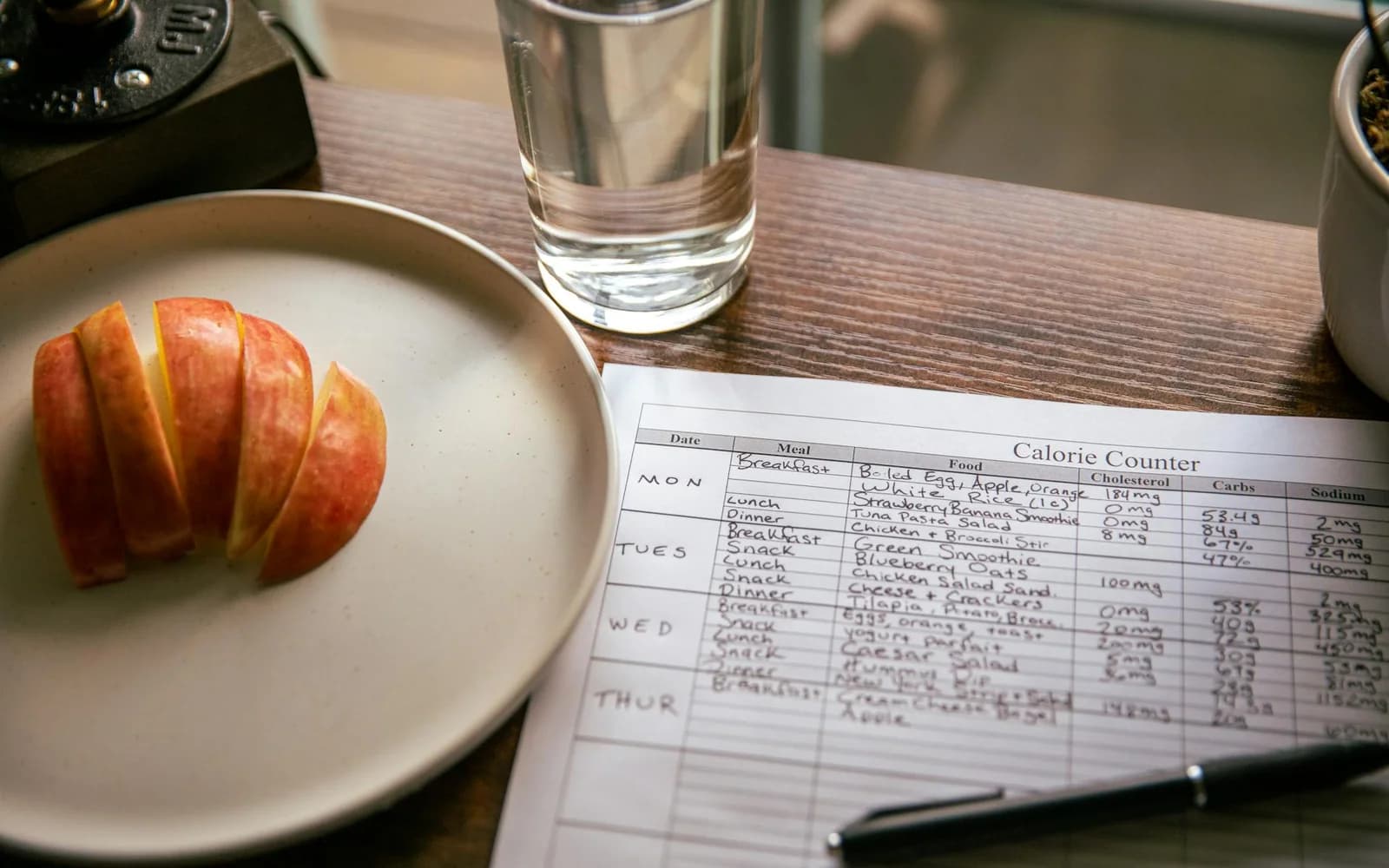
4. Progress photos: Unflattering but useful. Consistent lighting and angles at 4-week intervals tell you whether your body composition is shifting in the right direction beyond what the scale reports.
Warning signs of excess lean mass loss:
- Strength dropping more than 10–15% over 8 weeks
- Noticeable muscle definition loss at the same body weight
- Persistent fatigue that isn't explained by sleep or training load
- Arms and legs appearing thinner without a corresponding drop in waist measurement
If you notice these signs, prioritize protein intake and reduce training intensity. Don't increase the caloric deficit.
Final Thoughts
GLP-1 drugs are effective. The weight loss data is real and clinically significant. But the medication does the appetite suppression work — it doesn't protect your muscle. That part is on you.
The framework is straightforward: hit your protein floor every day, train with resistance at least twice a week, and track your body composition rather than just your weight. None of these steps require extreme effort. They do require consistency.
The goal isn't to fight the drug — it's to work with it while protecting the muscle that makes the weight loss worth keeping. A lighter body with less muscle isn't a transformation. A leaner body with preserved — or improved — muscle is one you can actually maintain.
You've got the hardest part handled. The drug suppresses the appetite, the deficit happens, the fat comes off. Make sure what's left underneath is worth uncovering.
Affiliate disclosure: Some links in this article are affiliate links. If you purchase through them, we may earn a small commission at no extra cost to you. We only recommend products we genuinely believe in.
About the author
Nathan reviews the research, tests the tools, and writes the guides at LeanBodyEngine — evidence-first, no sponsored content, no supplement shilling.
Related articles
Subscribe
Never miss a new article
Get an email whenever we publish a new fitness guide, supplement review, or workout plan. One short email per post — that's it.
Unsubscribe anytime. We only email when there's a new post.