
Intermittent Fasting for Beginners: The Complete 16/8 Guide
A beginner's guide to intermittent fasting with the 16/8 protocol — how it works, realistic fat-loss expectations, meal timing, and the training pitfalls.
Intermittent Fasting for Beginners: The Complete 16/8 Guide
If you've been searching for a simple, sustainable fat-loss framework, this guide to intermittent fasting for beginners gives you the honest version — no hype, no miracle claims. The 16/8 protocol is one of the most forgiving ways to structure your meals: you fast for 16 hours (most of it while you sleep) and eat within an 8-hour window. It's not magic, it's a tool. Used well, it can make a calorie deficit easier to maintain. Used poorly, it can tank your training and leave you hungrier than before. Here's exactly how to do it right.
Key Takeaways
- Eating window: 8 hours per day — typically 12 PM–8 PM — with all food consumed inside that span.
- Metabolic switch timing: Fat oxidation ramps up at roughly the 12–16 hour mark, once liver glycogen is depleted.
- Weight loss outcomes: A 2020 JAMA Internal Medicine RCT found 16/8 produced ~2 lbs of weight loss over 12 weeks — on par with, but not superior to, matched calorie restriction.
- Meta-analysis consensus: A 2022 review of 27 trials in Nutrients confirmed IF fat loss equals daily calorie restriction when protein and calories are equated.
- Muscle preservation: Largely maintained when protein hits 0.7–1.0 g per pound of bodyweight and resistance training stays consistent.
- Primary mechanism: Passive calorie reduction — compressing a 15-hour eating window to 8 hours typically removes 300–600 kcal/day without active tracking.
What 16/8 Actually Means
The 16/8 method — also called time-restricted eating — limits your daily food intake to an 8-hour window. A typical setup looks like this:
- Fasting window: 8 PM to 12 PM the next day (16 hours)
- Eating window: 12 PM to 8 PM (8 hours)
During the fasting window, you consume only non-caloric drinks: water, plain black coffee, unsweetened tea. No cream, no sugar, no zero-calorie sweeteners if you want to be strict (the evidence on sweeteners and insulin is mixed, but most beginners can ignore this).
Tip: You already fast 8 hours every night in your sleep. 16/8 simply pushes breakfast back a few hours and stops late-night snacking. That's it. If you regularly skip breakfast already, you're probably 80% of the way there.
16/8 Schedule Variations
Not everyone thrives on the same window. Pick the schedule that aligns with your training time and social life — then stick with it for at least two weeks before adjusting.
| Start Time | Eating Window | Best For | Caveats | |---|---|---|---| | 10 AM–6 PM | 10 AM to 6 PM | Early risers; morning exercisers who want to eat pre-workout | Conflicts with evening social meals | | 11 AM–7 PM | 11 AM to 7 PM | People who train mid-morning; slight breakfast appetite | Requires an early dinner | | 12 PM–8 PM | 12 PM to 8 PM (classic) | Beginners; anyone with a standard 9–5 schedule | Longest morning fast; can feel rough week one | | 2 PM–10 PM | 2 PM to 10 PM | Night-shift workers; late-evening exercisers | Late-night eating may impair sleep quality; not ideal long-term |
What the Research Actually Shows
Here's the part most YouTube videos skip: intermittent fasting is not metabolically magical. Every well-controlled meta-analysis comparing intermittent fasting to continuous calorie restriction — with calories and protein matched — shows roughly equivalent fat loss.
A landmark 2020 randomized controlled trial in JAMA Internal Medicine put participants on 16/8 for 12 weeks and found an average weight loss of about 2 lbs — barely different from the control group. A 2022 meta-analysis in Nutrients reviewing 27 trials concluded that intermittent fasting produces weight loss "comparable to, but not superior to, daily calorie restriction."
So why do so many people lose weight on IF? Because compressing your eating window naturally cuts calories. If you used to eat from 7 AM to 10 PM (15 hours) and now eat from 12 PM to 8 PM (8 hours), you've probably dropped 1–2 snacks and a late dessert. That's 300–600 fewer calories — the real mechanism.
Intermittent fasting is a legitimate tool for:
- People who aren't hungry in the morning
- People who snack mindlessly at night
- People who prefer fewer, larger meals
- Simplifying meal planning and decisions
It is not a tool for:
- Overriding the laws of thermodynamics
- Eating anything you want during the window
- Hitting aggressive muscle-gain goals
Is 16/8 Right for You?
Use this decision table to quickly assess whether 16/8 fits your situation — or whether a different approach would serve you better.
| Your Situation | 16/8 Fit | Better Alternative | |---|---|---| | Skip breakfast naturally most days | Strong fit | — | | Tend to snack late at night | Strong fit | — | | Prefer 2–3 larger meals over 5–6 small ones | Strong fit | — | | Train early morning at high intensity | Poor fit | Shift window to 10 AM–6 PM or eat pre-workout | | Pregnant or breastfeeding | Not appropriate | Standard calorie-controlled diet with OB guidance | | History of disordered eating | Not appropriate | Work with a registered dietitian | | Type 1 diabetic or on insulin | Not appropriate | Consult endocrinologist before any fasting protocol | | Active muscle-building phase (>500 kcal surplus) | Marginal fit | Flexible dieting / IIFYM may be easier | | Frequent business dinners or social lunches | Difficult | 14:10 or calorie tracking may be more sustainable | | Goal is simple calorie reduction with minimal rules | Good fit | — |
The LBE 16:8 Ramp Protocol
Cold-turkey 16-hour fasting is the fastest way to quit by day four. The LBE 16:8 Ramp Protocol (Lengthen, Build, Establish) phases you in over three weeks so hunger hormones — primarily ghrelin — adjust before the full fast is in place.
Week 1 — Lengthen (12:12)
- Stop eating at 8 PM every night
- Push your first meal back to 8 AM (12-hour fast)
- Focus on eating protein-forward meals and cutting liquid calories
Week 2 — Build (14:10)
- Keep the 8 PM cutoff
- Push your first meal to 10 AM (14-hour fast)
- Add electrolytes (sodium 500–1,000 mg, potassium, magnesium) to the morning fasting window
Week 3 — Establish (16:8)
- Push your first meal to 12 PM — full 16/8 is now in place
- Evaluate energy, sleep, and training performance before deciding to continue

Amazon · Affiliate
Doctor's Best High Absorption Magnesium Glycinate
4.7
Highly bioavailable magnesium chelate. Supports muscle relaxation, deep sleep, stress reduction, and recovery.
$12–$22Check Price on Amazon
Magnesium glycinate is particularly useful during the ramp-up phase. Fasting increases urinary magnesium excretion, and low magnesium is one of the most common reasons beginners report headaches, muscle cramps, and poor sleep in weeks one and two.
A Realistic 12 PM–8 PM Eating Window
Here's how a beginner day looks in practice. This isn't a rigid template — it's a starting point you adjust based on training, hunger, and schedule.
Before 12 PM (fasting):
- Water on waking (12–16 oz)
- Black coffee or green tea
- Optional: electrolytes (sodium, potassium, magnesium) — especially in the first 1–2 weeks
12:00 PM — Break-fast meal (largest):
- 40–50g protein (chicken, eggs, Greek yogurt, tofu)
- Complex carbs (oats, rice, potatoes)
- Vegetables + healthy fat
3:00 PM — Snack or mini-meal:
- 20–30g protein (cottage cheese, jerky, shake)
- Piece of fruit or handful of nuts
6:30–7:30 PM — Dinner:
- 30–40g protein
- Vegetables, starch, fat
- Optional: small dessert if it fits calories
By 8:00 PM — Window closes. Brush your teeth. It's a surprisingly effective psychological cue.
Tip: Aim for 0.7–1.0g of protein per pound of bodyweight spread across 2–3 meals. Hitting protein targets in an 8-hour window is harder than it sounds — most beginners fall short by 20–40g on day one.
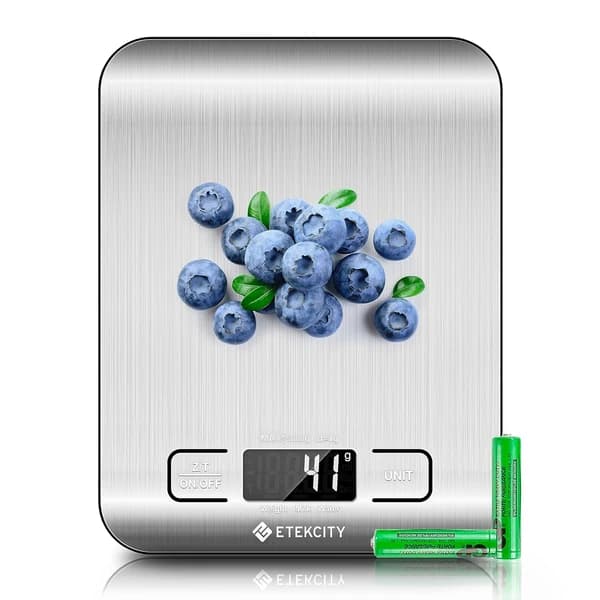
A food scale removes the guesswork entirely. When you're condensing all your nutrition into two or three meals, eyeballing portions is how beginners miss their protein target by 30% and don't realize it.
Amazon · Affiliate
Etekcity Digital Food Scale (0.1g precision)
4.7
Measures in grams, ounces, pounds, and milliliters. Tare function, backlit display, auto-off. Essential for accurate macro tracking.
$10–$16Check Price on Amazon
Training Fasted: What Actually Works
Many beginners assume fasted training "burns more fat." The reality is more nuanced. A 2014 study in the Journal of the International Society of Sports Nutrition directly compared fasted vs. fed cardio and found no significant difference in fat loss when total calories were equated.
What does change is performance. Training intensely on a 14-hour empty stomach is brutal for most people — you'll likely lift less, sprint slower, and recover worse. That matters, because training output drives long-term results.
Practical options for training inside 16/8:
- Train late afternoon (4–6 PM) — you've eaten two meals, you're energized, and you break your biggest meal right after the session. This is the sweet spot.
- Train fasted in the morning — fine for low-intensity cardio or mobility work. Less ideal for heavy lifting.
- Shift your window — some people use an 11 AM–7 PM window so they can train fueled.
Breaking the Fast: Protein First
The meal that opens your eating window matters more than people realize. A giant stack of pancakes at noon will spike your blood sugar hard after a 16-hour fast. Lead with protein and fiber, and let carbs follow.
Protein is especially critical on IF because you have fewer meals to hit your daily target. Research from Dr. Brad Schoenfeld's group suggests beginners build muscle fine on 2–3 protein-rich meals per day, as long as each meal contains at least 0.4g/kg of high-quality protein (roughly 30–40g for most adults).
If solid food feels heavy right at noon — which is common in the first two weeks — a whey shake blended with fruit is the easiest way to deliver 25–30g of fast-digesting protein without filling your stomach.
Amazon · Affiliate
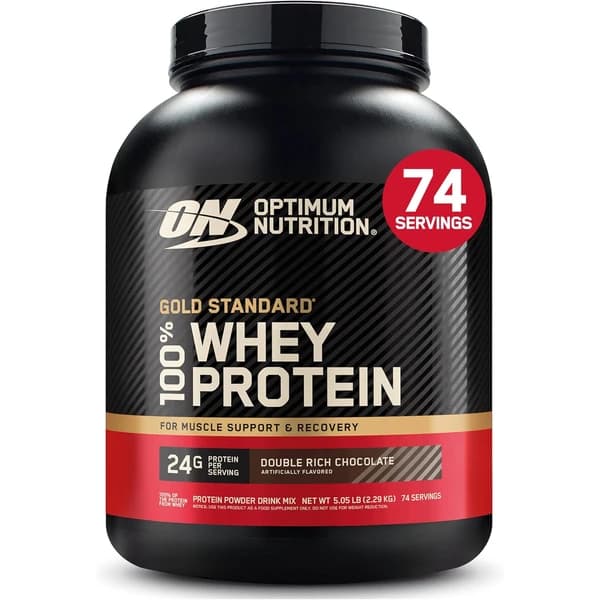
Optimum Nutrition Gold Standard 100% Whey
4.8
The world's best-selling whey protein powder. 24g protein per serving, low sugar, mixes easily.
$30–$60Check Price on Amazon
Tip: Studies show whey protein leads to better satiety for roughly 90 minutes, which makes it a strong choice inside your eating window to keep hunger in check between meals.
Micronutrients: The Overlooked Pitfall
Compressing your eating window means you have fewer meals to get your vitamins and minerals in. A 2019 analysis in Nutrients found that adults on time-restricted eating regimens were more likely to fall short on vitamin D, magnesium, iron, calcium, and B12 — especially if they also cut calories at the same time.
The fix isn't complicated, but it does require attention:
- Eat a rainbow of vegetables across your 2–3 meals
- Include one dense source daily: leafy greens, organ meat, seafood, or fortified foods
- Don't skip fat — it's required to absorb A, D, E, and K
- Consider a multivitamin as an insurance policy
Tip: Take fat-soluble vitamins (D, E, K, A) with your largest meal — absorption drops significantly on an empty stomach, which is why "morning vitamins" don't mix well with fasting.
Who Should NOT Do Intermittent Fasting
IF is not for everyone, and the research is clear on a few high-risk groups. Skip or consult a clinician first if you are:
- Pregnant or breastfeeding — calorie and nutrient needs are elevated, and fasting can affect milk supply
- Under 18 — growth, development, and hormones depend on consistent fueling
- Underweight or recovering from an eating disorder — IF can reinforce restrictive patterns and is contraindicated
- Type 1 diabetic or on insulin — risk of hypoglycemia
- Training for strength/muscle gain at an advanced level — getting enough calories and protein in 8 hours becomes limiting
- Someone with a history of disordered eating — the rigid rules can easily cross into pathology
- Experiencing HPA-axis dysfunction, chronic fatigue, or high life stress — fasting is a stressor
Tip: If you try 16/8 for 2–3 weeks and feel worse — poor sleep, mood swings, worse workouts, cold hands, irregular cycles — stop. The "best" diet is the one that works with your physiology, not against it.
Final Thoughts
Intermittent fasting for beginners works best when you treat it as a meal-timing framework, not a weight-loss spell. The research is consistent: IF doesn't outperform matched calorie restriction, but it does make calorie reduction passive and effortless for a specific type of person — someone who isn't hungry in the morning, snacks late at night, and prefers fewer, larger meals.
If that's you, the path is clear. Use the LBE 16:8 Ramp Protocol to ease in over three weeks rather than going cold turkey. Compress your eating window, lead every meal with protein, train when you have fuel in the tank, and keep your micronutrient bases covered with whole foods and a quality supplement stack.
Do that consistently for 6–8 weeks and you'll know whether 16/8 fits your life — or whether a simpler calorie-tracking approach serves you better. Keep it simple, track how you feel, and adjust from there.
Affiliate disclosure: Some links in this article are affiliate links. If you purchase through them, we may earn a small commission at no extra cost to you. We only recommend products we genuinely believe in.
About the author
Nathan reviews the research, tests the tools, and writes the guides at LeanBodyEngine — evidence-first, no sponsored content, no supplement shilling.
Related articles

Subscribe
Never miss a new article
Get an email whenever we publish a new fitness guide, supplement review, or workout plan. One short email per post — that's it.
Unsubscribe anytime. We only email when there's a new post.