
Advanced Cardio Programming for Fat Loss: The Zone 2 + HIIT Hybrid System
Zone 2 alone and HIIT alone both work. Together, in the right ratio, they work better. Here is the hybrid programming framework for serious fat loss.

Most people doing cardio for fat loss are doing one thing right and two things wrong.
The one thing right: they're doing some cardio. The two things wrong: they're either grinding away exclusively on the treadmill at a comfortable moderate pace (not low enough to build the aerobic base, not high enough to drive adaptation), or they're hammering HIIT every session and wondering why their fat loss stalled after month two and their joints ache.
The 2024–2025 research landscape on hybrid cardio programming is the clearest it's been in a decade. We now have strong evidence on exactly where zone 2 ends and HIIT begins, what each modality does mechanistically, how they interact when combined, and — critically — what the interference effects look like when you're also lifting weights.
This article gives you the complete framework, grounded in that research, applied to three real-world athlete profiles. No vague zones, no "just listen to your body" hedging. Exact numbers. Complete 8-week programs. A decision table for managing cardio around lifting. This is what advanced cardio programming actually looks like.
The LBE Fat Loss Cardio Stack: A 3-Tier Framework
Before programming a single session, you need to understand what you're building. The LBE Fat Loss Cardio Stack is a three-tier system in which each tier serves a specific physiological function. Remove any tier and you get a less effective program. Stack all three in the right ratio and you get synergistic adaptation — fat loss that compounds month over month instead of plateauing.
Tier 1 — Aerobic Base (Zone 2): The Metabolic Foundation
Definition: Exercise performed at 60–70% of your maximum heart rate, or the intensity at which you can speak in full sentences with mild effort. Lactate stays below 2 mmol/L.
The physiology: Zone 2 is where fat oxidation is maximized. Research published in Frontiers in Sports and Active Living (2024) confirms that Fatmax — the exercise intensity at which fat oxidation rate peaks — occurs at roughly 45–65% VO2max for most trained individuals, which corresponds directly to zone 2. At this intensity, Type I slow-twitch muscle fibers are primarily recruited, mitochondria are stressed without being overwhelmed, and the body's capacity to shuttle and oxidize fatty acids is trained directly.
Dr. Iñigo San Millán, exercise physiologist at the University of Colorado and advisor to Tour de France cyclists, has been the most prominent voice making this case. His research, including work published in Antioxidants (2023), documents how zone 2 training specifically stimulates mitochondrial biogenesis — the creation of new mitochondria — and upregulates the enzymatic machinery for fat oxidation. More mitochondria means more metabolic horsepower to burn fat at rest and during activity.
The practical implication: zone 2 is not just calorie-burning cardio. It is training your body's hardware to be a better fat-burning machine 24 hours a day.
The monitoring problem: The single biggest implementation error for zone 2 is training too hard. Most people who think they're in zone 2 are actually in zone 3 — the metabolic "gray zone" that's too hard to be truly restorative and too easy to drive high-intensity adaptations. You need real-time HR data to stay in the 60–70% max HR range.
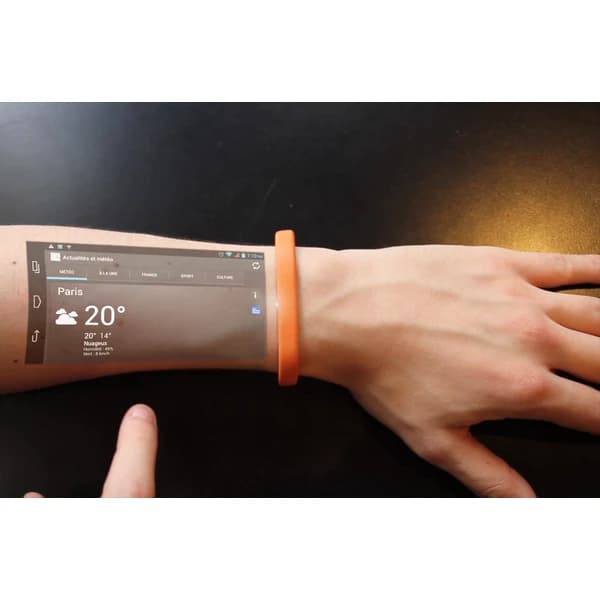
Amazon · Affiliate
Fitbit Charge 6 Fitness Tracker
4.4
Built-in GPS, heart rate monitoring, sleep tracking, and 40+ exercise modes. Google Maps and Wallet integration.
$100–$160Check Price on Amazon
A wrist-based HR monitor pays for itself in training quality within the first month. Knowing your max HR (220 minus age is a rough start; a true max HR test is better), staying at 60–70% of that number, and slowing down when you drift above it is the entire zone 2 implementation protocol.
Zone 2 in the stack: Tier 1 is the engine. It should constitute 70–80% of your total cardio volume by time.
Tier 2 — Threshold Intervals: Lactate System Development
Definition: Exercise at 75–85% max HR, around the lactate threshold (LT2) — the point at which lactate production begins to exceed clearance. Intervals of 10–20 minutes per bout.
The physiology: Threshold work develops your lactate shuttle system. At moderate-to-high intensities, your body produces lactate as a byproduct of carbohydrate metabolism. Lactate is not a waste product — it's a fuel. Your ability to clear and re-oxidize lactate is trainable, and training it has a compounding effect on fat loss: better lactate clearance means you can sustain higher absolute intensities before transitioning to primarily carbohydrate burning, which means more total calories burned at fat-dominant intensities.
Threshold intervals also improve work capacity for your HIIT sessions (Tier 3) and your zone 2 sessions (you become faster at the same HR).
Threshold work in the stack: Tier 2 is the transmission — it connects the raw aerobic engine of zone 2 to the high-intensity output of Tier 3. It should constitute 10–15% of total cardio volume by time.
Tier 3 — High-Intensity Sparks (HIIT): EPOC Driver and VO2max Stimulus
Definition: Exercise at 85–95% max HR in structured intervals with active recovery. Total work time per session: 16–25 minutes (not including warm-up and cool-down).
The physiology: HIIT drives two specific adaptations that zone 2 cannot:
-
VO2max improvement. VO2max — maximum oxygen uptake — is the strongest single predictor of cardiovascular fitness and is strongly inversely correlated with all-cause mortality. Dr. Martin Gibala's research at McMaster University has repeatedly demonstrated that HIIT produces VO2max improvements equal to or greater than continuous moderate-intensity training in less time. The Norwegian 4×4 protocol (developed at NTNU by Ulrik Wisløff and colleagues) produced 13% VO2max gains after 8 weeks in clinical trials. A higher VO2max means a higher metabolic ceiling — you burn more calories doing everything.
-
EPOC (Excess Post-Exercise Oxygen Consumption). After a HIIT session, your body's oxygen consumption remains elevated as it works to restore homeostasis — replenishing ATP, clearing lactate, cooling the body, restoring hormonal balance. This is the "afterburn effect." The research here has an important nuance (addressed in the contrarian take below), but EPOC is real and contributes meaningfully to daily caloric expenditure.
HIIT in the stack: Tier 3 is the accelerant — it raises the metabolic ceiling and creates acute caloric deficit spikes. It should constitute 10–15% of total cardio volume by time.
Fat Oxidation Zone Table
Understanding exactly where different intensities sit on the fuel-utilization spectrum is essential for programming. Use this as your reference:
| HR Zone | % Max HR | Approx. % VO2max | % Calories from Fat | % Calories from Carbs | Practical Note |
|---------|----------|-------------------|---------------------|-----------------------|----------------|
| Zone 1 | 50–60% | 35–45% | 80–90% | 10–20% | Active recovery; very low caloric expenditure |
| Zone 2 | 60–70% | 45–65% | 60–80% | 20–40% | Fat-burning sweet spot. Fatmax occurs here for most trained individuals. |
| Zone 3 | 70–80% | 65–80% | 35–55% | 45–65% | The "gray zone" — avoid for the bulk of training |
| Zone 4 | 80–90% | 80–90% | 10–35% | 65–90% | Threshold and HIIT work interval range |
| Zone 5 | 90–100% | 90–100% | <10% | >90% | Sprint/VO2max peaks; short duration only |
Note: These ranges are averages. Trained individuals exhibit higher fat oxidation rates at higher intensities than untrained individuals. An elite athlete may oxidize fat efficiently up to 75% VO2max; a sedentary person may drop off at 40% VO2max. This is why Tier 1 zone 2 training matters — you are literally expanding your fat-burning zone over time.
HIIT Protocol Cards
Three protocols make up the Tier 3 toolkit. Each has a different evidence profile, time commitment, and best-use application.
Protocol 1: The Norwegian 4×4
Origin: Developed by Ulrik Wisløff and colleagues at the Norwegian University of Science and Technology (NTNU), originally applied in cardiac rehabilitation research, then validated in healthy athletes.
Structure:
- Warm-up: 10 minutes at Zone 2 pace
- 4 intervals × 4 minutes at 85–95% max HR
- Active recovery between intervals: 3 minutes at 60–70% max HR
- Cool-down: 5 minutes easy
- Total session time: ~35–40 minutes
Work:rest ratio: 4:3 (roughly 1:1)
Intensity target: 85–95% max HR during work intervals. You should be breathing very hard and unable to speak more than 2–3 words.
What the evidence shows: The Wisløff et al. (2007) study published in Circulation reported a 13% improvement in VO2max after 8 weeks of twice-weekly 4×4 training. In heart failure patients — a population with severely compromised cardiac function — the protocol improved peak oxygen uptake by 46% vs. 14% for moderate continuous training. In healthy, recreationally active adults, 8–12 weeks consistently yields 10–15% VO2max gains.
Evidence grade: A (Multiple RCTs, strong mechanistic evidence)
Best use: Primary HIIT protocol for profiles A and B. Excellent on bike, rower, treadmill. Can be done with jump rope (see note below).
Jump rope application: Jump rope is one of the most efficient HIIT tools available — it requires no equipment beyond a $15 rope, you can do it anywhere, and it hits both cardiovascular and coordination systems simultaneously. For the Norwegian 4×4 on a jump rope: 4 minutes of steady-paced rope work at max sustainable effort, rest 3 minutes, repeat 4 times. A speed rope with ball bearings makes this dramatically more efficient.

Amazon · Affiliate
WOD Nation Speed Jump Rope
4.6
Ball-bearing speed rope for HIIT and double-unders. Adjustable cable, lightweight aluminum handles. Burns 400+ calories per 30 min.
$10–$18Check Price on Amazon
Protocol 2: The 30-20-10
Origin: Developed by Professor Jens Bangsbo at the University of Copenhagen. Published in the Journal of Applied Physiology (2012) and validated in a 2024 study in the European Journal of Sport Science.
Structure:
- Warm-up: 10 minutes Zone 2
- 5 × 1-minute blocks: each block = 30 sec easy + 20 sec moderate + 10 sec sprint
- Rest 2 minutes between blocks
- Cool-down: 5 minutes easy
- Total work time: 5 minutes; total session: ~25 minutes
Intensity targets:
- 30-second phase: ~50–60% max HR (easy jog or light row)
- 20-second phase: ~70–80% max HR (moderate effort)
- 10-second phase: 95–100% max HR (full sprint)
What the evidence shows: Bangsbo's 2012 study found 8 weeks of 30-20-10 training (twice weekly) reduced fat mass by 3.0 kg while increasing lean mass by 2.7 kg in recreational runners. A 2024 follow-up found significant improvements in VO2max, running economy, and cardiometabolic markers with as few as 2 sessions/week. Notably, athletes performing the 10-second sprint at 80% effort achieved comparable fitness gains to those going all-out — making this protocol accessible even when you're fatigued.
Evidence grade: A- (Multiple published studies, strong effect sizes on body composition)
Best use: Excellent time-efficient option for Profile A (limited time) or as a secondary HIIT protocol for Profile C.
Protocol 3: Tabata
Origin: Dr. Izumi Tabata, National Institute of Fitness and Sports, Japan. Original study published in Medicine & Science in Sports & Exercise (1996).
Structure:
- Warm-up: 10 minutes Zone 2
- 8 rounds × 20 seconds at 170% VO2max (maximum effort)
- 10-second rest between rounds
- Total HIIT work: 4 minutes; total session: ~20 minutes
Intensity target: True Tabata demands near-maximal effort — by round 6–8, you should be unable to maintain the same work output as round 1. If you're not near your limit by round 5, you're going too easy.
What the evidence shows: Tabata's original study found 6 weeks of 5 weekly sessions improved VO2max by 14% AND improved anaerobic capacity by 28% — dual adaptations that steady-state cardio cannot produce. The caveat: the original study used trained athletes on cycle ergometers with precise power output monitoring. Most casual "Tabata" workouts dramatically underestimate the required intensity. True Tabata is brutally hard and should be applied sparingly (no more than 2×/week).
Evidence grade: B+ (Strong original research; real-world application often diluted by insufficient intensity)
Best use: Best applied to lower-body dominant movements: cycling, rowing, burpees. Excellent for Profile C (metabolically fit, needs to break a plateau) as an intensity spike.
The Contrarian Take: EPOC Is Real But Overrated
Here's what the influencer cardio content won't tell you: the "afterburn effect" from HIIT is statistically significant but practically modest.
A 30-minute HIIT session burns approximately 50–100 extra calories above baseline compared to a 30-minute moderate-intensity session over the full 24-hour post-exercise window. Research in Scientific Reports (2024) showed EPOC elevated oxygen consumption measurably above resting control only for the first hour post-exercise, with the effect decaying to 13% above baseline at three hours and near-baseline at 16 hours. A NASM review found EPOC contributes approximately 7% of the session's total calorie expenditure — meaningful, but not the metabolic engine it's often marketed as.
The actual fat loss mechanism hierarchy:
- Caloric deficit from diet — by a wide margin, the primary driver
- Total energy expenditure — both from exercise and non-exercise activity
- Zone 2's long-term metabolic adaptation — more mitochondria, better fat oxidation at rest and at sub-maximal effort, over months of consistent training
- HIIT's VO2max elevation — raises your metabolic ceiling, meaning everything you do burns slightly more calories
- EPOC — real, but a rounding error compared to items 1–4
HIIT is the accelerant, not the engine. The metabolic adaptation effects of consistent zone 2 training over 3–6 months are a far bigger fat loss driver than any single HIIT session's afterburn. Program accordingly: lead with zone 2 volume, use HIIT as the strategic spike that prevents adaptation and raises the ceiling.
Cardio-Lifting Interference Decision Table
The "interference effect" — the concern that cardio blunts muscle-building — is real but context-dependent. A 2022 meta-analysis by Schumann and colleagues (43 studies) found that concurrent aerobic and strength training did not meaningfully reduce maximal strength or whole-muscle hypertrophy. However, there are volume and modality thresholds that matter.
A 2024 review in Medicine (LWW) identified the key variables: running produces more interference than cycling due to eccentric loading; very high cardio frequency combined with high lifting volume is the primary risk condition; and explosive strength (as opposed to hypertrophy) is the adaptation most susceptible to interference.
| Cardio Frequency | Cardio Type | Interference Risk | Mitigation Strategy | |-----------------|------------|-------------------|---------------------| | 2–3×/week zone 2 only | Cycling / Rowing | Very low | None needed | | 2–3×/week zone 2 only | Running | Low | Separate from leg day by 8+ hours | | 4–5×/week zone 2 | Any | Low–Moderate | Monitor recovery; reduce if performance drops in gym | | 2×/week HIIT only | Cycling / Rowing | Low | Don't HIIT the day before heavy lower-body lifting | | 2×/week HIIT only | Running | Moderate | 24-hour gap from leg sessions minimum | | 4+×/week HIIT | Any | High | Not recommended concurrent with serious hypertrophy training | | Zone 2 + HIIT (LBE Stack) | Mixed | Low–Moderate | See protocol below |
The concurrent training protocol:
- Lift first, cardio second (where possible) — strength work requires neuromuscular freshness more than cardio does
- If doing same-day cardio + lifting: lift → eat → zone 2 within 3 hours, OR zone 2 in AM → lift in PM with 6+ hours between
- Do not do Tier 3 HIIT the day before heavy squat or deadlift sessions
- Keep HIIT sessions to 2×/week maximum when lifting 4×/week
The fasted cardio protocol: When running concurrent training in a fasted or semi-fasted state, fat oxidation increases — but so does muscle protein breakdown. This is the targeted intervention point:
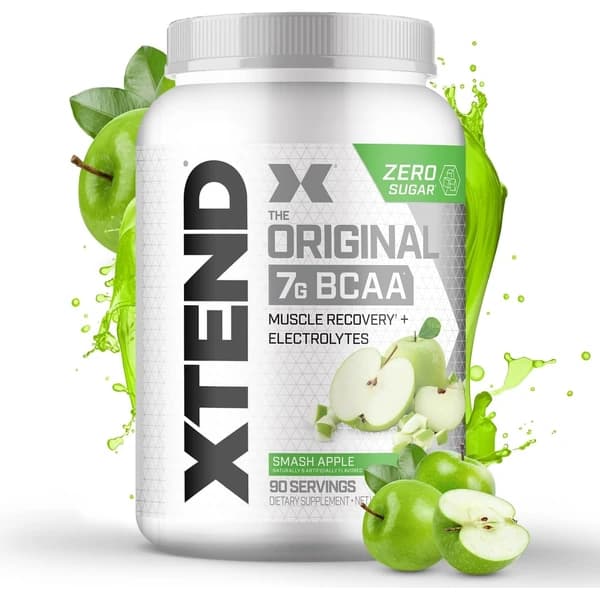
Amazon · Affiliate
Xtend Original BCAA Powder
4.6
7g BCAAs per serving in the proven 2:1:1 ratio. Zero sugar, hydration minerals, and 14 flavors. Supports muscle recovery and endurance.
$25–$40Check Price on Amazon
BCAAs (particularly leucine, isoleucine, and valine in a 2:1:1 ratio) before fasted zone 2 cardio blunt muscle protein breakdown without meaningfully blunting fat oxidation. 7g BCAAs 15–20 minutes before a fasted morning zone 2 session is the standard protocol for concurrent training athletes who want to maintain muscle mass while maximizing fat oxidation.
The Three Athlete Profiles: Complete 8-Week Programs
Profile A: The Desk Worker
Description: Works a desk job, 3 hours/week maximum available for cardio, no current structured training, wants to lose fat and build aerobic base simultaneously. May have done occasional jogging or gym cardio before.
Starting point: Aerobic base is minimal. Zone 2 sessions will feel very easy at first — that's correct. Do not push harder.
Program structure: 3 sessions/week, ~60 minutes total/week in weeks 1–4, building to ~90 minutes/week in weeks 5–8.
Stack ratio: 80% Zone 2 / 10% Threshold / 10% HIIT
Profile A — Week-by-Week Schedule
Weeks 1–2: Foundation | Day | Session | Duration | Intensity | |-----|---------|----------|-----------| | Monday | Zone 2 — Walk/jog, bike, or elliptical | 25 min | 60–65% max HR | | Wednesday | Zone 2 — Same modality | 25 min | 60–65% max HR | | Saturday | Zone 2 — Longer easy session | 35 min | 60–65% max HR |
Focus: Learn to stay in zone 2. If HR drifts above 70%, slow down. No exceptions.
Weeks 3–4: Volume Build | Day | Session | Duration | Intensity | |-----|---------|----------|-----------| | Monday | Zone 2 | 30 min | 60–68% max HR | | Wednesday | Zone 2 | 30 min | 60–68% max HR | | Saturday | Zone 2 long | 40 min | 60–65% max HR |
Focus: Increase duration, maintain zone. Notice you can hold the same HR at a slightly faster pace by week 4 — this is metabolic adaptation working.
Weeks 5–6: Introduce Threshold | Day | Session | Duration | Intensity | |-----|---------|----------|-----------| | Monday | Zone 2 | 35 min | 62–70% max HR | | Wednesday | Threshold intervals: 5 min warm-up + 3 × 8 min @ 75–80% HR + 2 min easy between + 5 min cool-down | 40 min | 75–80% max HR for intervals | | Saturday | Zone 2 long | 40 min | 60–67% max HR |
Focus: The Wednesday session is a different feeling — controlled discomfort, not gasping. If you cannot maintain 75% HR for 8 minutes without gasping, you're starting too hard.
Weeks 7–8: Introduce HIIT | Day | Session | Duration | Intensity | |-----|---------|----------|-----------| | Monday | Zone 2 | 35 min | 62–70% max HR | | Wednesday | 30-20-10 Protocol: 10 min warm-up + 4 rounds + 5 min cool-down | 30 min | Sprint phase at 95–100% max HR | | Saturday | Zone 2 long | 45 min | 60–67% max HR |
Focus: The HIIT session will feel like a different planet compared to zone 2. That's normal. You have 3 hours available and you're using them all effectively by week 8.
Profile A — Cheat Sheet Summary
| Weeks | Mon | Wed | Sat | Weekly Volume | Key Milestone | |-------|-----|-----|-----|--------------|---------------| | 1–2 | Z2 25 min | Z2 25 min | Z2 35 min | ~85 min | Establish zone 2 discipline | | 3–4 | Z2 30 min | Z2 30 min | Z2 40 min | ~100 min | HR drifts lower at same pace | | 5–6 | Z2 35 min | Threshold 40 min | Z2 40 min | ~115 min | First taste of controlled discomfort | | 7–8 | Z2 35 min | HIIT 30 min | Z2 45 min | ~110 min | Full stack operational |
Profile B: The Active Gym-Goer
Description: Already lifting weights 4×/week (upper/lower or push-pull-legs split). Wants to add cardio for fat loss without blunting strength gains. Has done casual cardio before but never structured it around lifting. 4–5 hours/week available across cardio + lifting.
Starting point: Better aerobic capacity than Profile A, but likely undertrained in zone 2 specifically. HIIT tolerance may be higher. Primary challenge is interference management.
Stack ratio: 75% Zone 2 / 15% Threshold / 10% HIIT
Critical rule: No HIIT the day before heavy compound lower-body work.
Profile B — Sample Weekly Lifting Schedule (Reference)
- Monday: Upper push (bench, shoulder press, triceps)
- Tuesday: Lower (squat, RDL, leg press)
- Thursday: Upper pull (rows, pull-ups, biceps)
- Friday: Lower (deadlift variation, hip hinge focus)
Profile B — Week-by-Week Schedule
Weeks 1–2: Introduce Cardio Stack — Low Interference Priority | Day | Type | Duration | Notes | |-----|------|----------|-------| | Wednesday | Zone 2 (post-upper push session, or separate) | 25 min | Cycling preferred — less eccentric load | | Saturday | Zone 2 long | 35 min | Separate from Friday lifting by 24+ hours | | Sunday | Zone 2 active recovery | 20 min | Walking or easy cycling only |
No HIIT weeks 1–2. Establish the cardio habit and assess recovery impact on lifts.
Weeks 3–4: Volume Build | Day | Type | Duration | Notes | |-----|------|----------|-------| | Wednesday | Zone 2 | 30 min | Monitor: are Thursday pull sessions affected? | | Saturday | Zone 2 long | 40 min | | | Sunday | Zone 2 active recovery | 25 min | |
If lifting performance drops in weeks 3–4, reduce zone 2 duration by 25% before adding HIIT.
Weeks 5–6: Introduce Threshold | Day | Type | Duration | Notes | |-----|------|----------|-------| | Wednesday | Threshold intervals: 3 × 10 min @ 75–82% HR | 40 min | Post-upper push OR 6+ hours separate | | Saturday | Zone 2 long | 45 min | | | Sunday | Zone 2 easy | 25 min | |
Weeks 7–8: Add HIIT | Day | Type | Duration | Notes | |-----|------|----------|-------| | Wednesday | Norwegian 4×4 (bike or rower) | 38 min | Post-upper session; NOT the day before Thursday lower | | Saturday | Zone 2 long | 50 min | | | Sunday | Zone 2 / active recovery | 30 min | |
Note: Wednesday HIIT is positioned after an upper-body session and before a rest day (Wednesday night–Thursday are both upper-pull, not HIIT). If your split differs, protect your lower-body compound days.
Profile B — Cheat Sheet Summary
| Weeks | Wed | Sat | Sun | Weekly Cardio Volume | Key Milestone | |-------|-----|-----|-----|---------------------|---------------| | 1–2 | Z2 25 min | Z2 35 min | Z2 20 min | ~80 min | Cardio without wrecking lifts | | 3–4 | Z2 30 min | Z2 40 min | Z2 25 min | ~95 min | HR lower at same cycling pace | | 5–6 | Threshold 40 min | Z2 45 min | Z2 25 min | ~110 min | Work capacity improving | | 7–8 | HIIT 38 min | Z2 50 min | Z2 30 min | ~118 min | Full stack, lifts still progressing |
Profile C: The Metabolically Fit Plateau Breaker
Description: Already training consistently — running or cycling 4–5×/week for 6+ months. Has good aerobic capacity. Fat loss has stalled despite continued effort. Likely stuck doing the same 3–5 miles at the same pace day after day — the classic moderate-intensity gray zone trap.
The diagnosis: Chronic moderate-intensity training. Enough to maintain fitness but not enough variation to drive adaptation. The body has fully adapted to the stimulus. No new mitochondria being built, no VO2max being pushed, no new fat-oxidation ceiling being established.
The fix: Polarized restructuring. Pull most sessions back to true zone 2 (lower than they currently train), then add genuine high-intensity peaks.
Stack ratio: 80% Zone 2 / 5% Threshold / 15% HIIT (more HIIT, more VO2max stimulus)
Warning: This profile often resists zone 2 because it "feels too easy." Trust the physiology. The discomfort of "going slower" is the adaptation working.
Profile C — Week-by-Week Schedule
Weeks 1–2: Polarized Reset Reduce all current training intensity. This will feel wrong. Do it anyway. | Day | Session | Duration | Intensity | |-----|---------|----------|-----------| | Monday | Zone 2 reset | 40 min | Strict 60–68% max HR — slower than usual | | Tuesday | Rest or walking only | — | — | | Wednesday | Zone 2 | 45 min | 60–68% max HR | | Thursday | Rest | — | — | | Friday | Zone 2 | 40 min | 60–68% max HR | | Saturday | Zone 2 long | 60 min | 62–68% max HR | | Sunday | Rest or 20 min walk | — | — |
Total: ~3.1 hours. Note this may be less volume than Profile C's previous training — that's intentional. You're rebuilding the foundation before layering intensity.
Weeks 3–4: Consolidate Base | Day | Session | Duration | Intensity | |-----|---------|----------|-----------| | Monday | Zone 2 | 45 min | 62–70% max HR | | Wednesday | Zone 2 | 45 min | 62–70% max HR | | Thursday | Norwegian 4×4 (1st HIIT session) | 38 min | 85–92% max HR intervals | | Saturday | Zone 2 long | 65 min | 62–68% max HR |
First HIIT session in week 3. By Thursday of week 3, the zone 2 base work should feel genuinely easy — that's the signal you're ready.
Weeks 5–6: Build HIIT + Threshold | Day | Session | Duration | Intensity | |-----|---------|----------|-----------| | Monday | Zone 2 | 45 min | 62–70% max HR | | Wednesday | Threshold intervals: 4 × 10 min @ 78–85% HR | 55 min | Sustained high effort | | Thursday | Norwegian 4×4 | 38 min | 87–95% max HR intervals | | Saturday | Zone 2 long | 70 min | 62–68% max HR |
Two quality sessions (Wed + Thu) separated by one day — ensure Thursday is not immediately after a very hard Wednesday. If threshold session goes long or hard, add a full rest day Thursday and move HIIT to Friday.
Weeks 7–8: Peak Load | Day | Session | Duration | Intensity | |-----|---------|----------|-----------| | Monday | Zone 2 | 50 min | 62–70% max HR | | Wednesday | 30-20-10 Protocol (variation) | 30 min | Full sprints | | Thursday | Norwegian 4×4 | 40 min | 88–95% max HR | | Saturday | Zone 2 long | 75 min | 62–68% max HR | | Sunday | Zone 2 easy / active recovery | 30 min | 58–64% max HR |
By week 8, you have ~3.7 hours of structured cardio weekly in a proper polarized distribution. Fat loss should have resumed weeks 3–4 as the body encounters new stimuli. VO2max testing should show improvement.
Profile C — Cheat Sheet Summary
| Weeks | Total Weekly Volume | HIIT Sessions | Z2 Sessions | Threshold | Key Milestone | |-------|---------------------|---------------|-------------|-----------|---------------| | 1–2 | ~3.1 hr | 0 | 4 | 0 | Polarized reset; feel "too easy" | | 3–4 | ~3.2 hr | 1 | 3 | 0 | First HIIT; fat loss resumes | | 5–6 | ~3.5 hr | 1 | 2 | 1 | Dual quality sessions | | 7–8 | ~3.7 hr | 2 | 3 | 0 | Full polarized stack at peak |
Polarized vs. Threshold Training: What the Research Settled
Dr. Stephen Seiler at the University of Agder (Norway) has spent two decades documenting how elite endurance athletes actually train. His research, published in Frontiers in Physiology (2015) and extensively reviewed since, consistently shows elite athletes distribute roughly 80% of training at low intensity (zones 1–2) and only 20% at high intensity — with very little time at moderate/threshold intensities.
A randomized study comparing four training approaches — high-volume low-intensity (HVLIT), threshold (THR), high-intensity interval (HIT), and polarized (80/20) — found polarized training produced the greatest improvements across VO2max, time-to-exhaustion, and performance metrics in trained athletes.
The practical takeaway: the gray zone (zone 3, moderate intensity) is where fat loss programs go to die. You get enough stress to prevent easy recovery, but not enough stimulus to drive meaningful adaptation. Most recreational exercisers spend the majority of their training time here. The LBE Fat Loss Cardio Stack pulls them out of it by being deliberately bimodal: genuinely easy (zones 1–2) most of the time, genuinely hard (zones 4–5) in structured doses.
Implementation FAQ
Q: What modality should I use for zone 2? Any modality that allows sustained, controllable effort: cycling (outdoor or stationary), rowing, brisk walking (especially inclined), swimming, or elliptical. Running is excellent but produces more musculoskeletal load; for Profiles B and C who are also lifting, cycling or rowing for zone 2 reduces interference risk.
Q: How long until I see fat loss results? Profile A: 3–4 weeks (primarily from caloric expenditure). Profile B: 2–3 weeks (assuming diet is controlled). Profile C: 1–3 weeks after the polarized reset, as the body responds to novel stimuli.
Q: Can I do zone 2 every day? Yes, with caveats. Zone 2 is genuinely restorative for cardiovascular health, but if you're also lifting 4× a week, the musculoskeletal load of daily running adds up. Cycling or walking for zone 2 daily is typically sustainable. Daily running zone 2 on top of 4× lifting is manageable for Profile B or C but monitor joint health carefully.
Q: What if I can't hit the zone 2 intensity on a run without stopping? Run-walk intervals. Set a 30-second run, 90-second walk ratio and hold zone 2 HR throughout. This is not a regression — it is exactly the right tool. As your aerobic base builds, the run intervals extend naturally.
Q: Should I eat before zone 2 cardio? For fat oxidation specifically, fasted zone 2 (with BCAAs) modestly increases the fat-burning fraction. However, performance in fasted zone 2 is lower and session quality may suffer. For most people, a small carbohydrate-light meal 60–90 minutes before is optimal. Fasted zone 2 is a tool, not a requirement.
Final Thoughts
Most readers of this article are Profile B.
You're already in the gym. You're already doing some form of cardio — probably moderate-intensity steady-state that's gotten comfortable, maybe some HIIT thrown in randomly. You've been doing it long enough that you've adapted to it, which is why the fat loss stalled.
Here's what to do Monday morning:
- Calculate your zone 2 HR: (220 – your age) × 0.62 to × 0.70. That's your ceiling for zone 2 work.
- Put on a heart rate monitor for your next cardio session and actually stay there for 30 minutes.
- Add one structured HIIT session (Norwegian 4×4) on a non-leg-day Wednesday using cycling or rowing.
- Run that protocol for 3 weeks before you evaluate anything.
The combination of genuine zone 2 base work and genuine high-intensity intervals — in the right ratio, with the right interference management — is categorically more effective than what most people are currently doing. The research is not ambiguous about this. The polarized approach works. The hybrid stack works.
The only version that doesn't work is continuing to train in the gray zone and expecting different results.
Build the engine. Then light it up.
Affiliate disclosure: Some links in this article are affiliate links. If you purchase through them, we may earn a small commission at no extra cost to you. We only recommend products we genuinely believe in.
About the author
Nathan reviews the research, tests the tools, and writes the guides at LeanBodyEngine — evidence-first, no sponsored content, no supplement shilling.
Related articles


Subscribe
Never miss a new article
Get an email whenever we publish a new fitness guide, supplement review, or workout plan. One short email per post — that's it.
Unsubscribe anytime. We only email when there's a new post.