
Cardio vs Strength Training for Fat Loss: Which Actually Wins?
Cardio vs strength training for fat loss — which burns more, preserves muscle better, and keeps the weight off? A data-backed breakdown with a beginner plan.

The oldest argument in the gym has a new answer. For decades, the conventional wisdom was simple: want to lose fat? Do cardio. Want to build muscle? Lift weights. Twenty years of research has quietly dismantled that binary. Cardio vs strength training for fat loss isn't a contest with a single winner — it's a pairing where the real question is how much of each and in what order. This guide lays out what each does, what the studies actually show, and the exact split that produces visibly leaner results in a beginner's first 12 weeks.
Key Takeaways
- A 180 lb person running at 6 mph burns roughly 700 kcal/hour versus ~350 kcal/hour lifting weights — but cardio-only dieters lose 2–3x more muscle mass than lifters at identical weight loss (Willis et al., 2013)
- Strength training preserves 93% of lean mass during a caloric deficit versus only 69% in cardio-only groups — at identical total weight loss (Sports Medicine, 2017 meta-analysis of 58 trials)
- EPOC (afterburn) is real but modest: heavy strength training generates +150–250 kcal post-workout; HIIT cardio +100–200 kcal; moderate cardio just +25–50 kcal
- The combined cardio + strength approach produces the best fat loss: in an 18-month RCT of 249 adults, the hybrid group lost 15.4 lb of fat vs 12.8 lb (cardio-only) and 6.2 lb (strength-only)
- Every pound of muscle added increases resting metabolic rate by 6–10 kcal/day — compounding for years, it meaningfully elevates your baseline calorie burn
- Zone-2 cardio (60–70% max heart rate) increases fat oxidation efficiency by ~15% over 12 weeks, making each subsequent cardio session more effective
What Each Actually Does to Your Body
Cardio — the calorie burner
Cardio (running, cycling, rowing, zone-2 walks) burns a lot of calories during the session. A 180 lb person running at 6 mph burns roughly 700 kcal/hour, versus ~350 kcal/hour lifting weights at moderate intensity. Over a week, that gap adds up.
Cardio also improves the heart, lungs, and mitochondrial density — the cellular machinery that lets your body use fat as fuel. Zone-2 cardio specifically (60–70% max heart rate — "conversational pace") increases fat oxidation efficiency by ~15% over 12 weeks, per a 2021 European Journal of Applied Physiology study.
Where cardio struggles: a 2013 meta-analysis of 15 studies (Willis et al.) showed that cardio-only dieters lost roughly the same weight as strength-only dieters — but lost 2–3x more muscle mass in the process. Pure cardio without strength work creates a smaller, softer version of you.
A jump rope is one of the most efficient cardio tools available — 10 minutes equals roughly 30 minutes of jogging in calorie burn, with zero equipment footprint.

Amazon · Affiliate
WOD Nation Speed Jump Rope
4.6
Ball-bearing speed rope for HIIT and double-unders. Adjustable cable, lightweight aluminum handles. Burns 400+ calories per 30 min.
$10–$18Check Price on Amazon
Strength training — the body composition engine
Lifting burns fewer calories per session but changes what the scale means. Every pound of muscle you add increases resting metabolic rate by roughly 6–10 kcal/day — modest, but compounding over years. More importantly, strength training preserves muscle during a caloric deficit, which is what actually determines whether you end a cut looking lean or looking skinny-fat.
A 2017 meta-analysis in Sports Medicine tracked 58 weight-loss trials and found that adding resistance training to a calorie deficit preserved 93% of lean mass versus only 69% preservation in cardio-only groups — at identical total weight loss.
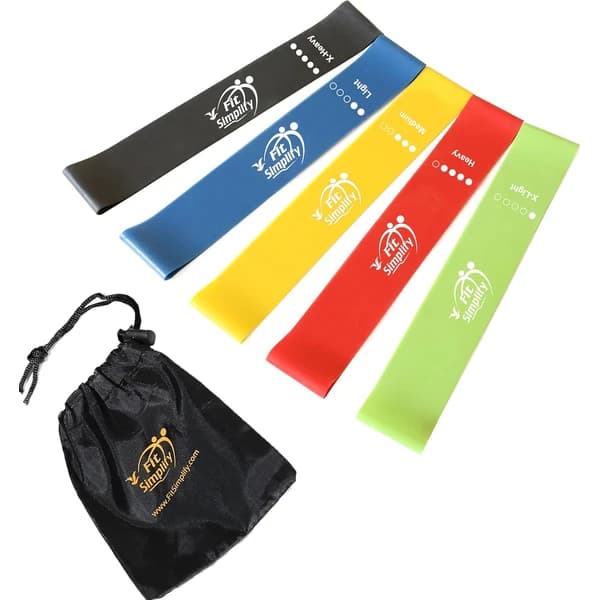
For home-based strength work, resistance bands let you replicate nearly every cable and machine exercise with zero equipment cost.
Amazon · Affiliate
Fit Simplify Resistance Loop Bands (5-Pack)
4.7
Premium latex resistance bands for all fitness levels. Perfect for home workouts, stretching, and rehab.
$10–$15Check Price on Amazon
The afterburn myth (and what's real)
Both modalities have an "EPOC" — excess post-exercise oxygen consumption — where you keep burning calories after the session. EPOC is real, but smaller than fitness influencers claim:
- Moderate cardio: +25–50 kcal over 24 hours post-workout
- HIIT cardio: +100–200 kcal over 24 hours
- Heavy strength: +150–250 kcal over 24 hours
Strength work's EPOC is actually higher per session — but don't chase it. The total session calories + preserved muscle matter more than the afterburn line on your tracker.
Head-to-Head: Cardio vs Strength Training
| Factor | Cardio | Strength Training | |--------|--------|------------------| | Fat loss speed (short-term) | Faster (higher per-session calorie burn) | Slower (lower per-session burn) | | Muscle retention | Poor (loses 2–3x more lean mass) | Excellent (preserves 93% of lean mass) | | Metabolic rate impact | Minimal long-term change | Increases RMR via added muscle | | Time efficiency | Moderate (needs volume for results) | High (30–45 min sessions produce results) | | Injury risk | Moderate–high (repetitive stress, overuse) | Low–moderate (when form is coached) | | Sustainability | Low–moderate (boring, hard to progress) | High (progressive overload keeps it engaging) |
The Science on Actual Fat Loss
Let's get specific. A landmark 2017 study in Obesity randomized 249 overweight adults to three groups for 18 months:
| Group | Weight lost | Fat lost | Muscle lost | |-------|------------|----------|-------------| | Cardio only | -14.9 lb | -12.8 lb | -2.1 lb | | Strength only | -9.5 lb | -6.2 lb | +3.3 lb (gain) | | Cardio + Strength | -16.5 lb | -15.4 lb | -1.1 lb |
Cardio + strength beat both alone on total fat loss and muscle preservation. This is the most robust finding in the literature: the combined approach dominates either in isolation.
Which Approach Is Right for Your Goal?
| Your Primary Goal | Best Approach | Why | |------------------|---------------|-----| | Lose fat as fast as possible | Hybrid (cardio + strength, 70/30 split) | Maximizes calorie burn while protecting muscle | | Improve body composition (look leaner at same weight) | Strength-dominant | Builds muscle while burning fat — scale may not move much | | Train for a 5K or endurance event | Cardio-dominant with 1–2 strength sessions | Aerobic capacity is the limiter; muscle work prevents injury | | Lose fat with minimal time (<3 days/week) | Strength + HIIT | Highest return per hour; EPOC compounds on short weeks | | Preserve muscle during aggressive cut | Strength-primary | Resistance training is the #1 lever for lean mass retention | | Beginner with no gym access | Bodyweight strength + walking | Entry point with lowest barrier; both modalities covered |
The Contrarian Take: Strength Training Wins Long-Term Fat Loss
Here's what most cardio enthusiasts miss: strength training burns more total fat over a 12-month horizon than cardio, despite burning fewer calories per session.
The mechanism is straightforward. A 12-week strength program that adds 4 lb of muscle raises your resting metabolic rate by roughly 30–40 kcal/day. That's ~12,000 extra kcal burned per year — at rest, doing nothing — equivalent to about 3.4 lb of fat. Run those numbers out over five years and you're looking at 17+ lb of additional fat loss that cardio can't touch, because cardio doesn't rebuild the metabolic engine. Strength training does.
The research supports this: long-term follow-up studies consistently show that people who built muscle during a weight-loss phase regain significantly less fat in the following 12–24 months than those who relied on cardio alone. The muscle they built keeps working even when they're not in the gym.
The lesson isn't "don't do cardio." It's "don't skip the weights expecting cardio to carry you." Cardio is the accelerant; strength training is the foundation.
The LBE Concurrent Training Model
Most programs treat cardio and strength as competing priorities. The LBE Concurrent Training Model (Lift, Build, Elevate) treats them as a sequenced system with three roles:
Lift (strength anchor, 3x/week): Full-body resistance training forms the non-negotiable core of the week. These sessions protect muscle, drive EPOC, and build the metabolic engine that makes everything else more effective. Never cut these when life gets busy — cut cardio first.
Build (zone-2 base, 2x/week): Steady-state aerobic work at conversational pace (60–70% max heart rate). These sessions improve fat oxidation efficiency and aerobic capacity without producing the cortisol load that tanks recovery. Keep them at 30–45 minutes. These are also active recovery — they flush soreness.
Elevate (HIIT spike, 1x/week): One high-intensity interval session per week. Sprints, hill repeats, bike intervals — 20–25 minutes total including warm-up. This elevates VO2 max, drives a larger EPOC, and breaks adaptation plateaus without overloading the recovery system.
The sequence matters. On days you strength train, place cardio after (or on separate days) — never before. Pre-fatigue from cardio reduces strength output, which compromises the most important part of the session.
A fitness tracker keeps the Build sessions honest — heart rate data is the only reliable way to confirm you're actually in zone-2 rather than inadvertently pushing into zone-3.
Amazon · Affiliate
Fitbit Charge 6 Fitness Tracker
4.4
Built-in GPS, heart rate monitoring, sleep tracking, and 40+ exercise modes. Google Maps and Wallet integration.
$100–$160Check Price on Amazon
The 70/30 Beginner Framework
For a beginner with ~30–60 minutes per day, 4–5 days a week, here's the evidence-based split:
70% of training time — strength 30% of training time — cardio
Seem backwards? It's not. Strength work is the rate-limiting factor — if you shortchange it, you'll bleed muscle and rebound. Cardio is the volume multiplier you add on top.
A sample weekly split (5 days, ~45 min each)
| Day | Session | Duration | |-----|---------|----------| | Mon | Full-body strength | 45 min | | Tue | Zone-2 cardio (walk/bike) | 40 min | | Wed | Full-body strength | 45 min | | Thu | Rest or mobility | — | | Fri | Full-body strength | 45 min | | Sat | HIIT or brisk hike | 30 min | | Sun | Zone-2 cardio | 40 min |
Total: ~3.5 hours strength, ~2 hours cardio. Roughly 65/35 time split — within the framework.
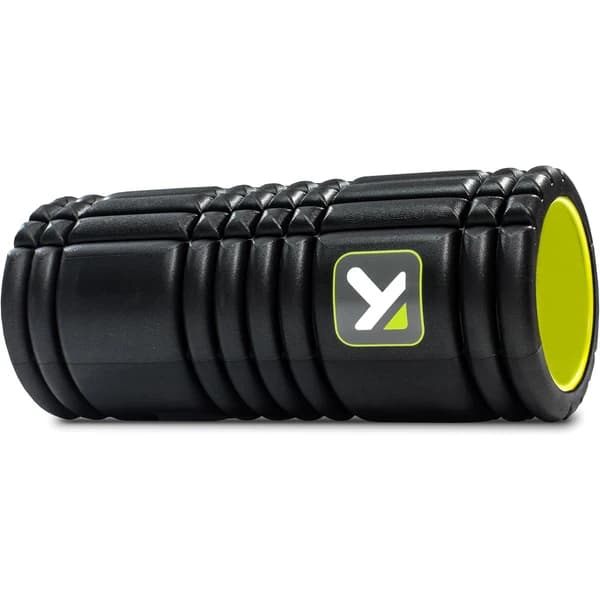
Post-session foam rolling is underrated for the concurrent athlete. When you're strength training and doing cardio multiple times a week, soft-tissue work dramatically reduces soreness and lets you hit the next session at full capacity.
Amazon · Affiliate
TriggerPoint GRID Foam Roller
4.7
Multi-density foam roller for muscle recovery and myofascial release. Used by pro athletes.
$30–$40Check Price on Amazon
Fueling the Combined Approach
Protein matters most in a deficit — a 2020 review concluded that dieting lifters need 1.6–2.4 g/kg bodyweight of protein daily (roughly 0.75–1.0 g per lb) to maximize muscle retention. Hitting that number consistently is the single most important nutritional intervention for body composition.
Expert tip: nutrition researcher Alan Aragon puts it simply — "In a deficit, protein and resistance training aren't optional. They're the two variables that decide whether you lose fat or lose yourself."
Common Mistakes in the Cardio vs Strength Debate
- Going cardio-only — the fastest path to weight loss that looks like sickness rather than fitness
- Going strength-only in a heavy deficit — you'll preserve muscle but progress slower and miss cardiovascular health benefits
- Doing HIIT 5x/week — HIIT is productive in small doses (2x/week max). More than that, cortisol accumulates and recovery suffers
- Treating the scale as the scoreboard — muscle is denser than fat. Scale may not move for a week while your jeans loosen 2 sizes. Use waist measurements + photos
- Ignoring NEAT — non-exercise activity thermogenesis (walking, fidgeting, standing) burns far more calories daily than most workouts. 10,000+ steps beats a single hour of cardio
What About Fasted Cardio?
The short version: doesn't matter for most people. A 2014 study (Schoenfeld et al.) showed zero difference in fat loss between fasted and fed cardio when total calories were matched. Do whichever keeps you consistent. If fasted morning walks fit your life, great. If you need coffee + toast to function, that's also great.
How to Program Progression
Week 1–4: Establish the habit. Don't worry about weights or pace.
Week 5–8: Add load on strength days (more weight or reps). Push pace on 1–2 cardio sessions per week.
Week 9–12: Add a 5th session if recoverable. Consider a hard HIIT day. Test body composition — expect 4–10 lbs of fat lost at this point.
Weeks 13+: The program itself doesn't need changing — your inputs (protein, calories, sleep) and progressive overload do.
Final Thoughts
The cardio vs strength training for fat loss debate was always a false choice. The body composition you actually want — tight waist, visible muscle, good energy — comes from pairing both, with strength work as the anchor and cardio as the multiplier. The LBE Concurrent Training Model gives that pairing a structure: lift three times a week as the non-negotiable foundation, build your aerobic base with zone-2 sessions, and spike the system once a week with HIIT. Three months of consistent execution and you'll have hard evidence that the "best" type of exercise is whichever one you consistently combine with the other.
For programming the strength side, see our compound vs isolation exercises guide or subscribe to the LeanBodyEngine newsletter for weekly training + nutrition breakdowns.
Affiliate disclosure: Some links in this article are affiliate links. If you purchase through them, we may earn a small commission at no extra cost to you. We only recommend products we genuinely believe in.
About the author
Nathan reviews the research, tests the tools, and writes the guides at LeanBodyEngine — evidence-first, no sponsored content, no supplement shilling.
Related articles


Subscribe
Never miss a new article
Get an email whenever we publish a new fitness guide, supplement review, or workout plan. One short email per post — that's it.
Unsubscribe anytime. We only email when there's a new post.