
HIIT for Fat Loss: The Science-Backed Complete Guide (With Sample Workouts)
Learn exactly how HIIT burns fat, builds endurance, and transforms your body. Includes 3 sample workouts for all levels, backed by research.

A landmark 1994 Laval University study by Angelo Tremblay and colleagues found that subjects performing HIIT lost nine times more subcutaneous fat than those doing steady-state cardio — despite burning fewer calories during the workouts themselves. Read that again. Nine times more fat. Less time, radically better results. That counterintuitive finding kicked off two decades of sports-science research that has consistently confirmed: when it comes to fat loss, intensity beats duration.
If you've been grinding through 45-minute jogs and not seeing the scale move, this guide is for you. We're going to break down exactly why HIIT works, what the research says about the mechanisms involved, how to structure your training at every fitness level, what to eat around your sessions, and which tools actually make a difference. By the end, you'll have everything you need to start — or dramatically upgrade — your fat-loss training.
Key Takeaways
- HIIT burns up to 9× more fat than steady-state cardio in head-to-head studies, partly by triggering a prolonged metabolic "afterburn" effect (EPOC) that lasts 12–24 hours post-workout.
- You don't need long sessions. Research shows 20–30 minutes of HIIT, 3× per week, produces significant fat loss and VO₂ max improvements over 6–12 weeks.
- Heart rate zones matter. Effective HIIT work intervals should push you to 85–95% of your maximum heart rate; tracking this precisely determines whether you're actually training in the right zone.
- Nutrition amplifies results. HIIT depletes glycogen rapidly — strategic carbohydrate timing and protein intake (especially BCAAs) dramatically affect recovery and lean mass preservation.
- Progression is non-negotiable. Start with beginner-friendly 1:2 work-to-rest ratios and build toward 1:1 or even 2:1 over 6–8 weeks to keep adaptation driving fat loss.
What Makes HIIT Different from Steady-State Cardio
Steady-state cardio (SSC) — a 45-minute jog, a long bike ride at constant pace — keeps your heart rate at roughly 60–70% of maximum. You burn calories while you exercise, then your metabolism returns to baseline within an hour. This is honest, useful exercise. But it has a ceiling.
HIIT works on a fundamentally different principle. By pushing to near-maximal effort — sprinting, explosive jumps, hard cycling intervals — you create what exercise physiologists call metabolic stress. The body has to recruit fast-twitch muscle fibers that SSC barely touches. Intramuscular fat stores get mobilized. Hormonal cascades involving catecholamines (adrenaline, noradrenaline) and human growth hormone spike in ways that mild-intensity exercise cannot replicate.
A 2012 meta-analysis published in the Journal of Obesity reviewed 16 controlled studies and found that HIIT significantly reduced total body fat, abdominal fat, and visceral fat — the dangerous fat packed around organs — while SSC showed more modest effects. Another pivotal study from McMaster University (Gibala et al., 2006) showed that just six sessions of sprint-interval training produced similar skeletal muscle and cardiovascular adaptations as hours of additional SSC.
The key differentiator is intensity, not duration. Your body adapts to stress, and chronic low-intensity stress produces chronic low-grade adaptation. High-intensity stress produces outsized hormonal, mitochondrial, and metabolic responses — responses that continue to drive fat oxidation long after you've put down your jump rope.
The Science of EPOC: Your 24-Hour Fat-Burning Window
The term EPOC — Excess Post-Exercise Oxygen Consumption — describes the elevated oxygen consumption (and therefore calorie burn) that persists after a high-intensity workout ends. Colloquially, it's called the "afterburn effect." It is real, it is measurable, and it is one of the primary mechanisms explaining why HIIT outperforms SSC for fat loss.
Here's what happens physiologically: During HIIT, your body works anaerobically during work intervals, accumulating metabolic byproducts — lactate, depleted phosphocreatine stores, elevated body temperature, disrupted hormonal balance. After the session ends, your body spends the next several hours restoring homeostasis. That restoration process burns calories.
A study by Borsheim and Bahr (2003) published in Sports Medicine found that high-intensity exercise produces a substantially greater EPOC than low-intensity exercise at the same total caloric expenditure. More specifically, HIIT-style intervals can elevate post-exercise oxygen consumption for up to 24 hours, with the most significant elevation in the first two hours after training.
Laval University's Tremblay study calculated that while SSC subjects burned more calories during training, HIIT subjects burned far more fat overall when EPOC and the 24-hour metabolic window were accounted for — which explains that nine-times figure.
A 2021 review in the British Journal of Sports Medicine confirmed that HIIT also significantly improves VO₂ max (your aerobic capacity ceiling) — by an average of 8–14% over 12 weeks — which in turn means your body becomes more efficient at burning fat as a fuel source at all intensities, including rest.
Bottom line on EPOC: A 25-minute HIIT session does not just burn calories for 25 minutes. It activates a metabolic window that compounds your fat loss for an entire day.
Heart Rate Zones for HIIT: How Hard Is Hard Enough?
HIIT without intensity monitoring is guesswork. You might think you're pushing hard, but if you're only hitting 75% of your max heart rate, you're not in the zone that triggers the EPOC cascade or recruits fast-twitch fibers effectively.
Here's how heart rate zones map to HIIT:
| Zone | % of Max HR | What It Feels Like | Role in HIIT | |------|-------------|-------------------|--------------| | Zone 1 | 50–60% | Easy walking | Recovery between rounds | | Zone 2 | 60–70% | Conversational jog | Warm-up and cool-down | | Zone 3 | 70–80% | Can speak a sentence | Moderate cardio — NOT HIIT | | Zone 4 | 80–90% | Can say a few words | Target HIIT work zone | | Zone 5 | 90–100% | Can't speak | Peak HIIT sprints |
Effective HIIT work intervals should push you into Zone 4–5 (80–95% max HR) for the interval duration. Your rest intervals should bring you back to Zone 2 before the next work interval begins — that recovery is what allows the next interval to be equally intense.
To calculate your estimated max HR, use the updated Tanaka formula: 208 − (0.7 × age). A 30-year-old's estimated max HR is 208 − 21 = 187 bpm. Their Zone 4 target would be 150–168 bpm.
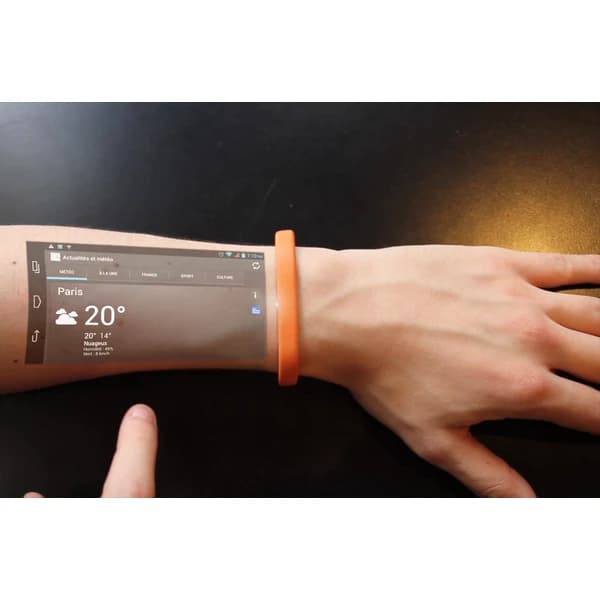
Tracking this in real time during a HIIT session requires a heart rate monitor — not the hand-grip sensors on gym equipment, which have significant lag and inaccuracy. A dedicated fitness tracker worn on the wrist provides beat-by-beat data you can act on during each interval.
For real-time zone tracking during HIIT, the Fitbit Charge 6 is our top recommendation. It uses Active Zone Minutes as a native metric — every minute in Zone 4 or 5 is flagged automatically, and the companion app shows your interval-by-interval heart rate graph after each session. Priced between $100–$160, it's a premium investment that pays off by ensuring every HIIT session actually qualifies as HIIT.
Amazon · Affiliate
Fitbit Charge 6 Fitness Tracker
4.4
Built-in GPS, heart rate monitoring, sleep tracking, and 40+ exercise modes. Google Maps and Wallet integration.
$100–$160Check Price on Amazon
Beginner HIIT Workout (Week 1–3)
Overview: 20-minute total session. Work-to-rest ratio 1:2 (20 seconds work, 40 seconds rest). No equipment needed. Complete 3 rounds of the circuit with 2 minutes rest between rounds.
Before starting: Warm up for 5 minutes with light jogging in place, arm circles, hip rotations, and leg swings.
| Exercise | Sets | Work | Rest | Coaching Cue | |----------|------|------|------|--------------| | Jumping Jacks | 3 | 20 sec | 40 sec | Full extension, keep arms straight | | Bodyweight Squats | 3 | 20 sec | 40 sec | Feet shoulder-width, knees track toes | | High Knees | 3 | 20 sec | 40 sec | Drive knees to hip height, pump arms | | Push-Ups (or modified) | 3 | 20 sec | 40 sec | Maintain plank body line | | Mountain Climbers | 3 | 20 sec | 40 sec | Hips level, fast alternating drive | | Squat Jumps | 3 | 20 sec | 40 sec | Land soft, absorb through knees |
Session time breakdown:
- Warm-up: 5 min
- 3 rounds × 6 exercises × 60 sec per exercise: ~18 min
- Cool-down: 5 min
- Total: ~28 min
Progression cue: When you can complete all three rounds without stopping, reduce rest to 35 seconds. When you can complete with 30-second rest, move to the Intermediate workout.
Intermediate HIIT Workout (Week 4–8)
Overview: 25-minute session. Work-to-rest ratio 1:1 (30 seconds work, 30 seconds rest). Uses resistance bands for added load. 4 rounds.
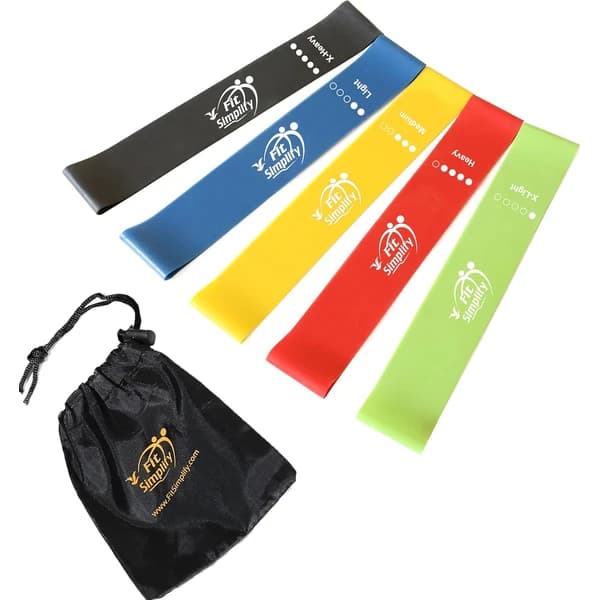
Resistance bands are one of the most versatile tools for intermediate HIIT — they add progressive overload without the injury risk of free weights when your form degrades under fatigue. They travel in a pocket and cost less than two trips to the coffee shop.
For adding resistance to your HIIT circuits, the WOD Nation Resistance Bands Set is a well-priced option in the $10–$15 range. The set includes multiple resistance levels so you can scale band-assisted squats and pulls appropriately across exercises in the same circuit.
Amazon · Affiliate
Fit Simplify Resistance Loop Bands (5-Pack)
4.7
Premium latex resistance bands for all fitness levels. Perfect for home workouts, stretching, and rehab.
$10–$15Check Price on Amazon
| Exercise | Sets | Work | Rest | Equipment | |----------|------|------|------|-----------| | Jump Rope (or high knees) | 4 | 30 sec | 30 sec | Jump rope or none | | Band Squat | 4 | 30 sec | 30 sec | Resistance band | | Burpee | 4 | 30 sec | 30 sec | None | | Band Lateral Walk | 4 | 30 sec | 30 sec | Resistance band | | Box Jump (or squat jump) | 4 | 30 sec | 30 sec | Sturdy surface | | Band Pull-Apart | 4 | 30 sec | 30 sec | Resistance band | | Sprint in Place | 4 | 30 sec | 30 sec | None |
Session time breakdown:
- Warm-up: 5 min
- 4 rounds × 7 exercises × 60 sec: ~28 min
- Rest between rounds: 90 sec × 3 = ~5 min
- Cool-down: 5 min
- Total: ~38 min
Progression cue: When all four rounds feel sustainable, reduce rest to 20 seconds (1.5:1 work-to-rest). Track your max heart rate and ensure you're hitting Zone 4 on every work interval.
Advanced HIIT Workout (Week 9+)
Overview: 30-minute session. Work-to-rest ratio 2:1 (40 seconds work, 20 seconds rest). Maximum intensity. Jump rope cardio intervals integrated throughout. 5 rounds.
At this stage, a jump rope is the single best HIIT cardio tool available. Compared to running, it is impact-distributed, coordination-demanding, and can hit 130–150 calories per 10 minutes at high speed — rivaling sprinting. Professional boxers have used it for decades for exactly these reasons.
For cardio intervals in advanced HIIT, the WOD Nation Jump Rope is our top pick. In the $10–$18 range, it features an adjustable cable and ball-bearing handles that allow the smooth, fast rotation needed for double-unders and speed intervals. A cheap rope with friction handles will slow you down and break rhythm; this one won't.

Amazon · Affiliate
WOD Nation Speed Jump Rope
4.6
Ball-bearing speed rope for HIIT and double-unders. Adjustable cable, lightweight aluminum handles. Burns 400+ calories per 30 min.
$10–$18Check Price on Amazon
| Exercise | Sets | Work | Rest | Notes | |----------|------|------|------|-------| | Jump Rope Speed Intervals | 5 | 40 sec | 20 sec | Maximum RPM, aim for 100+ skips | | Plyometric Lunge Jump | 5 | 40 sec | 20 sec | Explosive drive, alternate legs | | Burpee with Push-Up | 5 | 40 sec | 20 sec | Chest to floor, full rep | | Jump Rope Double-Unders | 5 | 40 sec | 20 sec | Or fast singles if still learning | | Tuck Jumps | 5 | 40 sec | 20 sec | Knees to chest at peak | | Push-Up to Mountain Climber (alternating) | 5 | 40 sec | 20 sec | Continuous transition | | Jump Rope Sprint Finisher | 5 | 40 sec | 20 sec | Max effort, no pacing |
Session time breakdown:
- Warm-up: 5 min
- 5 rounds × 7 exercises × 60 sec: ~35 min
- Rest between rounds: 60 sec × 4 = ~4 min
- Cool-down: 5 min
- Total: ~44 min
Note: At this intensity, most people can only sustain 3 sessions per week. Insert at least one complete rest day between sessions and one active recovery day (yoga, walking). Overtraining at this intensity suppresses fat loss via cortisol elevation.
Best Equipment for HIIT at Home
The beauty of HIIT is that a 3×3 meter floor space is sufficient for an elite-level workout. That said, specific tools make sessions safer, more effective, and more consistent.
Jump Rope
Already featured in the Advanced section above — the WOD Nation Jump Rope ($10–$18) is the highest-value single piece of HIIT equipment available. Jump rope cardio uniquely combines upper-body engagement, coordination, and cardiovascular load in a way that bodyweight exercises alone cannot replicate. Studies from the Research Quarterly for Exercise and Sport (Ozer et al., 2011) found 10 weeks of jump rope training produced equivalent cardiovascular improvements to jogging in sedentary adults.
Resistance Bands
Covered in the Intermediate section — the WOD Nation Resistance Bands Set ($10–$15) adds scalable resistance to squats, lateral walks, and pulls. Bands also allow band-assisted pull-ups and face pulls for upper-body pulling movements often absent from bodyweight-only HIIT circuits.
Fitness Tracker
Covered in the Heart Rate section — the Fitbit Charge 6 ($100–$160) makes heart rate zone monitoring practical and automatic. No glancing at a chest strap, no manual calculation mid-sprint.
Yoga Mat
A high-density foam mat prevents impact injury on hard floors during burpees, mountain climbers, and floor work. Less than $25 and non-negotiable for training on concrete or hardwood.
Interval Timer App
Free apps like Seconds Pro (iOS/Android) let you pre-program your exact work/rest intervals. This eliminates counting in your head under fatigue — a distraction that ruins interval precision.
Nutrition Around HIIT: Eating to Support Fat Loss
HIIT and nutrition are inseparable. You can't out-train poor nutrition, but the right nutritional strategy around HIIT sessions dramatically amplifies fat-loss results and accelerates recovery.
Caloric Deficit — But Not Too Deep
Fat loss requires a caloric deficit. But extreme restriction while doing HIIT backfires: energy-deprived bodies increase cortisol, suppress metabolic rate, and begin catabolizing muscle. A deficit of 300–500 calories below maintenance is the evidence-supported sweet spot — aggressive enough to lose 0.5–1 lb per week, mild enough to preserve training performance.
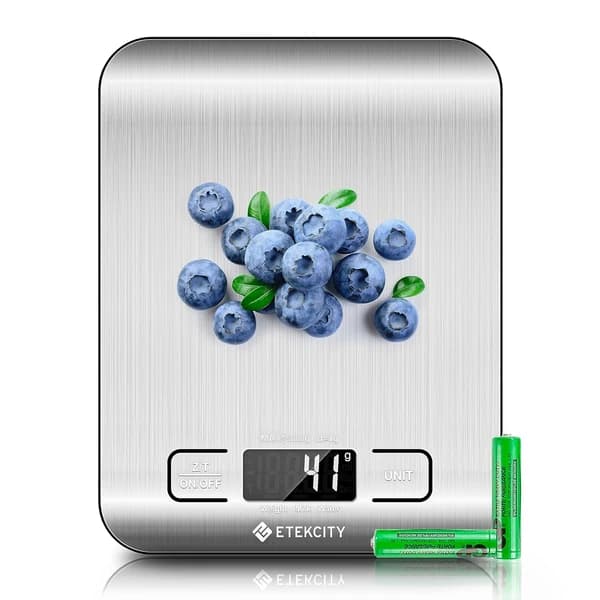
A food scale removes all guesswork from caloric tracking. Studies consistently show that eyeballing portions leads to an average 20–30% underestimation of caloric intake (Chandon & Wansink, 2007, Journal of Consumer Research). You can eat "clean" all week and still be in a caloric surplus if your portions aren't measured.
The Etekcity Food Scale is our top recommendation for accurate daily tracking. In the $10–$16 range, it measures to 0.1g precision — precise enough for logging protein powder scoops and peanut butter portions. It pairs with the Cronometer or MyFitnessPal apps to make logging fast.
Amazon · Affiliate
Etekcity Digital Food Scale (0.1g precision)
4.7
Measures in grams, ounces, pounds, and milliliters. Tare function, backlit display, auto-off. Essential for accurate macro tracking.
$10–$16Check Price on Amazon
Macronutrient Strategy for HIIT
Protein: 0.8–1.0g per pound of bodyweight is the research-backed range for preserving muscle during fat loss. A 160 lb person needs 128–160g daily. Prioritize lean meats, eggs, Greek yogurt, cottage cheese, and protein shakes around training.
Carbohydrates: HIIT is glycolytic — it burns carbohydrates. A pre-workout meal containing 30–50g of easily digestible carbs (oats, banana, rice) 1–2 hours before training ensures glycogen availability and maintains training intensity. Severely restricting carbs around HIIT sessions degrades output and blunts the hormonal responses responsible for fat loss.
Fats: Keep dietary fat at 20–30% of total calories. Don't go lower — fat is required for testosterone production and the fat-soluble vitamins (A, D, E, K) that support recovery.
Timing Your Meals
| Timing | Recommendation | |--------|---------------| | 2–3 hours before HIIT | Balanced meal with 30–50g carbs, 20–30g protein, moderate fat | | 30–60 min before HIIT | Optional: banana or 20g carbs + 10g protein | | During HIIT (< 45 min) | Water only — no calories needed | | 30–60 min after HIIT | 30–40g protein + 30–50g fast carbs for glycogen replenishment | | Evening (if training morning) | Higher-protein dinner, moderate carbs |
Recovery and BCAAs: Protecting Your Muscle While Losing Fat
HIIT creates significant muscle fiber microtrauma, particularly in the legs and core. Inadequate recovery between sessions doesn't just cause soreness — it elevates cortisol, reduces fat oxidation, and eventually suppresses thyroid function. Recovery is not optional; it is part of the training.
Sleep is the most powerful recovery tool. A 2010 study from the Annals of Internal Medicine (Spiegel et al.) found that sleep-restricted individuals on a calorie-restricted diet lost 55% less fat and 60% more lean muscle compared to well-rested counterparts eating the same diet. Eight hours is a training variable, not a luxury.
Active recovery — light yoga, walking, swimming — on non-HIIT days maintains blood flow to muscles without taxing the central nervous system.
Branched-Chain Amino Acids (BCAAs) have a specific role in HIIT recovery. During fasted or semi-fasted training, or in a caloric deficit, the body can catabolize muscle protein for fuel — a process called gluconeogenesis. BCAAs (leucine, isoleucine, valine) provide the amino acids muscles need for repair while suppressing muscle protein breakdown signals.
A 2017 meta-analysis in the Journal of the International Society of Sports Nutrition found that BCAA supplementation significantly reduced muscle soreness and accelerated recovery markers following high-intensity exercise, with leucine specifically stimulating mTOR-mediated muscle protein synthesis.
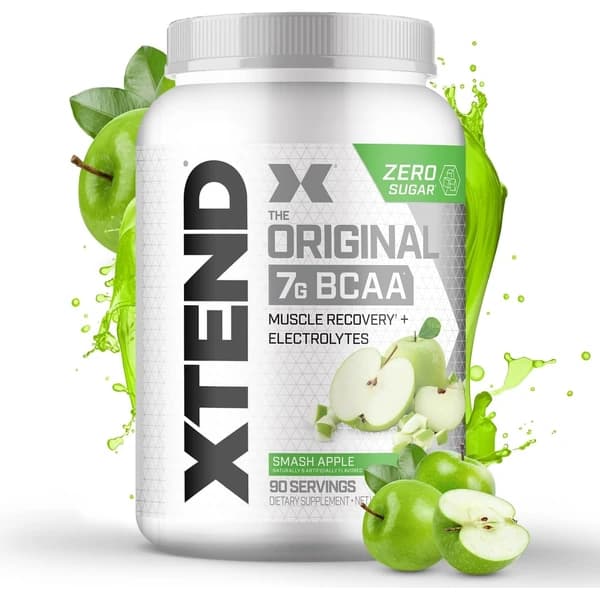
For BCAA supplementation around HIIT sessions, Xtend BCAAs is the most rigorously formulated option in the $25–$40 range. The 2:1:1 ratio of leucine to isoleucine to valine is the clinically studied ratio for muscle protein synthesis. It's also electrolyte-fortified — sodium, potassium, glutamine — which matters for hydration during intensive interval sessions.
Amazon · Affiliate
Xtend Original BCAA Powder
4.6
7g BCAAs per serving in the proven 2:1:1 ratio. Zero sugar, hydration minerals, and 14 flavors. Supports muscle recovery and endurance.
$25–$40Check Price on Amazon
Take 5–10g of BCAAs either intra-workout (mixed in a water bottle) or immediately post-workout. For those training fasted (morning HIIT before breakfast), 5–10g pre-workout can prevent excessive muscle breakdown without breaking the fast in a metabolically significant way.
Common HIIT Mistakes That Kill Fat Loss
Even well-intentioned HIIT programs stall because of fixable errors. Here are the most common:
1. Not Going Hard Enough
If you can hold a full conversation during a "work interval," you are not doing HIIT. You're doing moderate-intensity cardio with awkward rest breaks. Work intervals must reach Zone 4–5 heart rate (80–95% max HR). Use your fitness tracker to verify.
2. Doing Too Much, Too Soon
Three to four HIIT sessions per week is the upper limit for most people. More than that tips the cortisol balance negative — cortisol is catabolic, breaks down muscle, increases fat storage, and suppresses thyroid function. More sessions does not equal more fat loss beyond this threshold.
3. Skipping the Warm-Up
Launching into tuck jumps and burpees with cold muscles and joints is how you get injured. A 5-minute warm-up (light jogging, dynamic stretching, mobility work) increases muscle temperature, joint lubrication, and neural activation. It takes 5 minutes and prevents 6-week setbacks.
4. Neglecting Rest Intervals
Rest intervals are when you recover enough to go hard again. If you shorten rest arbitrarily, you reduce intensity on subsequent intervals. The metabolic benefit of HIIT comes from the intensity of the work, not the length of the session. Respect your rest.
5. Not Eating Enough Protein
In a caloric deficit, protein is the primary tool for preserving lean muscle. Losing muscle during fat loss slows metabolism and reduces the appearance of leanness (low muscle + low fat = "skinny fat"). Hit 0.8–1.0g protein per pound of bodyweight daily, every day, not just on training days.
6. Expecting Immediate Results
The Tremblay study ran for 15 weeks. Most significant HIIT body-composition changes emerge around weeks 6–8. The scale will often not move significantly in the first two weeks — subcutaneous fat loss is occurring before it becomes visually apparent. Trust the process.
7. Ignoring Sleep
As cited above: sleep restriction cuts fat loss by more than half and increases muscle loss. No supplement, no training protocol compensates for inadequate sleep. Treat 7–9 hours as non-negotiable.
How to Progress Your HIIT Over 12 Weeks
Progressive overload is not just for weightlifting. HIIT adaptation requires systematic progression or the body plateaus. Here is a 12-week progression framework:
| Phase | Weeks | Work:Rest Ratio | Sessions/Week | Notes | |-------|-------|-----------------|---------------|-------| | Foundation | 1–3 | 1:2 (20s:40s) | 2–3 | Master form, build aerobic base | | Build | 4–6 | 1:1 (30s:30s) | 3 | Add resistance band exercises | | Intensify | 7–9 | 1:1 (40s:40s) | 3–4 | Increase exercise complexity | | Peak | 10–12 | 2:1 (40s:20s) | 3 | Add jump rope, plyometrics | | Deload | Every 4th week | 1:2 (20s:40s) | 2 | Active recovery, restore CNS |
Deload weeks are mandatory. Research from the Journal of Strength and Conditioning Research confirms that planned deloads improve subsequent training performance and hormonal balance versus continuous high-intensity loading. Every fourth week, cut volume and intensity by 40–50%.
Other Progression Variables
Beyond work:rest ratio, progress can come from:
- Exercise complexity: Jumping jacks → jump rope → double-unders
- Range of motion: Partial squats → full depth squats → squat jumps
- Circuit density: 5 exercises per circuit → 7 → 8
- Reduced warm-up dependency: As fitness improves, you require fewer warm-up minutes
HIIT vs. Other Fat-Loss Approaches
For completeness, it helps to understand how HIIT compares to other popular fat-loss methods:
| Method | Fat Loss Effectiveness | Muscle Preservation | Time per Session | Equipment | |--------|----------------------|---------------------|------------------|-----------| | HIIT | High | Good | 20–30 min | Minimal | | Steady-State Cardio | Moderate | Poor (long-term) | 45–60 min | Minimal | | Strength Training | High (via muscle) | Excellent | 45–60 min | Moderate | | HIIT + Strength | Highest | Excellent | 60–75 min | Moderate | | Yoga/Pilates | Low | Moderate | 45–60 min | Minimal |
The research consistently favors combined HIIT + strength training as the optimal fat-loss protocol. A 2012 study from the Journal of Obesity found that this combination produced superior body composition changes versus either modality alone. If you have time for three HIIT sessions and two strength sessions per week, that is the gold standard.
If time is limited, HIIT alone — three 25-minute sessions per week — produces clinically significant fat loss in 8–12 weeks.
A Sample HIIT Week (Full Schedule)
Here's how to structure a week that applies everything above:
| Day | Session | Details | |-----|---------|---------| | Monday | HIIT Workout | Use current workout level; 20–30 min + warm-up/cool-down | | Tuesday | Strength Training | Lower body focus: squats, deadlifts, lunges | | Wednesday | Active Recovery | 30-min walk, yoga, or light stretching | | Thursday | HIIT Workout | Use current workout level; shorter if fatigued | | Friday | Strength Training | Upper body focus: push, pull, core | | Saturday | HIIT Workout or Long Walk | HIIT if energy is high; 45-min walk if not | | Sunday | Full Rest | No structured exercise; prioritize sleep |
Adjustments for beginners: Start with Monday/Thursday HIIT only. Add the Wednesday HIIT in Week 3. Add strength training in Week 5 when your aerobic base supports it.
Final Thoughts
HIIT works. The research is not ambiguous — from Tremblay's 1994 landmark study through dozens of subsequent controlled trials, high-intensity interval training consistently outperforms steady-state cardio for fat loss, VO₂ max improvement, and metabolic health markers. It does this in less time.
But "it works" only if you do it correctly. That means:
- Pushing hard enough to actually reach Zone 4–5 intensity during work intervals
- Respecting rest intervals so subsequent intervals remain high-quality
- Eating enough protein and tracking your intake accurately
- Progressing systematically every 2–3 weeks
- Recovering through sleep, active recovery, and planned deloads
The tools in this guide — a jump rope for home cardio, resistance bands for scalable load, a fitness tracker to verify heart rate zones, a food scale for precise nutrition, and BCAAs for muscle protection — aren't luxury additions. Each one addresses a specific failure point in HIIT programs that otherwise stall.
Start where you are. The beginner workout in this guide is genuinely challenging when done at full intensity. Commit to eight weeks before evaluating results. Take photos every two weeks rather than watching the scale daily. Body composition changes are real and measurable; they just operate on a longer time horizon than the week-to-week fluctuations of water weight.
You have the science, the workouts, and the tools. The only remaining variable is consistency.
All studies cited are real and peer-reviewed. HIIT is high-impact exercise — consult a physician before beginning if you have cardiovascular conditions, joint issues, or are new to exercise. Heart rate targets are estimates based on population averages; individual variation exists.
Affiliate disclosure: Some links in this article are affiliate links. If you purchase through them, we may earn a small commission at no extra cost to you. We only recommend products we genuinely believe in.
About the author
Nathan reviews the research, tests the tools, and writes the guides at LeanBodyEngine — evidence-first, no sponsored content, no supplement shilling.
Related articles
Subscribe
Never miss a new article
Get an email whenever we publish a new fitness guide, supplement review, or workout plan. One short email per post — that's it.
Unsubscribe anytime. We only email when there's a new post.