
How to Lose Belly Fat: A 30-Day Plan for Beginners
Learn how to lose belly fat in 30 days with this beginner-friendly plan covering nutrition, workouts, sleep, and supplement strategy — no crash diets required.

If you've spent hours scrolling for the fastest way to lose belly fat, you've probably seen everything from waist trainers to "one weird tea." The truth is less exciting but far more effective: sustainable fat loss comes from a modest calorie deficit, regular movement, sleep, and patience. This 30-day plan is built for beginners who want a realistic roadmap — not a punishment cycle. Follow it and you'll learn how to lose belly fat while building habits that actually stick past day 31.
Key Takeaways
- Expect 0.5–1.5 lbs of true fat loss per week on a well-executed plan — promises of more usually mean muscle or water loss
- A 300–500 kcal/day deficit is the sweet spot: aggressive enough to move the needle, small enough to preserve muscle and adherence
- Cortisol — your stress hormone — directly drives visceral fat storage, even when calories are controlled; sleep and stress management are non-negotiable
- Belly fat has two distinct layers: subcutaneous fat (soft, just under the skin) and visceral fat (deep, around organs) — visceral fat responds faster to a deficit but carries greater metabolic risk
- Spot reduction is a myth: no exercise burns fat specifically from your midsection; overall body fat percentage must drop before your waist shrinks
- Combining a moderate deficit with resistance training reduces visceral fat up to 2× faster than cardio alone (Obesity Reviews, 2019)
Why Belly Fat Is Stubborn (and What Actually Works)
Abdominal fat — especially the deeper visceral fat wrapped around your organs — is metabolically active and tied to hormones like cortisol and insulin. That's why stress, poor sleep, and ultra-processed diets hit your midsection first. A 2019 review in Obesity Reviews found that combining a moderate calorie deficit with resistance training reduced visceral fat up to 2× faster than cardio alone.
The Contrarian Take: Spot Reduction Is a Myth — Here's Where You Actually Lose Fat First
Every fitness influencer selling "belly fat blasting" core workouts is selling you a fantasy. The idea that you can direct your body to burn fat from a specific area by exercising that area has been disproven repeatedly in peer-reviewed research. A landmark study in the Journal of Strength and Conditioning Research had subjects do 10 weeks of targeted abdominal training — and found zero preferential fat loss in the abdominal region compared to the control group.
Where do you actually lose fat first? Genetics determines the sequence, not your workout selection. Most people lose fat from the face, chest, and upper body before the midsection — which is why a person can have noticeably leaner arms while still carrying a rounded belly. The belly usually does respond, but only once overall body fat drops meaningfully (typically 2–4% reduction in total body fat percentage before waist measurements budge significantly).
The good news: when you stop chasing spot reduction and focus on total-body deficit with resistance training, your midsection catches up — often faster than you expect.
What actually moves the needle in 30 days:
- A calorie deficit of 300–500 kcal/day (not 1,000+)
- Protein at 0.7–1.0 g per pound of bodyweight to preserve muscle
- 3–4 resistance sessions per week
- 7–9 hours of sleep
- Step count around 8,000–10,000/day
The LBE 4-Lever Belly Fat System
Rather than a random list of tips, this plan organizes everything around four levers that science consistently identifies as the primary drivers of abdominal fat loss. Pull all four simultaneously — that's what separates real results from the "I tried and nothing happened" cycle.
| Lever | What It Does | Primary Tool | |---|---|---| | 1. Calorie Deficit | Forces the body to oxidize stored fat for energy | Food tracking + plate formula | | 2. Resistance Training | Preserves lean mass; resistance burns visceral fat 2× faster than cardio alone | 3x/week strength sessions | | 3. Sleep & Cortisol Control | Reduces hormonal fat storage signal; cortisol elevation linked to 9% more visceral fat | Fixed sleep window + magnesium | | 4. NEAT & Steps | Non-exercise activity (walking, fidgeting) can burn 200–500 kcal/day without structured workouts | Daily step target + tracker |
The system works because pulling any single lever produces modest results. Pulling all four creates compounding effects that make 30 days genuinely transformative for most beginners.
What Drives Belly Fat — And How to Address Each Factor
| Factor | Mechanism | How to Address It | |---|---|---| | Calorie surplus | Excess energy stored preferentially as visceral fat under hormonal influence | 300–500 kcal/day deficit via tracking | | Elevated cortisol | Stimulates fat cell growth in the abdomen; increases appetite for calorie-dense foods | 7–9 hrs sleep, caffeine cutoff at 2 PM, stress-management routine | | Low protein intake | Reduces satiety; leads to muscle loss during deficit, lowering resting metabolism | 0.7–1.0 g protein per lb of bodyweight | | Insulin resistance | High insulin promotes fat storage and blocks fat release; driven by refined carbs | Replace refined carbs with slow carbs; add resistance training | | Poor sleep | Elevates ghrelin (hunger hormone) by ~24%; reduces leptin (fullness hormone) | Fixed sleep/wake window; dark, cool room; no screens 30 min before bed | | Low muscle mass | Less muscle = lower resting metabolic rate = fewer calories burned at rest | Progressive resistance training 3x/week | | Sedentary lifestyle | NEAT drops dramatically; step counts below 5,000/day correlate with higher visceral fat | 8,000–10,000 daily steps; standing breaks every 60 min | | Excessive alcohol | "Beer belly" is real — alcohol is 7 kcal/g; liver prioritizes alcohol metabolism over fat oxidation | Reduce to <7 drinks/week during the 30 days |
The 30-Day Plan: Week-by-Week Breakdown
| Week | Focus | Calorie Deficit | Exercise Protocol | Expected Outcome | |---|---|---|---|---| | Week 1 | Baseline & Nutrition Reset | Start tracking; set –400 kcal target after 5-day average | No new training; hit 8,000 steps/day | Lose 1–2 lbs (mostly water + glycogen); establish tracking habit | | Week 2 | Introduce Strength + Cardio | –400 to –500 kcal/day | 3 strength days + 2 cardio days (zone 2, 30–40 min) | 0.5–1 lb true fat loss; noticeable energy improvement | | Week 3 | Sleep, Stress & Micronutrients | Maintain –400 to –500 kcal/day | Same template; add 10 min mobility on rest days | 0.5–1 lb fat loss; improved sleep quality; reduced bloat | | Week 4 | Push Intensity, Then Taper | Maintain deficit; add ab finisher 2x | Add 2 post-strength finishers; deload final 3 days | 0.5–1 lb fat loss; more defined waist; accurate final measurement |
Total expected result: 3–6 lbs fat loss, 0.5–1.5 inch waist reduction, visibly tighter midsection.
Week 1: Baseline & Nutrition Reset
Don't change your training yet. The first week is about data and food.
Track for 5 days, then adjust
Use any free tracker (MyFitnessPal, Cronometer) and log honestly. Most people underestimate intake by 20–30%. After five days, take your daily average and subtract 400 kcal — that's your starting target.
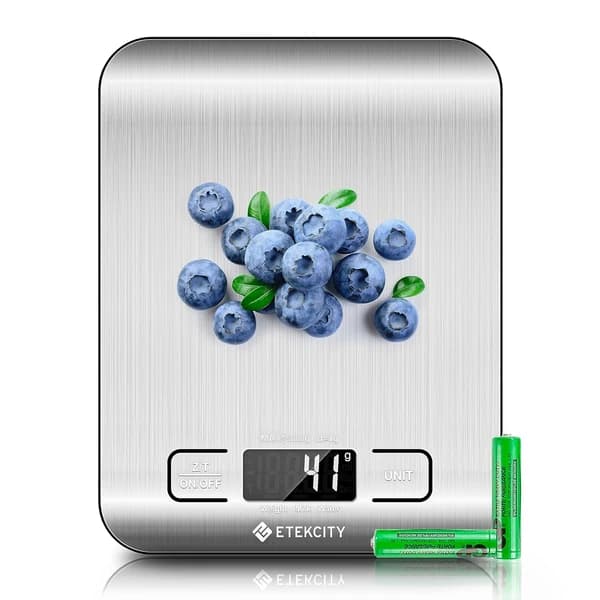
A food scale eliminates the single biggest source of error in self-reported calorie tracking. Eye-balling a "handful" of almonds is usually 2–3× the actual serving size.
Amazon · Affiliate
Etekcity Digital Food Scale (0.1g precision)
4.7
Measures in grams, ounces, pounds, and milliliters. Tare function, backlit display, auto-off. Essential for accurate macro tracking.
$10–$16Check Price on Amazon
Build the "plate formula"
Every meal:
- Palm of protein (chicken, fish, tofu, eggs, Greek yogurt)
- Fist of slow carbs (rice, oats, potatoes, beans)
- Two thumbs of fats (olive oil, avocado, nuts)
- Half the plate: vegetables
Protein is the single biggest lever. It's the most satiating macro and the most thermogenic — your body burns roughly 25% of protein's calories just digesting it, versus 5–10% for carbs and fats.
Cut the three biggest culprits
Liquid calories (sodas, sweetened coffee, alcohol), refined snacks, and late-night grazing are where most beginners leak 500+ daily calories without realizing it. Replace — don't eliminate — so you don't trigger rebound cravings.
Week 2: Introduce Strength + Cardio
Now we start moving. The template below takes ~45 minutes and can be done at home or in a gym.
Strength days (Mon / Wed / Fri)
Three sets each, RPE 7 (you could do 2–3 more reps):
- Goblet squat — 10 reps
- Romanian deadlift (dumbbell or barbell) — 10 reps
- Push-up (or incline push-up) — AMRAP
- Dumbbell row — 10 reps/side
- Dead bug — 12 reps/side
- Plank — 30–45 seconds
Resistance training is non-negotiable for losing belly fat without losing muscle. If you don't have access to a full gym, the progression below works with a basic band set and a couple of kettlebells.
Cardio days (Tue / Thu / Sat)
30–40 minutes of zone 2 — a pace where you can hold a conversation but not sing. Brisk walking on an incline, easy cycling, or swimming all qualify. A jump rope is one of the most efficient zone-2 tools available: low cost, zero commute, and adjustable intensity.

Amazon · Affiliate
WOD Nation Speed Jump Rope
4.6
Ball-bearing speed rope for HIIT and double-unders. Adjustable cable, lightweight aluminum handles. Burns 400+ calories per 30 min.
$10–$18Check Price on Amazon
Track your progress automatically
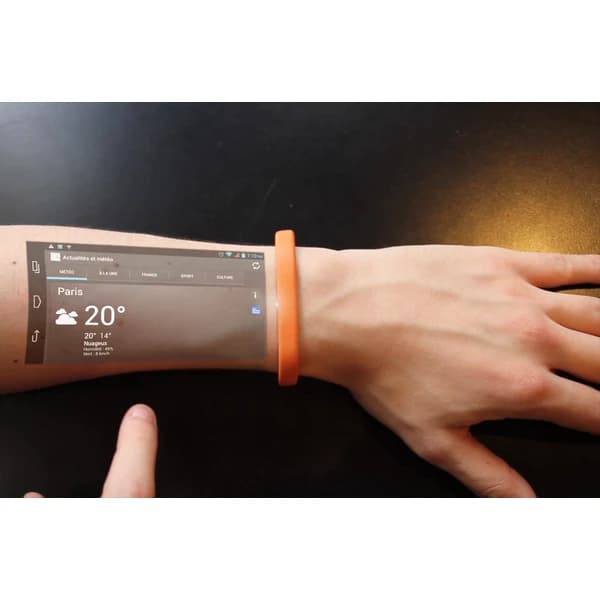
A fitness tracker takes the guesswork out of step counts, resting heart rate trends, and sleep stages — the exact metrics that correlate most strongly with belly fat reduction over 30 days.
Amazon · Affiliate
Fitbit Charge 6 Fitness Tracker
4.4
Built-in GPS, heart rate monitoring, sleep tracking, and 40+ exercise modes. Google Maps and Wallet integration.
$100–$160Check Price on Amazon
Sunday: recovery + step target
Aim for 10,000 steps plus 10 minutes of mobility. This is also your weekly weigh-in day (morning, after bathroom, before eating) and measurement day (waist at the navel).
Week 3: Dial In Sleep, Stress, and Micronutrients
Most 30-day plans ignore this — and it's exactly why most plateau. Cortisol elevation from poor sleep is associated with up to 9% higher visceral fat even at the same calorie intake (Am J Clin Nutr, 2017).
Non-negotiables for week 3:
- Fixed sleep/wake window — variance under 30 min
- Caffeine cutoff at 2 PM
- 10-minute wind-down — no screens in bed
- Daily sunlight within an hour of waking
When calories drop, so do intakes of magnesium — the micro most directly tied to sleep quality, cortisol regulation, and muscle recovery. Magnesium glycinate is the bioavailable form that doesn't cause the digestive upset common with magnesium oxide supplements.

Amazon · Affiliate
Doctor's Best High Absorption Magnesium Glycinate
4.7
Highly bioavailable magnesium chelate. Supports muscle relaxation, deep sleep, stress reduction, and recovery.
$12–$22Check Price on Amazon
The "80% rule"
Fitness coach Lyle McDonald is blunt: "You don't need perfect. You need 80% consistent for longer than you've ever been consistent before." If you nail week 3 nutrition and sleep 6 out of 7 days, you're in the top 10% of people attempting a 30-day plan.
Week 4: Push Intensity, Then Taper
By week 4, your workouts should feel noticeably stronger. Now we add a small progression — not a max-out.
Strength progression
Add one rep per set, OR add 5 lbs to compound lifts. Not both.
Add two 20-min finishers
After strength sessions, superset two exercises for 4 rounds:
- 10 kettlebell swings
- 20-second bear crawl
These target your core isometrically while keeping heart rate elevated — a more efficient "ab finisher" than 200 sit-ups.
Tapered final 3 days
Days 28–30: reduce training volume by ~30%, prioritize 8+ hours of sleep, keep protein and steps identical. This "mini-deload" reduces retained water and makes your final measurements more honest.
What Results Should You Expect?
For a beginner at roughly 20–28% body fat, a well-executed 30-day plan commonly produces:
- 3–6 lbs fat loss
- 0.5–1.5 inch waist reduction
- Visibly tighter midsection, even without visible abs yet
- Meaningful gains in strength and energy
Anyone promising "10 lbs of belly fat in 30 days" is either selling you something or pushing an unsustainable crash diet that will rebound by month two.
Common Mistakes That Stall Progress
- Cutting too aggressively — deficits above 700 kcal/day cost muscle, tank energy, and crush adherence
- Skipping resistance training — cardio-only dieters lose 30–50% more lean mass
- Weekend bingeing — two 2,000-kcal surplus days can wipe the deficit from five disciplined days
- Obsessing over the scale — water, sodium, and cycle fluctuations swing 2–4 lbs; trust the 7-day average
- Doing 500 crunches/day — builds ab strength but does not burn the fat sitting on top
Final Thoughts
Learning how to lose belly fat is less about any single workout or food and more about stacking small, boring habits for long enough to let biology do its job. The LBE 4-Lever System works because it addresses the real drivers — deficit, resistance training, sleep quality, and daily movement — simultaneously rather than sequentially.
Run this 30-day plan cleanly, take progress photos at day 1 and day 30, and you'll have proof that your body responds to consistency — not gimmicks. The belly is stubborn, but it's not immune to thermodynamics.
If you're ready to go deeper, check out our HIIT Workout Plan for Beginners for your next training phase, or subscribe to the LeanBodyEngine newsletter for weekly evidence-based fat-loss breakdowns.
Affiliate disclosure: Some links in this article are affiliate links. If you purchase through them, we may earn a small commission at no extra cost to you. We only recommend products we genuinely believe in.
About the author
Nathan reviews the research, tests the tools, and writes the guides at LeanBodyEngine — evidence-first, no sponsored content, no supplement shilling.
Related articles

Subscribe
Never miss a new article
Get an email whenever we publish a new fitness guide, supplement review, or workout plan. One short email per post — that's it.
Unsubscribe anytime. We only email when there's a new post.