10 Best Home Workouts for Beginners (No Equipment Needed)
Start your fitness journey at home with these 10 beginner-friendly workouts that require zero equipment. Build strength, burn fat, and improve endurance.
Picture this: it's 6 a.m., the gym is a 20-minute drive away, and you have exactly 30 minutes before your day explodes. Most people skip the workout. But a 2019 study published in the Journal of Strength and Conditioning Research found that bodyweight training programs produced equivalent strength gains to machine-based gym programs over 8 weeks — as long as effort was matched. Your living room is already a fully equipped training facility. You just need the right map.
Key Takeaways
- Bodyweight training produces strength gains equivalent to gym training when effort and progressive overload are applied (JSCR, 2019)
- Beginners should train 3 days per week with at least one rest day between sessions
- Start at 3 sets of 10–15 reps per exercise; add 1 rep per set each week to drive progress
- Most beginners see measurable strength improvements within 4–6 weeks of consistent training
- Core stability (planks, glute bridges) should be prioritized before high-rep dynamic moves
- A single resistance band can increase exercise difficulty by 30–50%, dramatically extending the lifespan of any bodyweight routine
Why Home Workouts Work
Research consistently shows that home-based exercise programs produce results comparable to gym workouts when effort and consistency are maintained. The biggest advantage? No commute, no cost, and no excuses.
The key variable isn't location — it's progressive overload: continually giving your muscles a reason to adapt. That principle works whether you're under a loaded barbell or on a living-room floor.
The Contrarian Truth About Home Training
Here's the take most gym advocates won't give you: home workouts can build just as much muscle as gym training — but only if you apply progressive overload deliberately.
A gym makes progression easy: add a plate, move up a dumbbell. At home, progression requires creativity. That's where most beginners stall. The fix is systematic variation — increasing reps, slowing the eccentric (lowering) phase, reducing rest periods, and eventually adding load via bands or a pull-up bar.
A 2021 meta-analysis in Sports Medicine reviewed 14 studies comparing home-based and gym-based resistance training. The conclusion: no statistically significant difference in muscle hypertrophy when volume and intensity were equated. The gym doesn't build muscle — effort and consistency do.
The 3-Phase Bodyweight Progression System
This framework structures your training across three distinct phases. Don't skip ahead — each phase builds the neurological foundation for the next.
Phase 1 — Foundation (Weeks 1–4): Learn movement patterns. Focus on controlled reps, full range of motion, and consistent scheduling. 3 days/week, 3 sets per exercise.
Phase 2 — Volume (Weeks 5–10): Increase total reps and sets. Introduce tempo work (e.g., 3-second lowering phase). Begin exercise variations. 3–4 days/week.
Phase 3 — Intensity (Weeks 11+): Add resistance (bands, weighted backpack), harder variations (archer push-ups, single-leg squats), and shorter rest periods. Treat this phase as ongoing.
The 10 Best Beginner Home Workouts
1. Bodyweight Squats
Squats build your legs and glutes while improving mobility. Stand with feet shoulder-width apart, lower down until your thighs are parallel to the floor, then stand back up.
Start with: 3 sets of 10–15 reps
2. Push-Ups
The classic push-up works your chest, shoulders, and triceps. Beginners can start on their knees to build strength progressively.
Start with: 3 sets of 5–10 reps
3. Glute Bridges
Lie on your back, feet flat on the floor, and drive your hips up toward the ceiling. Great for activating the glutes and lower back.
Start with: 3 sets of 15 reps
4. Mountain Climbers
A full-body move that gets your heart rate up fast. Start in a plank position and alternate driving your knees toward your chest.
Start with: 3 sets of 20 seconds
5. Plank Hold
Build core stability by holding a plank position with your body in a straight line from head to heels.
Start with: 3 sets of 20–30 seconds
6. Lunges
Alternate stepping forward into a lunge to build single-leg strength and improve balance.
Start with: 3 sets of 10 reps per leg
7. Jumping Jacks
A great cardiovascular warm-up or finisher that gets blood pumping throughout the body.
Start with: 3 sets of 30 seconds
8. Superman Hold
Lie face down and simultaneously raise your arms and legs off the floor. Excellent for lower back strength.
Start with: 3 sets of 10 reps
9. Tricep Dips (using a chair)
Place hands on the edge of a sturdy chair, lower your body down, then press back up to work your triceps.
Start with: 3 sets of 8–12 reps
10. High Knees
Run in place while driving your knees up to hip height. Raises heart rate and improves coordination.
Start with: 3 sets of 30 seconds
Exercise Progression Table
Not every exercise has the same ceiling. Here's how to advance each movement as you grow stronger across all three phases of the 3-Phase Bodyweight Progression System.
| Exercise | Phase 1 (Beginner) | Phase 2 (Intermediate) | Phase 3 (Advanced) | |---|---|---|---| | Squat | Bodyweight squat | Squat with 3-sec pause | Single-leg squat (pistol) | | Push-Up | Knee push-up | Standard push-up | Archer or decline push-up | | Glute Bridge | Two-leg bridge | Single-leg bridge | Elevated single-leg bridge | | Plank | 20-sec hold | 45-sec hold | Plank shoulder taps | | Lunge | Stationary lunge | Walking lunge | Reverse lunge with knee drive | | Mountain Climber | Slow controlled reps | Standard pace | Cross-body mountain climber | | Tricep Dip | Bent-knee dip | Straight-leg dip | Weighted dip (backpack) |
Sample Beginner Weekly Schedule
| Day | Workout | Duration | Focus | |---|---|---|---| | Monday | Squats, Push-Ups, Glute Bridges | 25–30 min | Lower body + push | | Tuesday | Rest or light walk | 20–30 min | Active recovery | | Wednesday | Planks, Mountain Climbers, Lunges | 25–30 min | Core + legs | | Thursday | Rest | — | Full recovery | | Friday | Full circuit (all 10 moves, 1 round each) | 30–40 min | Full body | | Saturday | Superman Hold, Tricep Dips, High Knees | 20–25 min | Back + arms + cardio | | Sunday | Active rest (walking, stretching) | 20–30 min | Mobility |
Tools That Extend Your Progress
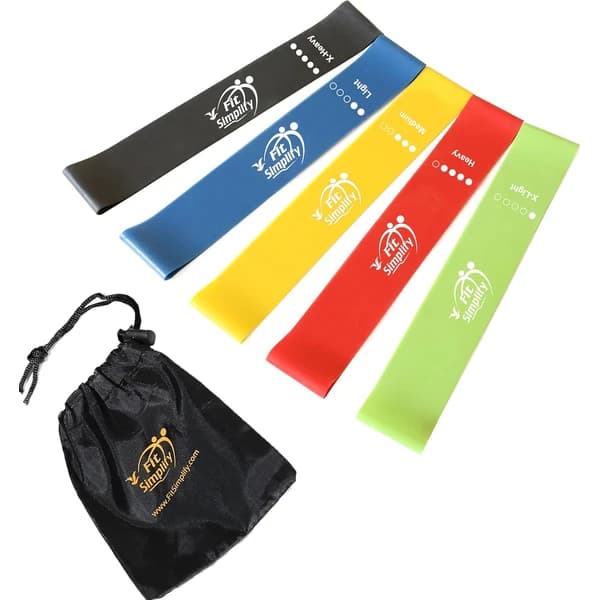
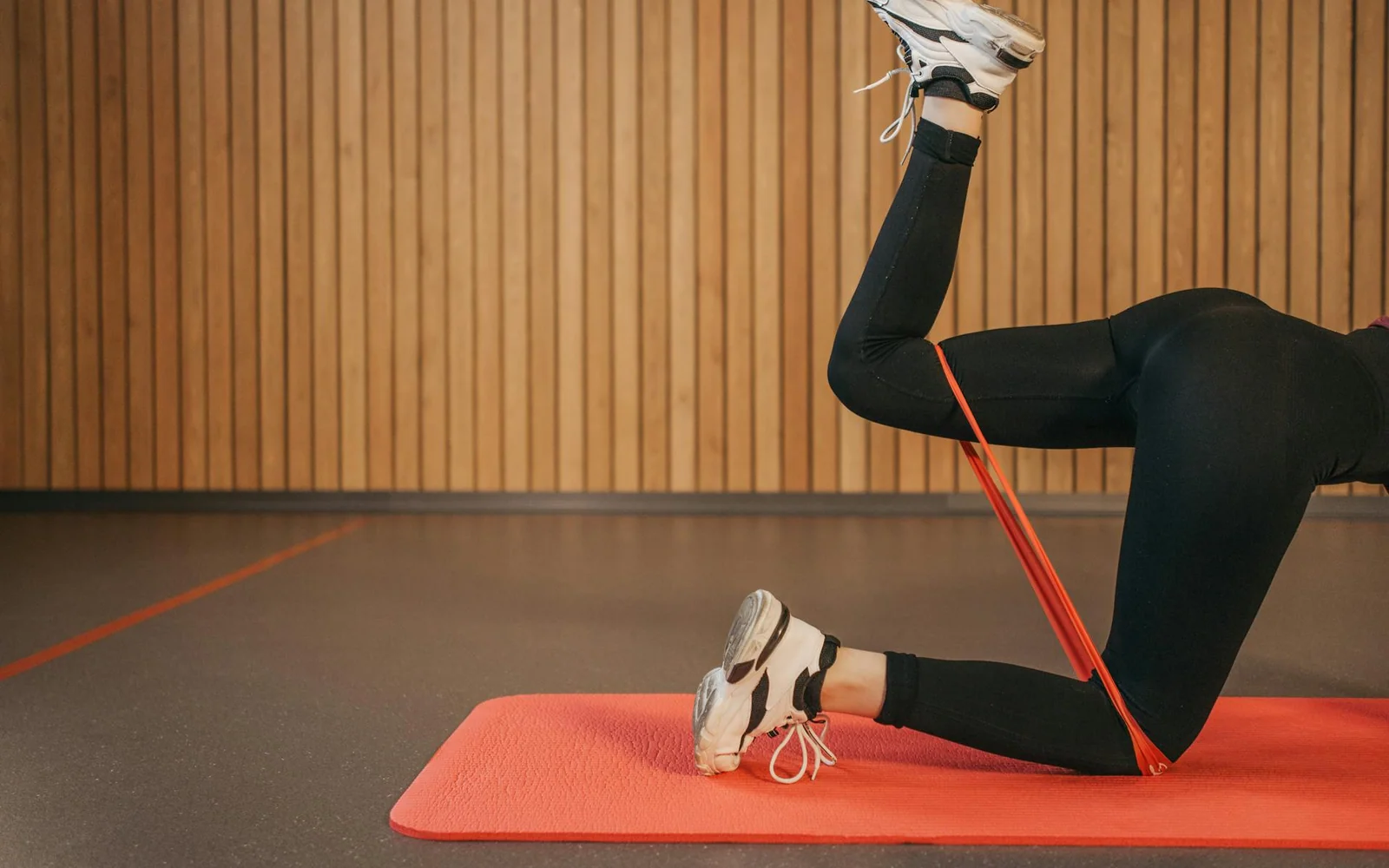
A resistance band set dramatically increases the challenge of every exercise in this list — and it's the single best investment for anyone serious about progressing past Phase 1.
Amazon · Affiliate
Fit Simplify Resistance Loop Bands (5-Pack)
4.7
Premium latex resistance bands for all fitness levels. Perfect for home workouts, stretching, and rehab.
$10–$15Check Price on Amazon
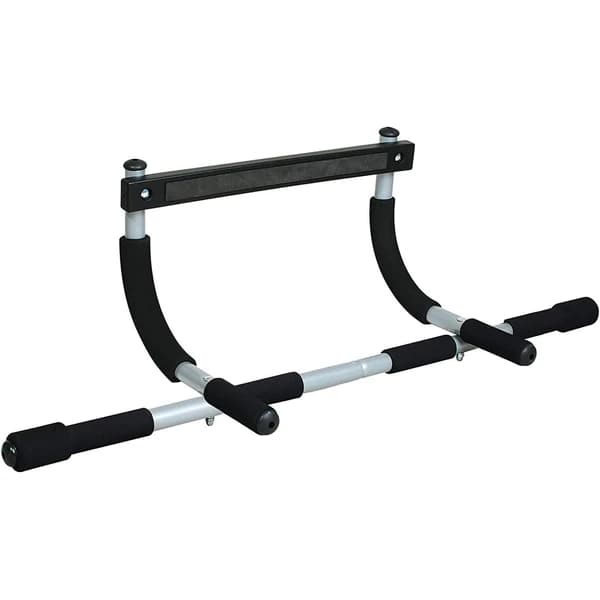
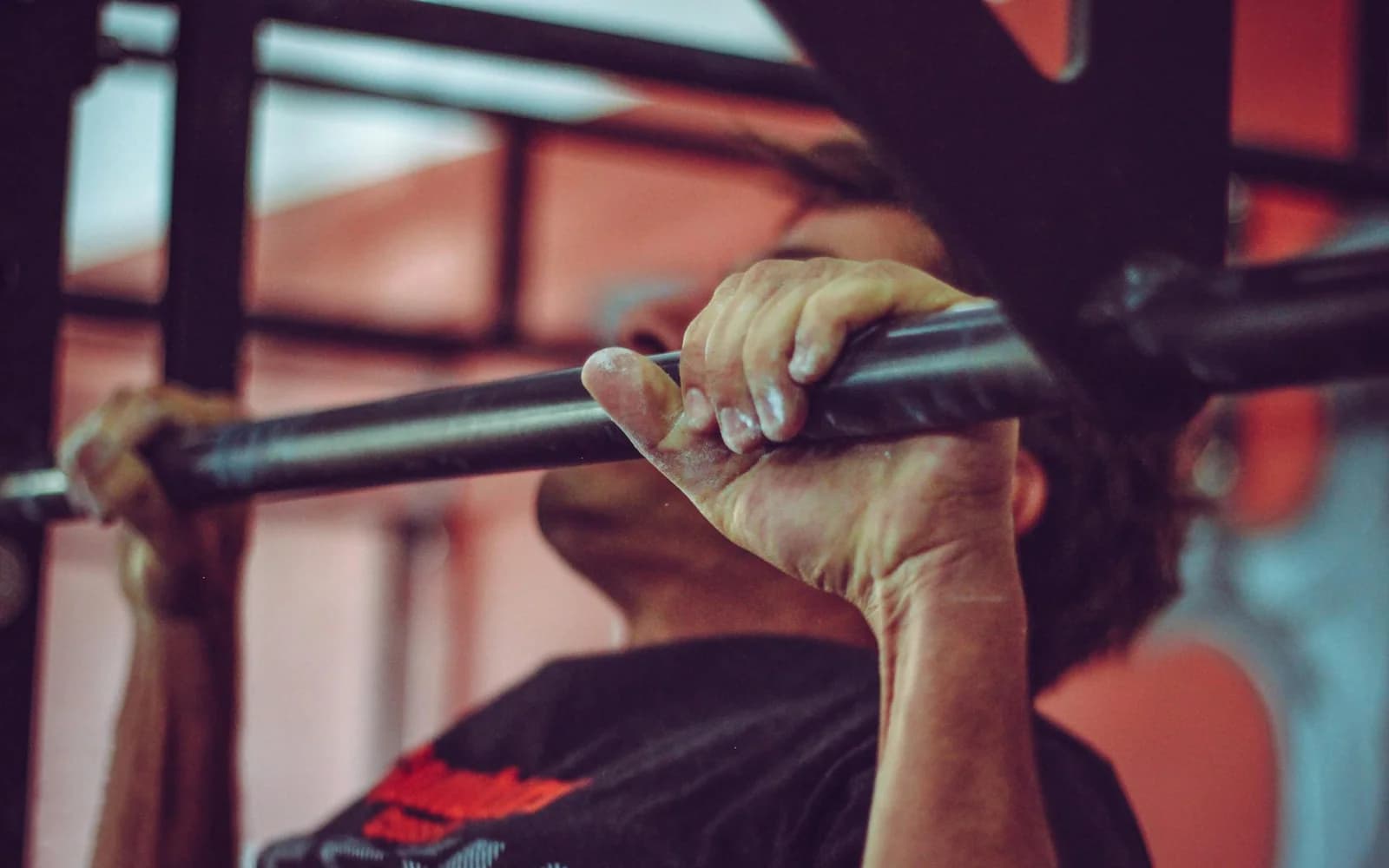
Once you've built a solid foundation, a doorframe pull-up bar opens up an entirely new category of upper-body pulling movements that bodyweight alone cannot replicate.
Amazon · Affiliate
Iron Gym Total Upper Body Workout Bar
4.5
Doorframe pull-up bar with no screws required. Supports up to 300 lbs. Doubles as a dip station.
$25–$35Check Price on Amazon
Tips for Consistency
- Start small. Three workouts per week is plenty when you're beginning.
- Progress deliberately. Add one rep or set per week to keep improving — this is the engine of the 3-Phase system.
- Track your workouts. A simple notebook goes a long way for motivation and for spotting stalls.
- Warm up. Always spend 5 minutes moving before your workout — jumping jacks, arm circles, leg swings.
- Respect rest days. Muscle is built during recovery, not during the session itself.
Final Thoughts
The gap between "home workout" and "real training" is a myth invented by people who have never applied genuine effort to a bodyweight program. These 10 exercises, structured through the 3-Phase Bodyweight Progression System, form the foundation of almost every beginner fitness program on the planet — gym or otherwise.
The goal in the first four weeks isn't transformation. It's consistency. Show up three times a week, move with intention, and add a little more each session. Master the basics at home, build the habit, and you'll have a solid base to work from — whether you eventually join a gym or not. Most people who start here never feel the need to.
Affiliate disclosure: Some links in this article are affiliate links. If you purchase through them, we may earn a small commission at no extra cost to you. We only recommend products we genuinely believe in.
About the author
Nathan reviews the research, tests the tools, and writes the guides at LeanBodyEngine — evidence-first, no sponsored content, no supplement shilling.
Related articles
Subscribe
Never miss a new article
Get an email whenever we publish a new fitness guide, supplement review, or workout plan. One short email per post — that's it.
Unsubscribe anytime. We only email when there's a new post.