
How to Sleep Better: A Science-Backed Guide for Athletes and Lifters
Learn how to sleep better as an athlete — circadian habits, pre-bed routine, supplements that help, and the mistakes stealing your recovery.
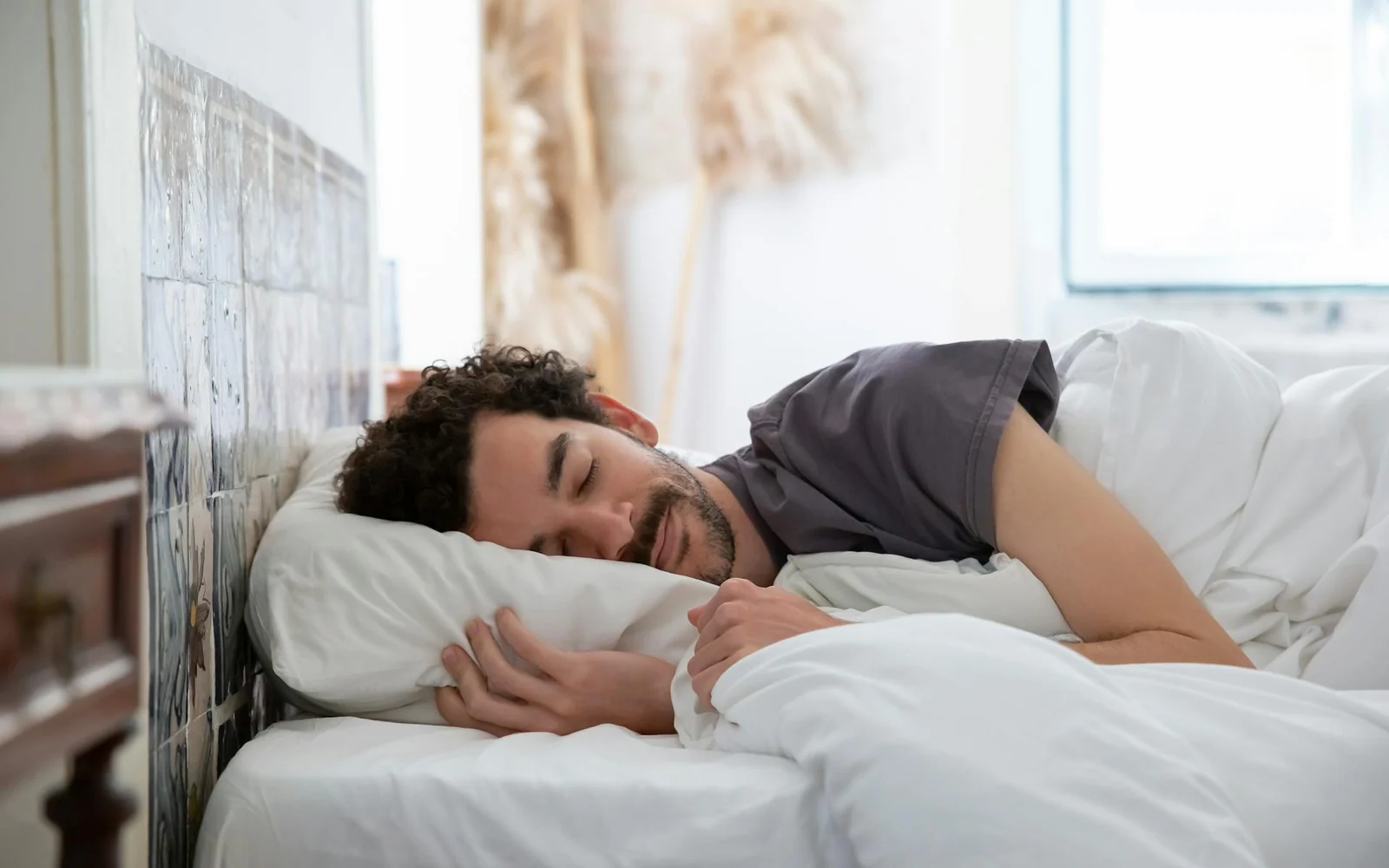
If you lift, run, or compete and you're wondering how to sleep better, you're already ahead of most athletes — because sleep is the single biggest lever for recovery, strength, and body composition, and almost nobody treats it that way. You can dial in your training, nail your macros, and still plateau if you're sleeping 6 hours on a noisy mattress in a 72°F room with your phone face-up on the nightstand. This guide walks through the science-backed habits that actually move the needle — circadian anchors, pre-bed routines, bedroom setup, supplements that work, and the things marketed to you that mostly don't.
Key Takeaways
- Athletes need 8–10 hours of sleep per night — not the 7-hour adult minimum — to fully support training adaptation
- Roughly 70% of daily growth hormone output is released during slow-wave (deep) sleep in the first third of the night
- Restricting sleep to 5 hours for just one week drops testosterone by 10–15% — equivalent to 10–15 years of hormonal aging
- Athletes sleeping under 6 hours show 60% higher cortisol and 40% lower testosterone than those sleeping 8+ hours
- Stanford basketball players who extended sleep to 10 hours improved sprint times, shooting accuracy, and reaction speed within weeks
- Caffeine consumed 6 hours before bed reduces total sleep time by more than one hour — the 2 PM cutoff is not arbitrary
Why Sleep Matters So Much for Athletes
Sleep is when your body repairs. Growth hormone — the hormone that drives muscle repair and connective tissue rebuilding — is released in pulses, and roughly 70% of your daily output happens during deep (slow-wave) sleep in the first third of the night. Cut your sleep short and you literally cut GH release short.
Testosterone follows a similar pattern. A frequently cited 2011 study in JAMA found that young men restricted to 5 hours of sleep per night for one week saw testosterone drop by 10–15% — the equivalent of aging 10 to 15 years hormonally, in seven days.
Strength output tanks too. In his book Why We Sleep, researcher Matthew Walker summarizes the literature bluntly: sleep is "the greatest legal performance-enhancing drug most athletes are ignoring." A 2019 study in the Journal of Sleep Research followed athletes across a training block and found that those sleeping under 6 hours had 60% higher cortisol levels and 40% lower testosterone than those sleeping 8+ hours — a hormonal profile that actively fights recovery.
The takeaway isn't subtle: if you're serious about training, treat sleep as training. Learning how to sleep better is how you finally see the gains you've been chasing.
Sleep and Athletic Performance: What the Numbers Say
The table below summarizes how nightly sleep duration affects the metrics that matter most for athletes. These figures draw on peer-reviewed studies including the Stanford sleep extension trials and subsequent replications.
| Nightly Sleep | Reaction Time | Strength Output | Recovery Rate | Notes | |---|---|---|---|---| | <5 hours | Degraded 20–30% | Down 10–15% | Severely impaired | Cortisol spikes; testosterone bottoms out | | 5–6 hours | Degraded 10–15% | Down 5–10% | Impaired | Most chronically under-slept athletes live here | | 6–7 hours | Marginal deficit | Near normal | Suboptimal | "Feels fine" but data says otherwise | | 7–8 hours | Normal | Normal | Adequate | Minimum for non-athletes; still short for hard trainers | | 8–9 hours | Optimal | Optimal | Full | Target range for recreational athletes | | 9–10 hours | Peak | Peak | Accelerated | Stanford extension studies showed measurable gains at this range |
The Stanford basketball study is the clearest proof-of-concept: players who extended sleep to 9–10 hours improved 3-point shooting by 9%, sprint times by 5%, and reaction time meaningfully — with no other training variable changed.
Anchor Your Circadian Rhythm First
Before you buy supplements or gadgets, fix your circadian rhythm. Your sleep-wake cycle runs on a ~24-hour clock driven by light, meal timing, and body temperature. Get these anchors right and sleep quality improves without any other intervention.
The three circadian anchors:
- Fixed wake time, seven days a week. Variance under 30 minutes. Weekends included. A 2017 Scientific Reports study showed that "social jet lag" (weekend sleep shifting) predicted worse metabolic health and poorer sleep quality even when total sleep time was identical.
- Morning sunlight within 30 minutes of waking. 5–10 minutes on a sunny day, 15–20 on an overcast one. Outdoor light is 10–100x brighter than indoor light and is the single strongest signal for setting your internal clock.
- Caffeine cutoff at 2 PM. Caffeine's half-life is 5–6 hours. A 3 PM cup still has roughly a quarter of the dose in your system at 11 PM — a 2013 Journal of Clinical Sleep Medicine study found caffeine consumed even 6 hours before bed reduced total sleep time by more than an hour.
These three habits are free, they compound, and they outperform almost any sleep supplement on the market.
Build a Pre-Bed Wind-Down Routine
Your nervous system doesn't flip from "work mode" to "sleep mode" on command. You need a transition — ideally 30–60 minutes — that tells your body it's safe to power down.
A simple 45-minute wind-down:
- T-45 min: Screens off (or at minimum, switch to dim, warm lighting and put the phone across the room)
- T-30 min: Dim overhead lights, switch to a single lamp
- T-20 min: Light mobility or stretching on the floor
- T-10 min: 4-7-8 breathing x 4 cycles, or 10 minutes of reading fiction
- Lights out: Same time each night, within a 30-minute window
The point isn't to follow this to the letter. The point is consistency — your brain learns that the sequence is the signal. A 2015 randomized trial in the Journal of Behavioral Medicine found that a consistent 30-minute pre-sleep routine reduced sleep onset latency by an average of 37%.
Get Your Bedroom Setup Right
Your bedroom should be a cave: cool, dark, and quiet. Most people underrate how much environment drives sleep quality.
Temperature: 65–68°F (18–20°C) is the range most of the sleep literature converges on. Your core body temperature needs to drop by about 1°C to initiate and maintain deep sleep. If your room is warm, you fight this the whole night. A 2012 study from the Journal of Physiological Anthropology found that bedroom temperatures above 75°F significantly reduced slow-wave sleep.
Darkness: Blackout curtains or a quality sleep mask. Even small amounts of ambient light (a streetlight, a charging LED) suppress melatonin release and fragment REM.
Amazon · Affiliate
Alaska Bear Natural Silk Sleep Mask
4.5
Ultra-soft 100% natural mulberry silk. Blocks 100% of light without putting pressure on eyes. Includes earplugs.
$8–$15Check Price on Amazon
Quiet: White or brown noise if your environment is unpredictable. A 2021 Journal of Sleep Research paper showed that continuous broadband noise reduced the number of awakenings per night by about 38%.
Amazon · Affiliate
LectroFan High Fidelity White Noise Machine
4.6
20 non-looping fan and white noise sounds. Masks disruptive sounds for deeper, uninterrupted sleep. Used in sleep clinics.
$45–$60Check Price on Amazon
Bed vs. everything else: Use the bed for sleep only. Don't work from it, don't scroll from it. Classical conditioning is real — your brain needs to associate the mattress with shutting down.
Mobility as Part of the Wind-Down
Light mobility in the last 15 minutes before bed does two things: it drops physical tension built up from the day, and it shifts your autonomic nervous system from sympathetic ("go") to parasympathetic ("rest"). A 2020 review in Sleep Medicine Reviews linked evening gentle stretching to faster sleep onset and improved subjective sleep quality in adults with occasional insomnia.
5-minute pre-bed floor flow:
- Child's pose — 60 seconds
- Supine spinal twist — 45 seconds per side
- Figure-4 glute stretch on floor — 45 seconds per side
- Foam roll upper back (slow, with breathing) — 60 seconds
- Legs up the wall — 2 minutes
The foam roller matters here — pressure on the thoracic spine and lats helps release the postural tension from sitting all day, and the slow, diaphragmatic breathing it forces is itself a parasympathetic cue.
Supplements That Actually Help
The honest answer: most sleep supplements are overhyped, but a few have real evidence behind them.
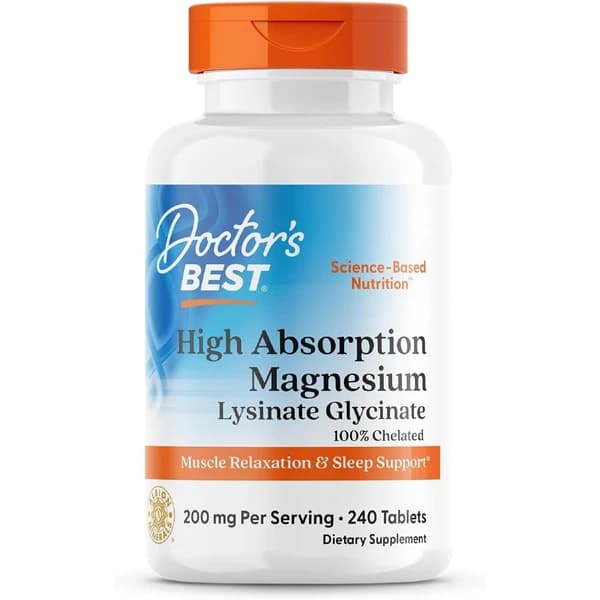
Magnesium glycinate supports GABA-mediated relaxation and is depleted faster in people training hard. A 2022 meta-analysis in BMC Complementary Medicine and Therapies reviewed 9 RCTs and found magnesium supplementation improved sleep onset latency by an average of 17 minutes and total sleep time by about 16 minutes — modest but meaningful numbers, especially for lifters already at risk for depletion.
Amazon · Affiliate
Doctor's Best High Absorption Magnesium Glycinate
4.7
Highly bioavailable magnesium chelate. Supports muscle relaxation, deep sleep, stress reduction, and recovery.
$12–$22Check Price on Amazon
Ashwagandha (KSM-66) is the other supplement with credible sleep data. A 2019 double-blind RCT in Medicine found KSM-66 ashwagandha (300 mg twice daily) significantly improved sleep quality scores, sleep onset latency, and morning cortisol — a meaningful combination for athletes who train hard and sleep short.

Amazon · Affiliate
Jarrow Formulas Ashwagandha (KSM-66)
4.6
300mg KSM-66 ashwagandha root extract. Clinically studied to reduce cortisol, improve sleep quality, and boost strength.
$15–$25Check Price on Amazon
Low-dose melatonin (0.3–0.5 mg) is useful for jet lag, shift work, or resetting a delayed schedule. The 5–10 mg gummies common on shelves are 10–30x the effective physiological dose. Natrol's 1 mg tablets are easy to halve.
Amazon · Affiliate
Natrol Melatonin 5mg Fast Dissolve (90ct)
4.6
Drug-free sleep aid that helps you fall asleep faster. Strawberry flavor, dissolves instantly — no water needed.
$8–$14Check Price on Amazon
The LBE Sleep Stack Protocol
Not all sleep interventions are equal. The framework below ranks them by impact — highest-leverage habits first, supplements last. Think of it as a build order: fix the environment before you buy a pill.
| Rank | Intervention | Mechanism | How to Implement | Evidence Grade | |---|---|---|---|---| | 1 | Fixed wake time (7 days) | Anchors circadian clock; normalizes adenosine buildup | Set one alarm, no snooze, same on weekends | A — strong RCT and cohort data | | 2 | Bedroom cooling to 65–68°F | Enables core temp drop required for deep sleep onset | AC, fan, or cooling mattress pad | A — multiple RCTs | | 3 | Full darkness (blackout + mask) | Prevents melatonin suppression from ambient light | Blackout curtains + sleep mask | B — mostly observational but consistent | | 4 | Morning sunlight (5–20 min) | Sets circadian phase via retinal photoreceptors | Walk outside within 30 min of waking | A — strong chronobiology evidence | | 5 | Caffeine cutoff at 2 PM | Clears adenosine-blocking caffeine before bed | Hard cutoff; track half-life from last dose | A — well-replicated RCT data | | 6 | 30–45 min wind-down routine | Reduces cortisol; shifts ANS to parasympathetic | Dim lights, no screens, light mobility | B — RCT showing 37% latency reduction | | 7 | White noise / sound masking | Reduces micro-arousals from environmental noise | White noise machine at ~50–60 dB | B — RCT showing 38% fewer awakenings | | 8 | Magnesium glycinate (300–400 mg) | Supports GABA signaling; corrects training-induced depletion | Take with dinner | B — meta-analysis of 9 RCTs | | 9 | Ashwagandha KSM-66 (300 mg 2x) | Lowers cortisol; improves subjective sleep quality | Morning + evening with food | B — double-blind RCT | | 10 | Low-dose melatonin (0.3–0.5 mg) | Phase-shifts circadian timing | 30 min before target bed time; not for nightly use | A for jet lag; B for general sleep onset |
How to use this protocol: Start at rank 1. Implement each level for one week before adding the next. By the time you reach supplements (rank 8–10), you'll have already captured 80% of the available gains — and you'll know precisely which supplemental layer is doing extra work.
What Doesn't Work as Well as You Think
Sleep is a massively profitable category, and plenty of products have weak or zero evidence behind them.
- Melatonin at high doses. The common 5–10 mg gummies are 10–30x the physiological dose. A 2017 review in Sleep Medicine Reviews concluded melatonin's effect on sleep onset is modest (~7 minutes) and is best reserved for jet lag or shift work at doses of 0.3–0.5 mg — much lower than what's on most shelves.
- Blue-blocker glasses. The evidence is mixed and mostly weak. A 2021 Chronobiology International review found only small effects on subjective sleep quality and no reliable improvement in objective sleep metrics. The bigger lever isn't filtering blue light through amber lenses — it's just not staring at a bright screen 6 inches from your face at 11 PM.
- CBD gummies for sleep. Inconsistent dosing, minimal evidence beyond anxiety-mediated indirect effects, and huge cost per night. Not a reliable tool.
- Alcohol as a sleep aid. A classic trap. It reduces sleep onset but destroys REM and fragments the second half of the night. A 2018 Journal of Clinical Sleep Medicine study showed even moderate evening alcohol reduced sleep quality by 24%.
Sleep-Tracker Caveats
Wearables (Oura, Whoop, Apple Watch) are useful for trends, not individual nights. Consumer sleep trackers have been validated against polysomnography and consistently show moderate accuracy for total sleep time (~10–15% margin) but poor accuracy for sleep stages — especially REM vs. light sleep boundaries.
Use them to spot weekly patterns (caffeine too late, alcohol on weekends, room too warm), not to stress about a single night's "78% score." And avoid "orthosomnia" — the ironic insomnia caused by obsessing over your sleep data. A 2017 Journal of Clinical Sleep Medicine case series formally described patients whose sleep worsened because they became fixated on wearable feedback.
Final Thoughts
Learning how to sleep better isn't about one hack — it's about a stacked protocol executed in the right order. Fix your wake time and room temperature before you buy anything. Add morning sunlight and a caffeine cutoff before you open the supplement drawer. When you do add supplements, lead with magnesium glycinate to address the most common training-driven deficiency, layer in ashwagandha if stress or cortisol is the limiting factor, and use low-dose melatonin only when timing is the actual problem.
Do the full LBE Sleep Stack Protocol for 30 days — even partially — and you'll feel like you're running on different hardware: stronger training sessions, faster recovery, better mood, fewer sick days. The athletes outperforming their peers on the same program aren't just training harder. They're sleeping smarter.
If you want the training-and-recovery flip side of this guide, pair it with our how to recover faster after a workout breakdown, or subscribe to the LeanBodyEngine newsletter for weekly evidence-based training and recovery playbooks.
Affiliate disclosure: Some links in this article are affiliate links. If you purchase through them, we may earn a small commission at no extra cost to you. We only recommend products we genuinely believe in.
About the author
Nathan reviews the research, tests the tools, and writes the guides at LeanBodyEngine — evidence-first, no sponsored content, no supplement shilling.
Related articles


Subscribe
Never miss a new article
Get an email whenever we publish a new fitness guide, supplement review, or workout plan. One short email per post — that's it.
Unsubscribe anytime. We only email when there's a new post.