Sleep supplements · Head-to-head
Melatonin vs Magnesium for Sleep
Both are popular over-the-counter sleep aids but they work on completely different systems — melatonin shifts the timing of your sleep cycle, magnesium supports muscle relaxation and the nervous system. The right choice depends on what's keeping you up: trouble falling asleep at the right time vs. a body that won't relax.
Melatonin — Natrol 5mg Fast Dissolve
Natrol Melatonin 5mg Fast Dissolve (90ct)
Synthetic version of the hormone your brain produces in response to darkness. Cues your circadian system that it's nighttime. Best for jet lag, shift work, delayed sleep phase syndrome, or resetting a schedule that's drifted.
Pros
- Fast-acting — reduces sleep onset by 10–15 min on average
- Near-zero cost (~$0.10 per dose)
- Excellent for jet lag and shift-work resets
- Doesn't create physical dependence
Cons
- Most OTC doses (3–10mg) are 10x what research supports
- Morning grogginess at high doses
- Vivid dreams and nightmares in some users
- Doesn't help if your issue is racing thoughts or muscle tension
Magnesium glycinate — Doctor's Best
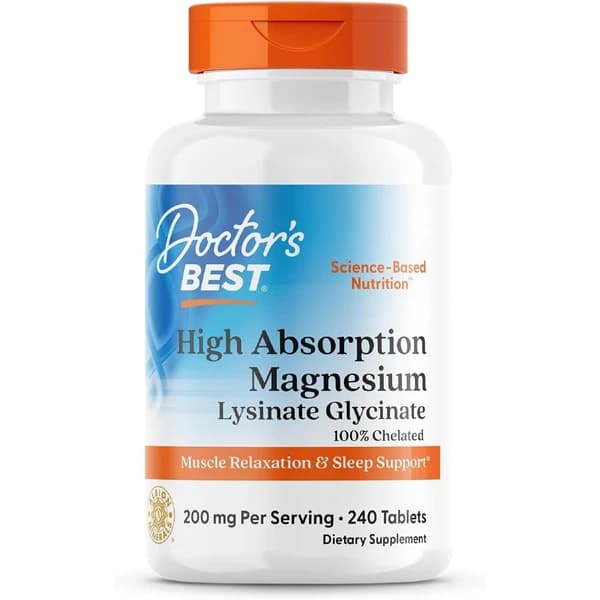
Doctor's Best High Absorption Magnesium Glycinate
Highly absorbable magnesium chelate. Magnesium is involved in 300+ enzymatic reactions including GABA regulation and muscle relaxation. Supplementing corrects a common deficiency (~50% of adults under-consume) and tends to deepen sleep rather than shorten its onset.
Pros
- Deepens sleep quality (more time in slow-wave stages)
- Reduces muscle cramps and restless legs
- No grogginess or morning hangover
- Safe for long-term nightly use
Cons
- Slower to notice — takes 1–2 weeks of consistent use
- Some forms (oxide, citrate) cause GI upset; glycinate is gentle
- Doesn't shift sleep timing — won't help with jet lag
- Higher daily cost than melatonin
Which one wins, by use case
Best for jet lag or schedule shifts
Natrol Melatonin 5mg Fast Dissolve (90ct)
Melatonin is the gold standard for re-timing your circadian clock. Take 0.5–3mg ~30 min before target bedtime at the new time zone.
Best for nightly use
Doctor's Best High Absorption Magnesium Glycinate
Deepens sleep without timing or tolerance issues. Safe to take every night long-term; many find it the single best sleep intervention they've tried.
Best if you can't turn your mind off
Doctor's Best High Absorption Magnesium Glycinate
Magnesium's GABA-promoting effect reduces the nervous-system chatter keeping you up. Melatonin won't help if the issue is mental activation, not biological time.
The verdict
For nightly use, magnesium glycinate wins — it deepens sleep without tolerance, timing effects, or morning grogginess, and corrects a deficiency most people actually have. Reach for melatonin specifically when you're fighting the clock (jet lag, shift work, delayed sleep phase). They stack safely, and starting low on melatonin (0.3–1mg) avoids the morning hangover most people complain about.
Quick compare
| Spec | Natrol Melatonin 5mg Fast Dissolve (90ct) | Doctor's Best High Absorption Magnesium Glycinate |
|---|---|---|
| Rating | 4.6 / 5 | 4.7 / 5 |
| Price range | $8–$14 | $12–$22 |
| Source | Amazon | Amazon |
Frequently asked
Questions people ask about this
Can I take melatonin and magnesium together?
Yes — they work on different systems and are frequently combined in commercial sleep formulas. Take magnesium 30–60 min before bed and melatonin 15–30 min before bed. No known interactions.
How much melatonin should I actually take?
Research supports 0.3–1mg, taken 30 min before target bedtime. Most OTC tablets are 3, 5, or even 10mg — 5–30x what's needed. High doses don't work better and cause more morning grogginess. If you're buying 5mg tabs, quarter or split them.
How long does magnesium take to work for sleep?
Expect 1–2 weeks of consistent nightly use before you notice clear improvement in sleep quality. Unlike melatonin, it's not acute — it works by raising your baseline tissue magnesium, which takes time. Stick with it; most people report the benefit sneaks up on them.
Is melatonin safe long-term?
Short-term (3 months) use is well-studied and safe. Long-term safety data is thinner but existing research shows no concerning patterns in healthy adults. The main caveat: melatonin suppresses LH/FSH in high doses, which has theoretical implications for adolescents and people trying to conceive — talk to a doctor before daily use if either applies.
More comparisons
Affiliate disclosure: Some links in this comparison are affiliate links. If you buy through them we may earn a commission at no cost to you. We only recommend products we genuinely believe in, and price/rating data reflects the most recent update.