Recovery · Head-to-head
Foam Roller vs Massage Gun
Both target soft-tissue recovery, but they work through different mechanisms — bodyweight pressure against broad muscle groups for the roller, targeted high-frequency percussion for the gun. They're complements more than substitutes, but if you have to pick one, the choice comes down to what you're actually trying to fix.
Foam roller — TriggerPoint GRID
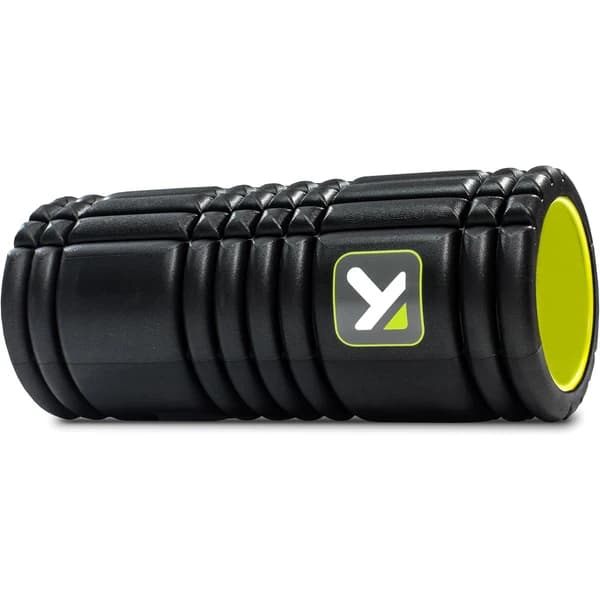
TriggerPoint GRID Foam Roller
Multi-density foam roller for broad-area self-myofascial release. Bodyweight pressure against large muscle groups (quads, IT band, lats, upper back). Cheap, durable, works without batteries, used by every PT and athletic trainer.
Pros
- Covers large surfaces (entire quad, full lat) in seconds
- One-time purchase, no charging or maintenance
- Doubles as an overhead-mobility tool and warm-up prop
- Cheap — high-quality roller is ~$35
Cons
- Hard to target small, specific knots
- Awkward on lower back, neck, pecs
- Hurts — some users can't tolerate deep pressure
- Requires floor space to use
Massage gun — RENPHO R3 Mini
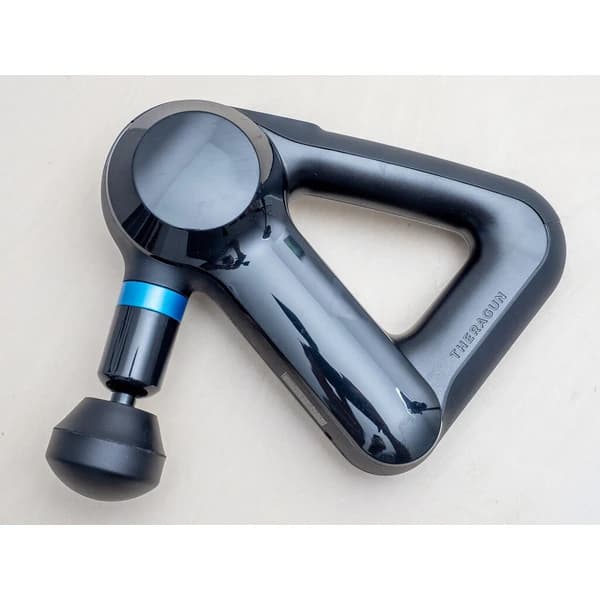
RENPHO R3 Mini Massage Gun
Percussion therapy device that delivers rapid, targeted pulses to specific trigger points. Reaches deep tissue and small muscle groups a foam roller can't address. Portable, tunable intensity, works anywhere you have an outlet or charged battery.
Pros
- Surgically targets small knots and trigger points
- Works on pecs, forearms, calves, neck — roller blind spots
- No floor space needed, usable anywhere
- Multiple intensity levels fit different pain tolerances
Cons
- Slow on large muscle groups (quads take minutes, not seconds)
- Requires charging — dead battery = no session
- Can be loud in a quiet room
- Higher price point (~$50 for budget, $300+ for premium)
Which one wins, by use case
Best all-around recovery tool
TriggerPoint GRID Foam Roller
Hits 80% of soft-tissue work for most people in less time. If you lift 3–5 days a week and want one tool, start here.
Best for targeting specific pain points
RENPHO R3 Mini Massage Gun
Neck tension, tight pecs, calf knots, forearm flexors — the places a roller can't reach. A gun is the right tool for precision work.
Best for travel and office use
RENPHO R3 Mini Massage Gun
Portable, no floor space needed, and discreet enough for hotel rooms or between meetings. A roller is too bulky to pack.
The verdict
Most people should buy a foam roller first — it covers more ground per minute and costs less. Add a massage gun 6–12 months later if specific trigger points keep flaring up that the roller can't reach. If you can only have one and you're already dialed in on roller basics, the gun adds the most new capability to your recovery stack.
Quick compare
| Spec | TriggerPoint GRID Foam Roller | RENPHO R3 Mini Massage Gun |
|---|---|---|
| Rating | 4.7 / 5 | 4.5 / 5 |
| Price range | $30–$40 | $40–$65 |
| Source | Amazon | Amazon |
Frequently asked
Questions people ask about this
Do massage guns actually work or is it placebo?
They work, but not for the reasons most marketing claims. Small studies show percussion therapy reduces delayed-onset muscle soreness and improves short-term range of motion — similar effect size to foam rolling. What they don't do: 'break up fascia' or flush lactic acid (those claims are marketing, not physiology).
How long should I foam roll each muscle group?
30–60 seconds per area is the sweet spot. Slow, deliberate passes beat fast rolling — the goal is sustained pressure, not friction. Longer than 90 seconds on one spot offers diminishing returns and can cause bruising.
Should I use a massage gun before or after workouts?
Both work, for different reasons. Pre-workout: 30–60 seconds per muscle group increases range of motion and activation without weakening the muscle (unlike static stretching). Post-workout: 1–2 minutes per group speeds subjective recovery and reduces next-day soreness. Avoid using it directly on injured tissue or within 24 hours of a strain.
Is an expensive massage gun ($300+) worth it over a $50 one?
Diminishing returns. A $300 Theragun or Hypervolt has better build quality, longer battery life, and quieter operation — but the therapeutic effect is essentially the same as a $50 budget gun with equivalent amplitude (10mm+) and stall force. Unless you're using it 2x a day or need it to last 5+ years, the budget tier is fine.
More comparisons
Affiliate disclosure: Some links in this comparison are affiliate links. If you buy through them we may earn a commission at no cost to you. We only recommend products we genuinely believe in, and price/rating data reflects the most recent update.